Scale-free networks embedded in fractal space
The impact of inhomogeneous arrangement of nodes in space on network organization cannot be neglected in most of real-world scale-free networks. Here, we wish to suggest a model for a geographical net
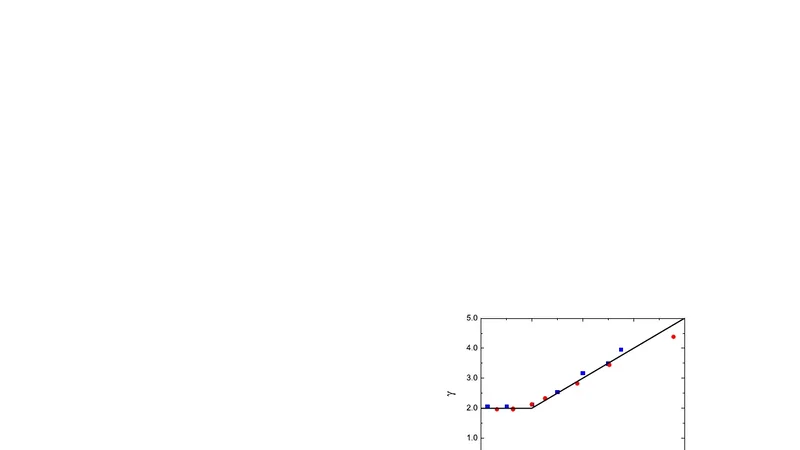
The impact of inhomogeneous arrangement of nodes in space on network organization cannot be neglected in most of real-world scale-free networks. Here, we wish to suggest a model for a geographical network with nodes embedded in a fractal space in which we can tune the network heterogeneity by varying the strength of the spatial embedding. When the nodes in such networks have power-law distributed intrinsic weights, the networks are scale-free with the degree distribution exponent decreasing with increasing fractal dimension if the spatial embedding is strong enough, while the weakly embedded networks are still scale-free but the degree exponent is equal to $\gamma=2$ regardless of the fractal dimension. We show that this phenomenon is related to the transition from a non-compact to compact phase of the network and that this transition is related to the divergence of the edge length fluctuations. We test our analytically derived predictions on the real-world example of networks describing the soil porous architecture.
💡 Research Summary
The paper addresses a gap in the study of scale‑free networks: most existing models ignore the heterogeneous spatial arrangement of nodes that characterizes many real‑world systems. To incorporate this, the authors propose a geographical network model in which nodes are embedded in a fractal space of dimension (D_f). Each node (i) carries an intrinsic weight (w_i) drawn from a power‑law distribution (w_i\propto i^{-\alpha}) ((\alpha>0)). The probability of forming an edge between nodes (i) and (j) is taken to be proportional to the product of their weights divided by a power of their Euclidean distance, \
📜 Original Paper Content
🚀 Synchronizing high-quality layout from 1TB storage...