A New 626 s Periodic X-ray Source in the Direction of the Galactic Center
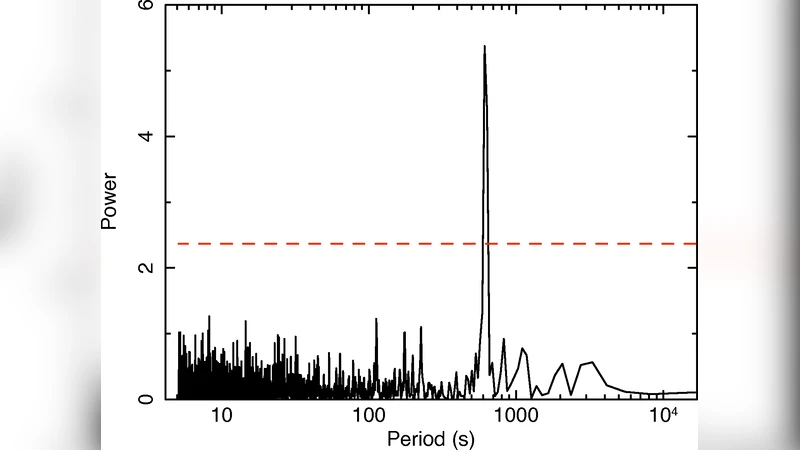
Here we report the detection of a 626 s periodic modulation from the X-ray source 2XMM J174016.0-290337 located in the direction of the Galactic center. We present temporal and spectral analyses of archival XMM-Newton data and photometry of archived near-infrared data in order to investigate the nature of this source. We find that the X-ray light curve shows a strong modulation at 626 +/- 2 s with a confidence level > 99.9% and a pulsed fraction of 54%. Spectral fitting demonstrates that the spectrum is consistent with an absorbed power law. No significant spectral variability was observed over the 626 s period. We have investigated the possibility that the 626 s period is orbital in nature (either that of an ultra-compact X-ray binary or an AM CVn) or related to the spin of a compact object (either an accretion powered pulsar or an intermediate polar). The X-ray properties of the source and the photometry of the candidate near-infrared counterparts are consistent with an accreting neutron star X-ray binary on the near-side of the Galactic bulge, where the 626 s period is most likely indicative of the pulsar spin period. However, we cannot rule out an ultra-compact X-ray binary or an intermediate polar with the data at hand. In the former case, if the 626 s modulation is the orbital period of an X-ray binary, it would be the shortest period system known. In the latter case, the modulation would be the spin period of a magnetic white dwarf. However, we find no evidence for absorption dips over the 626 s period, a low temperature black body spectral component, or Fe Kalpha emission lines. These features are commonly observed in intermediate polars, making 2XMM J174016.0-290337 a rather unusual member of this class if confirmed. We instead suggest that 2XMM J174016.0-290337 could be a new addition to the emerging class of symbiotic X-ray binaries.
💡 Research Summary
The authors report the discovery of a strong, coherent X‑ray modulation with a period of 626 ± 2 seconds from the source 2XMM J174016.0‑290337, located toward the Galactic centre. The source was serendipitously observed by XMM‑Newton on 29 September 2005 (ObsID 030422011) for a net exposure of 7.7 ks. Because the target fell outside the pn small‑window field, only MOS1 and MOS2 data were usable. After standard SAS processing, removal of high‑background intervals, and barycentric correction, a combined EPIC light curve with 2.6 s resolution was produced. A Lomb‑Scargle periodogram revealed a highly significant peak near 630 s (white‑noise confidence > 99.9 %). An epoch‑folding search refined the period to 626 s, with a sinusoidal pulse profile and a pulsed fraction of 54 %. No evidence for a harmonic at twice the period was found; folding at 1252 s produced a single‑peaked profile, arguing against a double‑pole geometry.
Spectral analysis was performed on the summed MOS1+MOS2 spectrum (0.2–10 keV), grouped to 20 counts per bin. An absorbed power‑law model provided an excellent fit (χ²/dof ≈ 1.1) with a photon index Γ ≈ 1.2 and an equivalent hydrogen column density N_H ≈ 1 × 10²² cm⁻², consistent with the line‑of‑sight absorption toward the inner Galaxy. No additional soft black‑body component, Fe Kα emission line, or absorption dips were detected. Phase‑resolved spectroscopy showed no significant variation of N_H or Γ across the pulse, indicating that the modulation is likely geometric (e.g., beaming or occultation) rather than due to variable absorption.
The source has been previously catalogued as AX J1740.2‑2903 (ASCA) and AX J1740.3‑2904 (ROSAT), confirming its long‑term X‑ray presence. Archival near‑infrared (NIR) surveys (2MASS, VVV) reveal several candidate counterparts within the 3″ X‑ray error circle, but the extreme crowding prevents a definitive identification. The colours of the plausible counterparts suggest a moderately reddened object at a distance of roughly 6–8 kpc, i.e., on the near side of the Galactic bulge. Assuming this distance, the 2–10 keV luminosity is ≈ 10³⁴ erg s⁻¹, a value typical of low‑luminosity X‑ray binaries.
The authors discuss three possible classifications:
-
Ultra‑compact X‑ray binary (UCXB) – If the 626 s period were orbital, the system would have the shortest known orbital period (the previous record is 685 s for 4U 1820‑30). UCXBs, however, usually exhibit soft thermal components from a helium‑rich donor and often show Fe Kα emission, neither of which is present here. Moreover, the lack of eclipses or dips disfavors a high‑inclination ultra‑compact system.
-
Intermediate Polar (IP) – In magnetic cataclysmic variables, the white‑dwarf spin periods range from a few hundred to a few thousand seconds, matching the observed period. IPs typically display a hard bremsstrahlung continuum, a low‑temperature blackbody from the accretion curtains, and prominent Fe Kα lines. The absence of these spectral signatures, together with the relatively high pulsed fraction and lack of absorption dips, makes an IP interpretation unlikely, though not impossible.
-
Accreting neutron‑star X‑ray pulsar, possibly a symbiotic X‑ray binary (SyXB) – Symbiotic X‑ray binaries consist of a neutron star accreting from the wind of an M‑type giant, often at large orbital separations, and can show long spin periods (hundreds to thousands of seconds). The observed hard power‑law spectrum, high pulsed fraction, and modest luminosity are consistent with a wind‑fed neutron‑star system. The NIR colours are compatible with a late‑type giant at bulge distances, supporting the SyXB scenario. The 626 s period would then represent the neutron‑star spin.
Given the data, the authors favour the symbiotic X‑ray binary interpretation, with the 626 s modulation being the neutron‑star spin period. They acknowledge that the current observations cannot completely exclude an ultra‑compact binary or an intermediate polar. Future work requiring high‑resolution X‑ray spectroscopy (to search for faint Fe lines), deeper NIR imaging and spectroscopy (to confirm the donor type), and possibly radio pulsation searches would be decisive in establishing the true nature of 2XMM J174016.0‑290337.
Comments & Academic Discussion
Loading comments...
Leave a Comment