Black hole candidate XTE J1752-223: Swift observations of canonical states during outburst
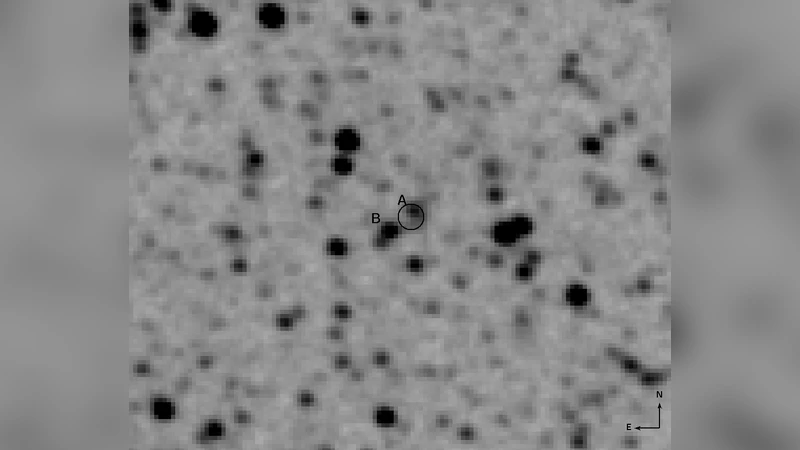
We present Swift broadband observations of the recently discovered black hole candidate, X-ray transient, XTE J1752-223, obtained over the period of outburst from October 2009 to June 2010. From Swift-UVOT data we confirm the presence of an optical counterpart which displays variability correlated, in the soft state, to the X-ray emission observed by Swift-XRT. The optical counterpart also displays hysteretical behaviour between the states not normally observed in the optical bands, suggesting a possible contribution from a synchrotron emitting jet to the optical emission in the rising hard state. We offer a purely phenomenological treatment of the spectra as an indication of the canonical spectral state of the source during different periods of the outburst. We find that the high energy hardness-intensity diagrams over two separate bands follows the canonical behavior, confirming the spectral states. Our XRT timing analysis shows that in the hard state there is significant variability below 10Hz which is more pronounced at low energies, while during the soft state the level of variability is consistent with being minimal. These properties of XTE J1752-223 support its candidacy as a black hole in the Galactic centre region.
💡 Research Summary
The authors present a comprehensive multi‑wavelength study of the recently discovered black‑hole candidate X‑ray transient XTE J1752‑223, using Swift observations obtained from the onset of its outburst in October 2009 through its decay in June 2010. The dataset comprises X‑ray data from the XRT (0.3–10 keV) and BAT (15–150 keV) instruments, together with ultraviolet/optical imaging from UVOT (1700–6000 Å). A new optical counterpart is identified in the UVOT images; its position matches the X‑ray coordinates to within the Swift astrometric uncertainties.
During the soft (thermal‑dominant) state the optical flux varies in step with the X‑ray count rate, indicating that the optical emission is dominated by the irradiated accretion disc, a behaviour that is well documented for confirmed black‑hole binaries. In contrast, during the rising hard state the optical flux follows a hysteresis loop: it is brighter at a given X‑ray intensity than during the soft state. This deviation from a simple disc‑only scenario suggests an additional contribution, most plausibly synchrotron radiation from a compact jet that is known to be active in the hard state.
Spectrally, the authors adopt a phenomenological approach, fitting each observation with a combination of a power‑law (representing the coronal or jet component) and a multicolour disc blackbody (diskbb) when required. In the hard state the photon index remains hard (Γ≈1.5–1.7) and the disc component is either absent or very cool (kT < 0.3 keV). As the source transitions to the soft state the power‑law steepens (Γ > 2.4) and a prominent thermal component emerges with a temperature of kT≈0.6 keV, reproducing the canonical hard‑to‑soft evolution seen in other transient black‑hole systems.
Timing analysis of the XRT light curves reveals strong aperiodic variability in the hard state: the fractional rms amplitude reaches 20–30 % in the 0.1–10 Hz band, with the variability being most pronounced at low energies (0.3–2 keV). Once the source settles into the soft state the rms drops below 2 %, indicating a quiescent disc that suppresses rapid fluctuations. This energy‑dependent variability pattern aligns with the picture of a fluctuating corona/jet in the hard state and a stable, geometrically thin disc in the soft state.
Hardness–intensity diagrams (HIDs) constructed in two separate energy ranges (2–10 keV and 10–20 keV) both trace the familiar “q‑shaped” track: the source brightens while remaining hard, then undergoes a rapid softening at roughly constant intensity, followed by a gradual decline in the soft state and a return to the hard state at lower luminosities. The consistency of the HID morphology across bands reinforces the identification of the canonical spectral states.
Taken together, the correlated optical/X‑ray behaviour, the spectral hard‑to‑soft transition, the marked change in rapid variability, and the canonical HID evolution provide compelling evidence that XTE J1752‑223 behaves like a typical black‑hole X‑ray binary. The observed optical hysteresis, likely linked to jet synchrotron emission, makes this source a valuable laboratory for studying jet contributions during the early hard‑state phase of transient outbursts.
Comments & Academic Discussion
Loading comments...
Leave a Comment