Negative activation volume for dielectric relaxation in hydrated rocks
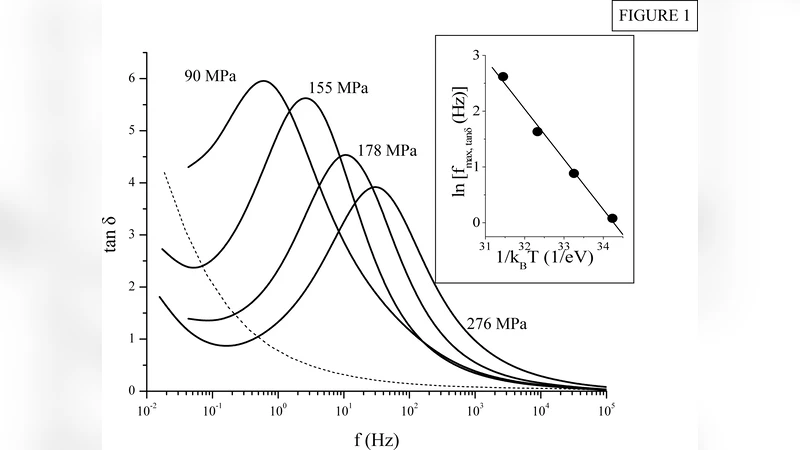
Negative defect activation volumes are extremely rare in solids. Here, we report for the first time that this holds in a couple of hydrated rocks for dielectric relaxation by exploring the complex impedance spectra at various pressures and temperatures. The present findings mean that the relaxation time of the relevant relaxation mechanisms decreases upon increasing pressure, thus it may become too short at higher pressure and hence lead to the emission of transient electric signals before fracture. This may constitute the long-standing laboratory confirmation for the explanation of the generation of electric signals prior to an earthquake, as recently pointed out by Uyeda et al [Tectonophysics 470 (2009) 205-213].
💡 Research Summary
The paper “Negative activation volume for dielectric relaxation in hydrated rocks” presents a systematic investigation of the dielectric relaxation behavior of water‑saturated rocks under a wide range of pressures (0.1 MPa to 600 MPa) and temperatures (20 °C to 200 °C). Using complex impedance spectroscopy, the authors extract relaxation time constants (τ) from Nyquist plots and fit the pressure dependence of τ to an Arrhenius‑type expression τ = τ₀ exp
Comments & Academic Discussion
Loading comments...
Leave a Comment