Locating a weak change using diffuse waves (LOCADIFF) : theoretical approach and inversion procedure
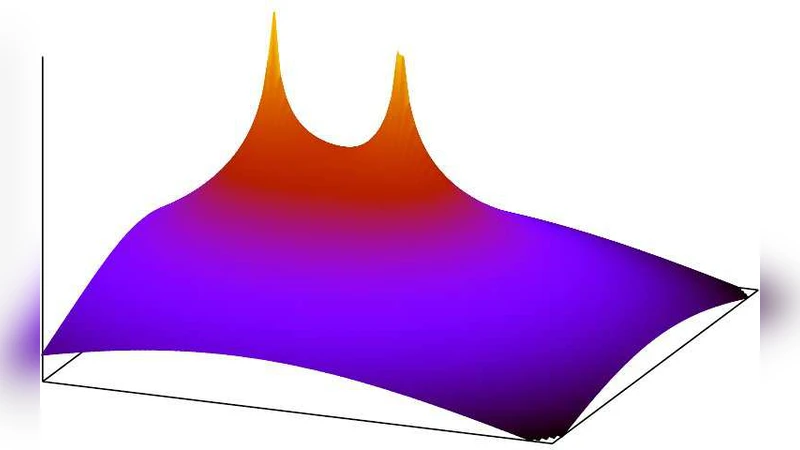
We describe a time-resolved monitoring technique for heterogeneous media. Our approach is based on the spatial variations of the cross-coherence of coda waveforms acquired at fixed positions but at different dates. To locate and characterize a weak change that occurred between successive acquisitions, we use a maximum likelihood approach combined with a diffusive propagation model. We illustrate this technique, called LOCADIFF, with numerical simulations. In several illustrative examples, we show that the change can be located with a precision of a few wavelengths and its effective scattering cross-section can be retrieved. The precision of the method depending on the number of source receiver pairs, time window in the coda, and errors in the propagation model is investigated. Limits of applications of the technique to real-world experiments are discussed.
💡 Research Summary
The paper introduces LOCADIFF, a novel time‑resolved monitoring technique designed to locate and quantify weak changes in heterogeneous media using diffuse (coda) waves. Unlike conventional coda interferometry, which typically relies on direct waveform differences or phase shifts, LOCADIFF exploits the spatial variations of the cross‑coherence function between two sets of coda recordings taken at different dates. This cross‑coherence captures both amplitude and phase perturbations, thereby amplifying the subtle signatures of minute structural modifications that would otherwise be buried in the noise of strongly scattered fields.
The theoretical framework assumes that wave propagation in the medium can be described by a diffusion equation. The Green’s function G(r, t) of the diffusion operator is used to model the field generated by a source and recorded at a receiver. When a weak scatterer appears at an unknown location r₀ with an effective scattering cross‑section σ_eff, the diffusion Green’s function is perturbed. By linearising the perturbation, the change in the cross‑coherence ΔC(s, r, τ) for a source‑receiver pair (s, r) and time lag τ can be expressed as a product of unperturbed Green’s functions multiplied by a term proportional to σ_eff and a spatial kernel centred at r₀.
LOCADIFF formulates the inverse problem as a maximum‑likelihood estimation (MLE). For a set of N source‑receiver pairs, the measured ΔC_i (i = 1…N) are compared with the theoretical prediction ΔĈ_i(r₀, σ_eff). Assuming Gaussian measurement noise, the likelihood is proportional to exp