Pulsar Results with the Fermi Large Area Telescope
The launch of the Fermi Gamma-ray Space Telescope has heralded a new era in the study of gamma-ray pulsars. The population of confirmed gamma-ray pulsars has gone from 6-7 to more than 60, and the superb sensitivity of the Large Area Telescope (LAT) on Fermi has allowed the detailed study of their spectra and light curves. Twenty-four of these pulsars were discovered in blind searches of the gamma-ray data, and twenty-one of these are, at present, radio quiet, despite deep radio follow-up observations. In addition, millisecond pulsars have been confirmed as a class of gamma-ray emitters, both individually and collectively in globular clusters. Recently, radio searches in the direction of LAT sources with no likely counterparts have been highly productive, leading to the discovery of a large number of new millisecond pulsars. Taken together, these discoveries promise a great improvement in the understanding of the gamma-ray emission properties and Galactic population of pulsars. We summarize some of the results stemming from these newly-detected pulsars and their timing and multi-wavelength follow-up observations.
💡 Research Summary
The launch of the Fermi Gamma‑ray Space Telescope in 2008 opened a new era for high‑energy pulsar astronomy. Using the Large Area Telescope (LAT), which combines a very large field of view with unprecedented sensitivity in the 100 MeV–300 GeV band, the number of confirmed gamma‑ray pulsars has risen from the handful known before Fermi to more than sixty today. This dramatic increase is the result of several complementary strategies. First, a systematic “blind” search of the LAT photon data—without any prior radio ephemerides—has uncovered 24 new pulsars. Remarkably, 21 of these are radio‑quiet: deep follow‑up observations at radio frequencies have failed to detect any pulsed emission, indicating that a substantial population of gamma‑ray pulsars beams toward Earth while their radio beams miss us or are intrinsically weak. The existence of such a radio‑quiet cohort forces a reassessment of pulsar emission geometry and suggests that gamma‑ray emission zones are located higher in the magnetosphere, where the fan‑like beams are broader than the narrow radio cones.
In parallel, millisecond pulsars (MSPs) have been firmly established as a distinct class of gamma‑ray emitters. LAT has detected individual MSPs both in the Galactic field and as a collective signal from globular clusters, where many MSPs reside. Targeted radio searches of LAT sources that lacked obvious counterparts have been extraordinarily productive, yielding dozens of new MSPs, many of which are in tight binary systems or have spin periods below 2 ms—objects that are often missed by traditional radio surveys. The gamma‑ray efficiencies of MSPs appear higher than previously thought, implying that they contribute significantly to the diffuse Galactic gamma‑ray background.
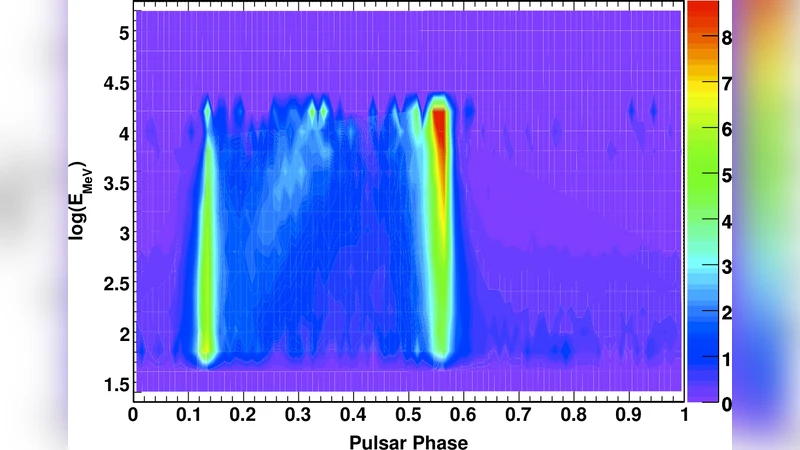
Multi‑wavelength follow‑up has been essential for characterizing these objects. Precise timing solutions derived from radio or X‑ray observations enable phase‑aligned light‑curve studies with LAT data, revealing a rich variety of pulse morphologies: some gamma‑ray peaks are aligned with radio peaks, while others are offset by up to half a rotation, supporting outer‑gap or slot‑gap emission models. Spectral analyses show that most gamma‑ray pulsars are well described by a power‑law with an exponential cutoff around a few GeV, consistent with curvature radiation from ultra‑relativistic particles. The blind‑search pulsars, despite lacking radio ephemerides, display similar spectral shapes, reinforcing the idea that the underlying acceleration physics is common across radio‑loud and radio‑quiet populations.
From a population‑synthesis perspective, the LAT sample provides the first statistically robust view of the Galactic pulsar distribution in gamma rays. The spatial distribution of radio‑quiet pulsars hints at a concentration toward the inner Galaxy, possibly reflecting selection effects in radio surveys or genuine differences in birth locations. The discovery of many MSPs, especially in globular clusters, suggests that the total Galactic MSP population may be larger than inferred from radio surveys alone, with implications for the evolution of binary systems and the contribution of MSPs to the Galactic positron excess.
The paper reviews these results in detail, describing the data analysis pipelines for blind searches, the timing campaigns that supplied phase models, and the multi‑wavelength campaigns that confirmed the nature of each source. It also discusses the theoretical implications for magnetospheric geometry, particle acceleration sites, and radiation mechanisms, emphasizing how the new LAT data challenge and refine existing models.
In summary, Fermi LAT has transformed our understanding of pulsars by expanding the known gamma‑ray pulsar population, revealing a substantial radio‑quiet component, confirming millisecond pulsars as prolific gamma‑ray emitters, and providing high‑quality light curves and spectra for detailed modeling. Ongoing observations, deeper blind searches, and coordinated radio/X‑ray timing efforts promise to uncover still more gamma‑ray pulsars and to sharpen our theoretical picture of how rotating neutron stars convert their rotational energy into the most energetic photons in the Universe.