Investigating a sample of strong cool core, highly-luminous clusters with radiatively-inefficient nuclei
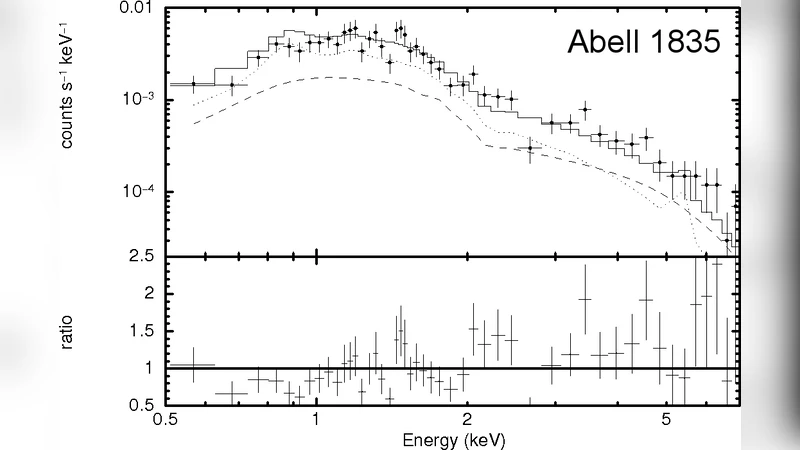
We present a study of strong cool core, highly-luminous (most with L_x > 10^(45) erg/s), clusters of galaxies in which the mean jet power of the central active galactic nucleus must be very high yet no central point X-ray source is detected. Using the unique spatial resolution of Chandra, a sample of 13 clusters is analysed, including A1835, A2204, and one of the most massive cool core clusters, RXCJ1504.1-0248. All of the central galaxies host a radio source, indicating an active nucleus, and no obvious X-ray point source. For all clusters in the sample, the nucleus has an X-ray bolometric luminosity below 2 per cent of that of the entire cluster. Most have a nucleus 2 - 10 keV X-ray luminosity less than about 10^(42) erg/s. We investigate how these clusters can have such strong X-ray luminosities, short radiative cooling-times of the inner intracluster gas requiring strong energy feedback to counterbalance that cooling, and yet have such radiatively-inefficient cores. If the central black holes have masses ~10^9M_sol then the power exceeds one per cent of the Eddington luminosity, and they are expected to be radiatively-efficient. Only if they are ultramassive (M_BH > 10^(10)M_sol), would their behaviour resemble that of lower mass accreting black holes. Our study focuses on deriving the nucleus X-ray properties of the clusters as defined in the above question, while briefly addressing possible solutions.
💡 Research Summary
The authors investigate a puzzling class of galaxy clusters that combine three apparently contradictory properties: (1) they host very strong cool‑core intracluster media with short central cooling times, (2) their central galaxies contain powerful radio‑loud active galactic nuclei (AGN) that are clearly injecting mechanical energy into the surrounding gas, and (3) despite the presence of an active nucleus, no X‑ray point source is detected at the cluster centre. Using the sub‑arcsecond imaging capability of the Chandra X‑ray Observatory, the study focuses on a well‑defined sample of thirteen of the most X‑ray luminous cool‑core systems (most with L_X > 10^45 erg s⁻¹), including the archetypal clusters A1835, A2204, and the exceptionally massive RXCJ1504.1‑0248.
Data and Methodology
All observations were reprocessed with the latest CIAO and CALDB tools. For each cluster the authors extracted a spectrum from a circular region of radius ≈1–2 kpc centred on the brightest cluster galaxy (BCG) and estimated the local background from an annulus just outside the core. When a point source was not formally detected, they derived 3σ upper limits on the 2–10 keV flux using a combination of Poisson statistics and Bayesian confidence intervals, assuming a power‑law spectrum with photon index Γ = 2. The resulting limits were converted to bolometric luminosities using the measured temperature and metallicity of the surrounding intracluster medium (ICM).
Results
In every object the nuclear X‑ray luminosity is ≤10^42 erg s⁻¹, corresponding to less than 2 % of the total cluster X‑ray output. By contrast, the radio cores have 1.4 GHz powers of 10^24–10^25 W Hz⁻¹, implying mechanical jet powers of order 10^44–10^45 erg s⁻¹—sufficient to offset the radiative cooling of the core gas. If the central supermassive black holes (SMBHs) have typical masses of ~10^9 M_⊙, the required jet power translates to an Eddington ratio of ≈0.01–0.03, a regime where standard thin‑disk accretion should be radiatively efficient. Yet the observed X‑ray limits correspond to Eddington ratios ≤10^−4, indicating a severe radiative deficit.
Interpretation
The authors explore three main explanations:
-
Ultra‑massive black holes (M_BH > 10^10 M_⊙). In this scenario the same jet power represents a much smaller fraction of the Eddington luminosity, allowing the accretion flow to remain radiatively inefficient even at relatively high absolute power. However, dynamical mass measurements for BCGs rarely support such extreme SMBH masses, and independent evidence is lacking.
-
Radiatively inefficient accretion flows (RIAFs/ADAFs). Low‑density, hot accretion solutions predict that most of the liberated gravitational energy is advected into the black hole or channeled into outflows rather than emitted as X‑rays. For a 10^9 M_⊙ black hole, an ADAF can produce jet powers of 10^44–10^45 erg s⁻¹ while keeping the X‑ray luminosity below 10^42 erg s⁻¹, consistent with the observations.
-
Heavy obscuration. Column densities N_H > 10^23 cm⁻² could hide a conventional thin‑disk nucleus. The lack of a strong Fe Kα line and the very low X‑ray to radio flux ratios, however, make pure obscuration an unlikely sole explanation.
The authors also discuss the possibility that the mechanical energy is supplied directly by the jet without a luminous accretion disk, as suggested by magnetically arrested disk (MAD) models, and that the observed radio power may be a more reliable tracer of the true feedback energy than the X‑ray core.
Conclusions and Future Work
The study demonstrates that a substantial fraction of the most powerful cool‑core clusters host AGN that are essentially “X‑ray dark” despite driving powerful jets. This challenges the simple picture that high Eddington‑ratio accretion must be radiatively efficient. The results favor either ultra‑massive black holes or low‑efficiency accretion modes (ADAF/MAD) as the dominant explanation. To discriminate between these possibilities, the authors call for high‑resolution VLBI imaging to resolve the innermost jet structure, deep mm‑wave observations (e.g., with ALMA) to probe molecular gas and potential obscuring columns, and next‑generation X‑ray spectroscopy (e.g., Athena) to search for faint reflection features. Additionally, dynamical measurements of SMBH masses in BCGs will be crucial to test the ultra‑massive black‑hole hypothesis.
Overall, the paper provides a comprehensive observational foundation for the existence of radiatively inefficient, mechanically dominant AGN in the most extreme cooling‑flow clusters, and it outlines a clear roadmap for future multi‑wavelength investigations to unravel the physics of black‑hole feedback in the most massive structures of the Universe.
Comments & Academic Discussion
Loading comments...
Leave a Comment