Reproduction of a Protocell by Replication of Minority Molecule in Catalytic Reaction Network
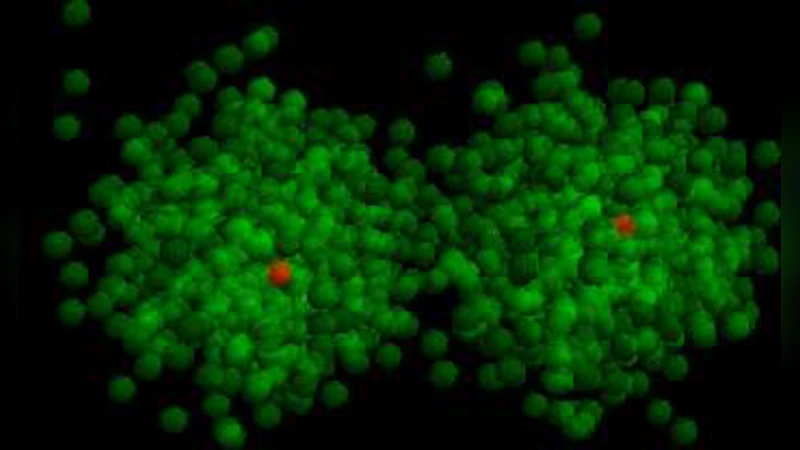
For understanding the origin of life, it is essential to explain the development of a compartmentalized structure, which undergoes growth and division, from a set of chemical reactions. In this study, a hypercycle with two chemicals that mutually catalyze each other is considered in order to show that the reproduction of a protocell with a growth-division process naturally occurs when the replication speed of one chemical is considerably slower than that of the other chemical. It is observed that the protocell divides after a minority molecule is replicated at a slow synthesis rate, and thus, a synchrony between the reproduction of a cell and molecule replication is achieved. The robustness of such protocells against the invasion of parasitic molecules is also demonstrated.
💡 Research Summary
The paper tackles a central problem in origin‑of‑life research: how a compartmentalized entity capable of growth and division can emerge from a simple set of chemical reactions. The authors adopt a minimal hypercycle consisting of two molecular species, X and Y, that mutually catalyze each other’s synthesis (X + Y → 2X and Y + X → 2Y). Crucially, they impose a large asymmetry in the intrinsic replication rates: the synthesis rate constant of X (k_X) is much smaller than that of Y (k_Y). X is therefore termed the “minority molecule,” while Y is the “majority molecule.”
The system is placed inside a finite, membrane‑bounded volume that mimics a protocell. Material influx, diffusion, and the reaction network are modeled using coupled reaction‑diffusion equations and stochastic particle‑based simulations (Gillespie‑type algorithm). The membrane is given an elastic energy that resists expansion; when internal pressure exceeds a threshold, the membrane becomes unstable and splits into two daughter compartments.
Simulation results reveal a striking dynamical pattern. Because Y replicates rapidly, its concentration builds up quickly, causing the protocell volume to increase steadily. However, division does not occur continuously; instead, a division event is triggered only when a single X molecule is successfully synthesized. The appearance of a new X changes the stoichiometric balance and the internal stress distribution enough to push the membrane over its mechanical limit. Consequently, each X replication acts as a “clock pulse” that synchronizes the cell‑level growth‑division cycle with the molecular‑level replication event. After division, the two daughter protocells inherit almost identical X‑to‑Y ratios, establishing a natural coupling between cell reproduction and the replication of the minority species.
Parameter sweeps (varying the rate ratio r = k_X/k_Y, diffusion coefficient D, and membrane stiffness K) demonstrate that this coupling is robust across a wide range of conditions. The most stable regime occurs when r ≤ 0.1, i.e., the minority molecule replicates at least ten times slower than the majority molecule. In this regime, the timing of division is highly regular, and the system exhibits limit‑cycle‑like behavior despite the stochastic nature of individual reaction events.
To test the evolutionary plausibility of the model, the authors introduce a parasitic species Z that can also be produced by the catalytic network. Two scenarios are examined: (i) Z catalyzes both X and Y, and (ii) Z catalyzes only Y. In case (i), Z’s fast replication quickly overwhelms the system, destroying the X‑Y balance and preventing orderly division. In case (ii), although Y becomes even more abundant, the scarcity of X remains the limiting factor for division; thus Z cannot dominate the population. This demonstrates that a minority‑molecule‑driven division mechanism inherently confers resistance to parasitic takeover, because the critical “division trigger” remains tied to the slow‑replicating species that parasites cannot easily replace.
The authors discuss possible experimental realizations. RNA ribozymes or peptide‑based catalysts that mutually enhance each other’s synthesis could serve as X and Y. Microfluidic droplets with semi‑permeable lipid or polymer membranes could provide the confined environment and elastic boundary conditions required for the model. By monitoring droplet growth, internal composition, and division events, the theoretical predictions could be validated.
In summary, the study provides a clear, quantitative demonstration that a hypercycle with a pronounced replication‑rate asymmetry can give rise to a protocell that grows, divides, and synchronizes its division with the replication of a single, slow‑replicating minority molecule. This mechanism operates without any external regulatory circuitry and simultaneously offers robustness against parasitic molecules. The work therefore advances our understanding of how the first self‑reproducing, compartmentalized entities might have arisen on the prebiotic Earth, bridging the gap between simple catalytic chemistry and the emergence of cell‑like life.
Comments & Academic Discussion
Loading comments...
Leave a Comment