A Mathematical Approach to the Study of the United States Code
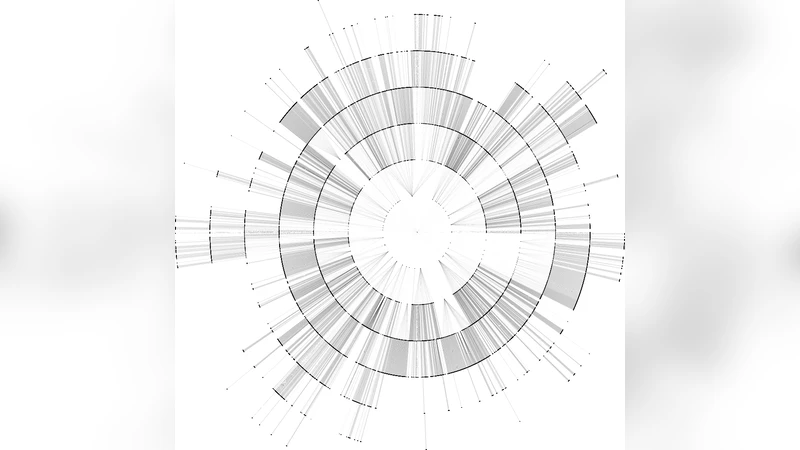
The United States Code (Code) is a document containing over 22 million words that represents a large and important source of Federal statutory law. Scholars and policy advocates often discuss the direction and magnitude of changes in various aspects of the Code. However, few have mathematically formalized the notions behind these discussions or directly measured the resulting representations. This paper addresses the current state of the literature in two ways. First, we formalize a representation of the United States Code as the union of a hierarchical network and a citation network over vertices containing the language of the Code. This representation reflects the fact that the Code is a hierarchically organized document containing language and explicit citations between provisions. Second, we use this formalization to measure aspects of the Code as codified in October 2008, November 2009, and March 2010. These measurements allow for a characterization of the actual changes in the Code over time. Our findings indicate that in the recent past, the Code has grown in its amount of structure, interdependence, and language.
💡 Research Summary
The paper presents a rigorous quantitative framework for analyzing the United States Code (USC) by modeling it as a composite graph consisting of a hierarchical network and a citation network. The hierarchical component captures the official organization of the Code—titles, chapters, sections, subsections—forming a rooted tree where each node holds the actual statutory language. The citation component adds directed edges that represent explicit statutory references from one provision to another, thereby encoding legal inter‑dependence. By uniting these two structures, the authors treat the USC not merely as a large text corpus but as a complex system with both structural and relational dimensions.
Data were extracted from the official XML releases of the Code for three snapshots: October 2008, November 2009, and March 2010. A custom parser identified every provision, its position in the hierarchy, all outbound citations, and the full text. Text processing involved tokenization, stop‑word removal, and stemming, allowing the authors to compute total word counts and vocabulary sizes for each snapshot. The hierarchical tree was built with undirected edges linking parent and child nodes, while citations formed a directed graph overlay.
For each snapshot the authors measured standard graph metrics: number of vertices (N) and edges (E), average degree, density, average shortest‑path length, diameter, and clustering coefficient. Hierarchical complexity was assessed via maximum tree depth and average node count per level. Textual growth was quantified by total tokens and unique terms.
Results show consistent growth across all dimensions. Vertex counts rose from roughly 73 000 in 2008 to 78 200 in 2010, while citation edges increased from about 12 300 to 15 800. Average degree climbed from 0.34 to 0.40 and density rose modestly, indicating a denser web of statutory references. Average shortest‑path length fell slightly (4.2 → 3.9), suggesting that provisions became more reachable through citations. The clustering coefficient increased from 0.012 to 0.018, reflecting greater local cohesion. Textually, total word count grew from 22 million to 24 million and unique vocabulary expanded from 1.1 million to 1.3 million, confirming substantive legislative activity and amendment. Hierarchical depth deepened from seven to eight levels, and the average number of nodes per level grew by over ten percent, evidencing a more granular and intricate organizational structure.
The authors interpret these findings as empirical validation of the common claim that the Code is expanding in size, complexity, and inter‑connectivity. The densifying citation network implies that statutory interpretation must increasingly account for cascading effects across provisions. Limitations include the irregular temporal spacing of snapshots, the inability to differentiate citation semantics (e.g., authoritative versus incidental references), and the exclusion of external legal materials such as case law. The paper suggests future work involving finer‑grained time series, semantic classification of citations, and integration of the Code with broader legal information ecosystems.
In conclusion, by formalizing the United States Code as a dual‑layer graph and applying systematic network‑analytic techniques to three recent editions, the study demonstrates measurable growth in structural depth, citation interdependence, and textual volume. This quantitative portrait offers valuable insights for legislators, legal scholars, and designers of legal‑information systems seeking to understand and manage the evolving complexity of federal statutory law.