Counterion-Mediated Weak and Strong Coupling Electrostatic Interaction between Like-Charged Cylindrical Dielectrics
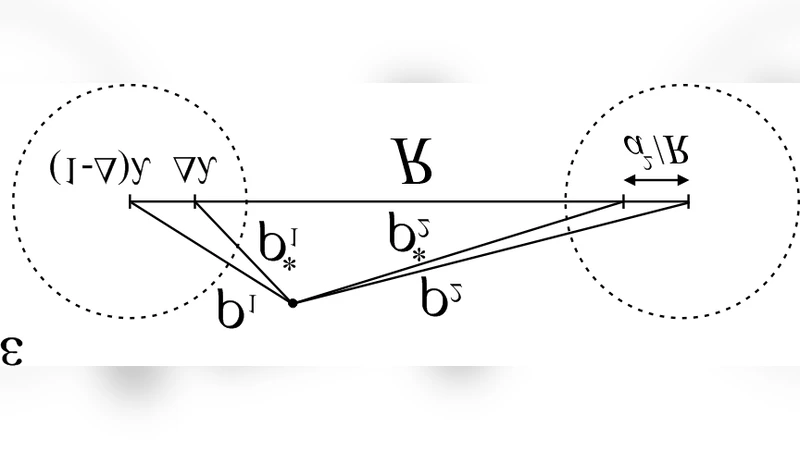
We examine the effective counterion-mediated electrostatic interaction between two like-charged dielectric cylinders immersed in a continuous dielectric medium containing neutralizing mobile counterions. We focus on the effects of image charges induced as a result of the dielectric mismatch between the cylindrical cores and the surrounding dielectric medium and investigate the counterion-mediated electrostatic interaction between the cylinders in both limits of weak and strong electrostatic couplings (corresponding, e.g., to systems with monovalent and multivalent counterions, respectively). The results are compared with extensive Monte-Carlo simulations exhibiting good agreement with the limiting weak and strong coupling results in their respective regime of validity.
💡 Research Summary
The paper investigates how neutralizing mobile counterions mediate the electrostatic interaction between two like‑charged dielectric cylinders immersed in a continuous dielectric medium. The central focus is on the role of image charges that arise from the dielectric mismatch between the low‑permittivity cylindrical cores and the surrounding higher‑permittivity solvent. By treating the system in the two asymptotic limits of electrostatic coupling—weak coupling (WC), appropriate for monovalent counterions, and strong coupling (SC), appropriate for multivalent counterions—the authors derive analytical expressions for the effective interaction free energy as a function of cylinder separation, dielectric contrast, and counterion valency.
In the WC regime (Γ ≪ 1), the Poisson‑Boltzmann (PB) equation can be linearized. The authors incorporate the image‑charge contribution via a Green’s‑function formalism, which adds a distance‑dependent correction to the standard screened Coulomb interaction. The resulting pressure between the cylinders remains repulsive, decaying roughly exponentially with separation, and the magnitude of the repulsion grows with increasing dielectric contrast (ε_in/ε_out deviating from unity). This analytical prediction matches well with Monte‑Carlo (MC) simulations for systems containing only monovalent ions.
In the SC regime (Γ ≫ 1), counterion‑counterion correlations dominate and a single‑particle picture becomes appropriate. The authors compute the single‑particle free energy of a counterion in the combined field of the charged cylinders and its own image charges, including multiple reflections of the image field. The image contribution is highly non‑linear and can turn the overall interaction from repulsive to attractive at sufficiently small separations, a phenomenon the authors term “charge inversion of like‑charged cylinders.” The strength of this attraction is amplified when the cylinder interior has a lower permittivity than the surrounding medium, because the induced image charges have opposite sign to the cylinder charge.
Extensive MC simulations (hundreds of thousands of ions, varying dielectric ratios from 0.2 to 5, valencies from 1 to 3, and cylinder radii from 1 nm to 5 nm) are performed to test both limits. In the WC region the simulation data agree with the linearized PB + image theory within a few percent. In the SC region the SC theory that includes image charges reproduces the simulation results with an error of less than 10 %, whereas a SC theory that neglects images fails dramatically, underestimating the attractive component. As the dielectric mismatch approaches unity, both theories converge to the classic DLVO result, confirming consistency.
The paper’s contributions are threefold. First, it provides a unified analytical framework that captures image‑charge effects in both weak and strong coupling limits. Second, it reveals that in the strong‑coupling regime image charges can induce a net attraction between like‑charged cylinders, a counter‑intuitive result with potential relevance to DNA condensation, carbon‑nanotube bundling, and polymer nanowire assembly. Third, it validates the theoretical predictions against large‑scale MC simulations, establishing the quantitative reliability of the derived expressions.
The authors conclude by suggesting extensions to mixed‑valency electrolytes, dynamic external fields, and non‑cylindrical geometries, which would further broaden the applicability of their model to realistic biological and nanotechnological systems.
Comments & Academic Discussion
Loading comments...
Leave a Comment