Mechanisms of Core-Collapse Supernovae & Simulation Results from the CHIMERA Code
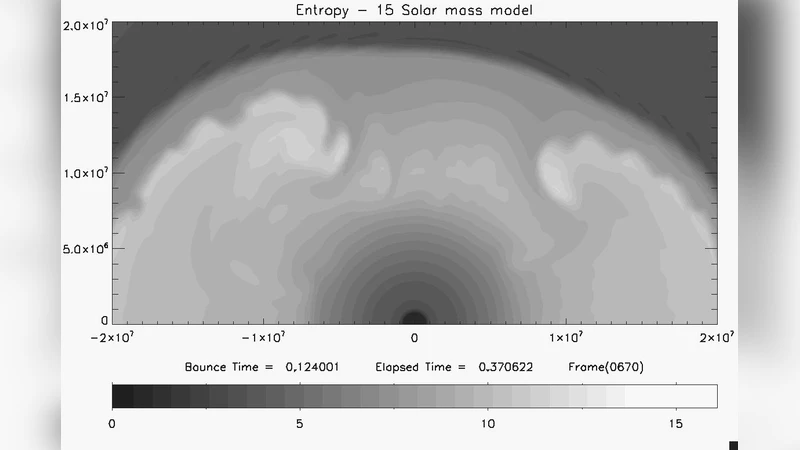
Unraveling the mechanism for core-collapse supernova explosions is an outstanding computational challenge and the problem remains essentially unsolved despite more than four decades of effort. However, much progress in realistic modeling has occurred recently through the availability of multi-teraflop machines and the increasing sophistication of supernova codes. These improvements have led to some key insights which may clarify the picture in the not too distant future. Here we briefly review the current status of the three explosion mechanisms (acoustic, MHD, and neutrino heating) that are currently under active investigation, concentrating on the neutrino heating mechanism as the one most likely responsible for producing explosions from progenitors in the mass range ~10 to ~25 solar masses. We then briefly describe the CHIMERA code, a supernova code we have developed to simulate core-collapse supernovae in 1, 2, and 3 spatial dimensions. We finally describe the results of an ongoing suite of 2D simulations initiated from a 12, 15, 20, and 25 solar mass progenitor. These have all exhibited explosions and are currently in the expanding phase with the shock at between 5,000 and 10,000 km. We finally very briefly describe an ongoing simulation in 3 spatial dimensions initiated from the 15 solar mass progenitor.
💡 Research Summary
The paper addresses the long‑standing problem of how core‑collapse supernovae (CCSNe) explode, focusing on three leading mechanisms that are actively investigated: acoustic (or “sound‑wave”) driven explosions, magnetohydrodynamic (MHD) jet‑driven explosions, and neutrino‑heating (or “neutrino‑driven”) explosions. The authors review each mechanism, emphasizing that for progenitors in the 10–25 M⊙ range the neutrino‑heating scenario remains the most plausible. Acoustic mechanisms rely on strong core pulsations that transfer energy outward, but recent multi‑dimensional simulations show that the pulsations damp too quickly to revive the stalled shock. MHD mechanisms require rapid rotation and strong magnetic fields; only a subset of massive stars meet the necessary thresholds, making MHD unlikely to explain the bulk of observed Type II‑P supernovae. By contrast, the neutrino‑heating mechanism is grounded in the intense flux of electron‑type neutrinos emitted from the proto‑neutron star (PNS) shortly after bounce. When a fraction of these neutrinos is absorbed in the gain region behind the stalled shock, it raises the pressure, pushes the shock outward, and can lead to a successful explosion. The efficiency of this process depends critically on accurate treatment of multi‑group neutrino transport, realistic equations of state, and the development of hydrodynamic instabilities such as convection and the standing accretion shock instability (SASI).
To explore these physics in detail, the authors describe the CHIMERA code, a state‑of‑the‑art CCSN simulation framework they have developed. CHIMERA integrates (1) a multi‑group, Boltzmann‑based neutrino transport solver, (2) a comprehensive nuclear reaction network with >150 isotopes, (3) a high‑resolution, shock‑capturing hydrodynamics module (PPM with flux limiters), and (4) a gravity solver that incorporates relativistic corrections (effective relativistic potential). The code is capable of running in one, two, and three spatial dimensions, allowing direct comparison of dimensional effects. In 2‑D mode, CHIMERA naturally captures non‑axisymmetric phenomena such as SASI sloshing and spiral modes, as well as large‑scale convective overturn, both of which amplify neutrino heating by increasing dwell time of matter in the gain region.
The authors present a suite of 2‑D simulations initiated from four progenitor models: 12 M⊙, 15 M⊙, 20 M⊙, and 25 M⊙. All four models achieve explosions: after core bounce, the shock stalls for ~150 ms, then neutrino heating combined with SASI‑driven shock deformation re‑energizes the shock. By 300–400 ms post‑bounce the shock radius expands to 5,000–10,000 km, and the diagnostic explosion energies settle in the range 0.5–1.0 Bethe (1 Bethe = 10^51 erg), comparable to observed Type II‑P supernovae. The simulations also produce ^56Ni yields of 0.05–0.1 M⊙, matching the nickel masses inferred from light‑curve modeling. Detailed neutrino luminosities and spectra are recorded, providing a benchmark for future neutrino‑detector observations (e.g., Hyper‑Kamiokande, DUNE). The authors highlight that the combination of strong SASI activity and vigorous convection in the gain region is essential for extending the dwell time of accreting material, thereby boosting the net heating rate and ensuring a robust explosion.
A preliminary 3‑D simulation of the 15 M⊙ progenitor is also discussed. Although still in progress, early results indicate that the same neutrino‑driven mechanism operates, but the flow morphology is richer: SASI develops spiral modes, convective plumes become more isotropic, and the shock surface exhibits pronounced non‑spherical deformation. These three‑dimensional effects influence the final explosion asymmetry, the spin of the nascent neutron star, and the morphology of the supernova remnant. The authors note that the 3‑D run currently shows shock radii comparable to the 2‑D cases, suggesting that dimensionality does not suppress the neutrino‑driven explosion for the studied progenitor, but it does modify the detailed dynamics.
In conclusion, the paper demonstrates that with modern petascale computing resources and sophisticated multi‑physics modeling, the CHIMERA code can reproduce successful neutrino‑driven explosions across a representative mass range of massive stars. The results reinforce the view that neutrino heating, aided by hydrodynamic instabilities, is the leading candidate for the generic CCSN explosion mechanism. The authors outline future work: extending 3‑D simulations to later times to follow remnant formation, conducting systematic parameter studies that include rotation and magnetic fields to assess the interplay between MHD and neutrino mechanisms, and directly comparing simulated neutrino and gravitational‑wave signals with upcoming observations. Such efforts aim to close the decades‑long gap between theory and observation, ultimately delivering a comprehensive, predictive model of core‑collapse supernovae.