Theoretical relation between water flow rate in a vertical fracture and rock temperature in the surrounding massif
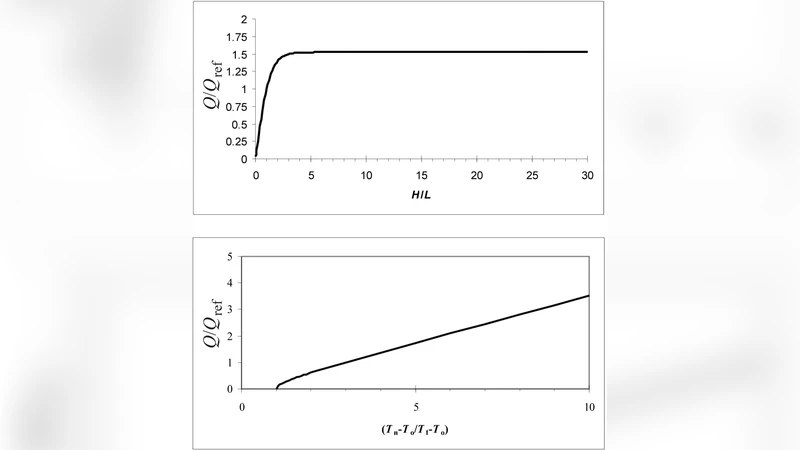
A steady-state analytical solution is given describing the temperature distribution in a homogeneous massif perturbed by cold water flow through a discrete vertical fracture. A relation is derived to express the flow rate in the fracture as a function of the temperature measured in the surrounding rock. These mathematical results can be useful for tunnel drilling as it approaches a vertical cold water bearing structure that induces a thermal anomaly in the surrounding massif. During the tunnel drilling, by monitoring this anomaly along the tunnel axis one can quantify the flow rate in the discontinuity ahead before intersecting the fracture. The cases of the Simplon, Mont Blanc and Gotthard tunnels (Alps) are handled with this approach which shows very good agreement between observed temperatures and the theoretical trend. The flow rates before drilling of the tunnel predicted with the theoretical solution are similar in the Mont Blanc and Simplon cases, as well as the flow rates observed during the drilling. However, the absence of information on hydraulic gradients (before and during drilling) and on fracture specific storage prevents direct predictions of discharge rates in the tunnel.
💡 Research Summary
The paper presents a steady‑state analytical solution for the temperature field in a homogeneous rock mass that is perturbed by a vertical fracture through which cold water flows at a constant rate. By solving the two‑dimensional Laplace equation with appropriate boundary conditions—fixed far‑field geothermal temperature, continuity of temperature and heat flux at the fracture wall, and a prescribed water temperature inside the fracture—the authors derive an explicit expression for the temperature distribution T(x,z) as a function of distance from the fracture and depth. The solution contains a decay parameter α that depends on the rock’s thermal conductivity, the water’s specific heat and density, and the fracture’s cross‑sectional area. By inverting the temperature expression, a formula is obtained that relates the measured temperature at any point in the rock to the water discharge Q in the fracture: \
Comments & Academic Discussion
Loading comments...
Leave a Comment