Deep Chandra observations of TeV binaries I: LSI +61 303
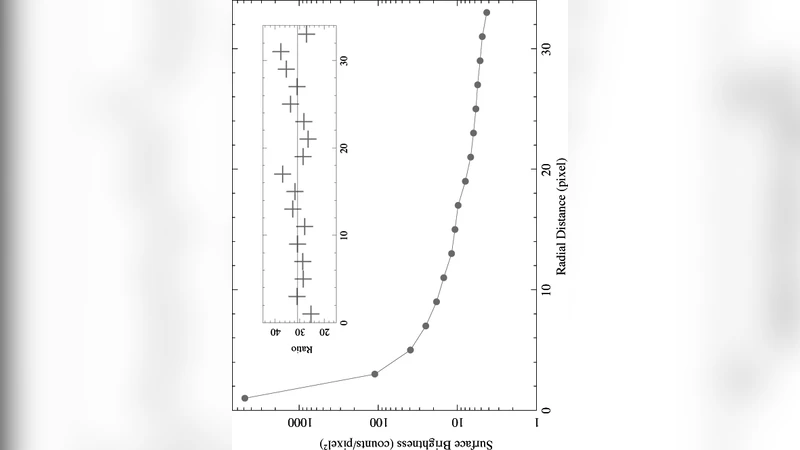
We report on a 95ks Chandra observation of the TeV emitting High Mass X-ray Binary LSI +61 303, using the ACIS-S camera in Continuos Clocking mode to search for a possible X-ray pulsar in this system. The observation was performed while the compact object was passing from phase 0.94 to 0.98 in its orbit around the Be companion star (hence close to the apastron passage). We did not find any periodic or quasi-periodic signal (at this orbital phase) in a frequency range of 0.005-175 Hz. We derived an average pulsed fraction 3 sigma upper limit for the presence of a periodic signal of ~10% (although this limit is strongly dependent on the frequency and the energy band), the deepest limit ever reached for this object. Furthermore, the source appears highly variable in flux and spectrum even in this very small orbital phase range, in particular we detect two flares, lasting thousands of seconds, with a very hard X-ray spectrum with respect to the average source spectral distribution. The X-ray pulsed fraction limits we derived are lower than the pulsed fraction of any isolated rotational-powered pulsar, in particular having a TeV counterpart. In this scenario most of the X-ray emission of LSI +61 303 should necessarily come from the interwind or inner-pulsar wind zone shock rather than from the magnetosphere of the putative pulsar. Furthermore, we did not find evidence for the previously suggested extended X-ray emission (abridged).
💡 Research Summary
The paper presents a deep 95‑kilosecond Chandra observation of the high‑mass X‑ray binary LSI +61 303, performed with the ACIS‑S detector in Continuous Clocking mode to achieve a 2.85 ms time resolution. The observation covered orbital phases 0.94–0.98, i.e., just before apastron, a phase where interaction between a putative pulsar wind and the stellar wind of the Be companion is expected to be strongest. The authors searched for coherent or quasi‑periodic X‑ray pulsations in the 0.005–175 Hz frequency range using both Fourier‑based power spectra and epoch‑folding techniques, carefully modeling background and Poisson noise. No statistically significant periodic signal was found; a 3σ upper limit on the pulsed fraction was derived at roughly 10%, varying with energy and frequency. This limit is lower than the pulsed fractions measured for any known rotation‑powered pulsar that also emits TeV gamma‑rays (e.g., PSR B1259‑63, PSR J2032+4127), implying that if a pulsar resides in the system its magnetospheric X‑ray output must be extremely weak or completely hidden.
During the observation the source displayed strong variability. Two distinct flares, each lasting several thousand seconds, were detected. Spectral analysis showed that the flares had a markedly harder photon index (≈1.2–1.3) compared to the average spectrum (≈1.7), while the absorption column remained essentially unchanged. The authors interpret these events as signatures of sudden enhancements in the pulsar‑wind/stellar‑wind shock, possibly triggered by dense clumps in the Be star’s outflow or by rapid reconnection events in the shocked region. The timing of the flares near orbital phase 0.95 supports a scenario where the wind collision geometry becomes more favorable for particle acceleration close to apastron.
The paper also revisits earlier claims of extended X‑ray emission surrounding LSI +61 303. With the deep exposure and improved imaging, no evidence for a halo or tail was found, suggesting that previous detections may have been artifacts of lower‑signal data or background subtraction issues.
Overall, the results favor a model in which the bulk of the X‑ray emission originates in the interaction zone between a relativistic pulsar wind and the dense equatorial wind of the Be star (the “inter‑wind” or inner pulsar‑wind shock), rather than from the pulsar’s magnetosphere. This interpretation aligns with the low pulsed‑fraction limit and the hard, flare‑related spectra. The findings do not definitively rule out a microquasar (black‑hole jet) scenario, but they place stringent constraints on any magnetospheric contribution and challenge models that require a bright, pulsed X‑ray component.
Future work suggested includes phase‑resolved timing studies to map pulsed‑fraction limits across the orbit, simultaneous multi‑wavelength campaigns to correlate X‑ray flares with radio or optical signatures of wind clumps, and hard X‑ray observations (e.g., with NuSTAR) to probe the high‑energy tail of the shock‑accelerated particle distribution. These efforts will further clarify the nature of the compact object in LSI +61 303 and the mechanisms powering its remarkable TeV emission.