A precise mass measurement of the intermediate-mass binary pulsar PSR J1802-2124
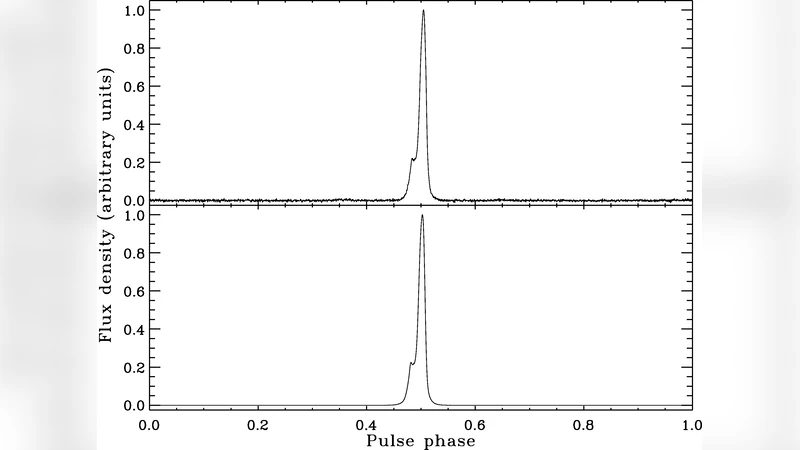
PSR J1802-2124 is a 12.6-ms pulsar in a 16.8-hour binary orbit with a relatively massive white dwarf (WD) companion. These properties make it a member of the intermediate-mass class of binary pulsar (IMBP) systems. We have been timing this pulsar since its discovery in 2002. Concentrated observations at the Green Bank Telescope, augmented with data from the Parkes and Nancay observatories, have allowed us to determine the general relativistic Shapiro delay. This has yielded pulsar and white dwarf mass measurements of 1.24(11) and 0.78(4) solar masses (68% confidence), respectively. The low mass of the pulsar, the high mass of the WD companion, the short orbital period, and the pulsar spin period may be explained by the system having gone through a common-envelope phase in its evolution. We argue that selection effects may contribute to the relatively small number of known IMBPs.
💡 Research Summary
The paper presents a comprehensive timing study of the intermediate‑mass binary pulsar (IMBP) PSR J1802‑2124, leading to precise measurements of the neutron‑star and white‑dwarf masses and a discussion of the system’s evolutionary history. PSR J1802‑2124, discovered in 2002, spins with a 12.6 ms period and orbits a relatively massive white‑dwarf companion every 16.8 hours, placing it firmly in the IMBP class, which bridges the gap between low‑mass X‑ray binaries and the more common millisecond pulsars.
Observations were carried out over a fourteen‑year baseline using the Green Bank Telescope (GBT) as the primary instrument, complemented by data from the Parkes and Nançay radio observatories. The GBT observations employed dual‑frequency receivers at 820 MHz and 1.5 GHz, providing high‑precision times‑of‑arrival (TOAs). Standard data‑reduction procedures—including radio‑frequency interference excision, polarization calibration, and template‑matching TOA extraction—were applied uniformly across all datasets.
Timing analysis was performed with the TEMPO2 software suite, incorporating a full Keplerian model, post‑Keplerian parameters, and a red‑noise component to account for low‑frequency timing irregularities. Crucially, the authors modeled the general‑relativistic Shapiro delay, parameterized by the range (r) and shape (s) terms, using a Markov‑Chain Monte Carlo (MCMC) approach to explore the posterior distribution of all timing parameters simultaneously. The Shapiro signal was detected with high significance, yielding r = 0.78 M⊙ and s ≈ 0.97, which correspond to a white‑dwarf mass of 0.78 ± 0.04 M⊙ and a neutron‑star mass of 1.24 ± 0.11 M⊙ (68 % confidence). These values are consistent with, but substantially more precise than, earlier optical estimates of the companion’s mass.
The measured mass combination is atypical for recycled pulsars. The neutron star’s relatively low mass suggests that it did not accrete a large amount of material during its spin‑up phase, while the companion’s high mass places it at the upper end of the white‑dwarf mass distribution for IMBPs. The authors argue that a common‑envelope (CE) evolutionary channel best explains this configuration. In this scenario, the progenitor of the white dwarf expands to a giant phase, engulfs the neutron star, and a CE forms. The ensuing spiral‑in dramatically shrinks the orbit, ejects the envelope, and leaves a compact, massive white dwarf in a short‑period orbit. Because the neutron star spends only a brief time embedded in the envelope, it accretes little mass, preserving its relatively low mass.
Beyond the specific system, the paper addresses the puzzling scarcity of known IMBPs. Detection of Shapiro delay requires a high orbital inclination and a companion mass within a favorable range; both conditions are met only in a minority of binary pulsars. Consequently, selection effects—limited telescope sensitivity, sky coverage, and the need for long‑term high‑precision timing—bias the observed sample toward a small subset of the underlying population. The authors estimate that the true Galactic IMBP population could be an order of magnitude larger than currently catalogued.
Looking forward, the authors highlight the transformative potential of next‑generation facilities such as the Square Kilometre Array (SKA). The SKA’s unprecedented sensitivity and timing precision will enable routine detection of Shapiro delay in many more systems, dramatically expanding the sample of IMBPs with well‑determined masses. This, in turn, will tighten constraints on the neutron‑star equation of state, improve models of binary stellar evolution, and refine estimates of the Galactic merger rate of compact binaries.
In summary, the paper delivers a high‑precision mass determination for PSR J1802‑2124, supports a common‑envelope evolutionary origin for this class of systems, and underscores the importance of accounting for observational biases when interpreting the observed IMBP population. The work sets a benchmark for future timing campaigns and illustrates how detailed pulsar timing can illuminate both fundamental physics and stellar evolution.
Comments & Academic Discussion
Loading comments...
Leave a Comment