Optical depths for gamma-rays in the radiation field of a star heated by external X-ray source in LMXBs: Application to Her X-1 and Sco X-1
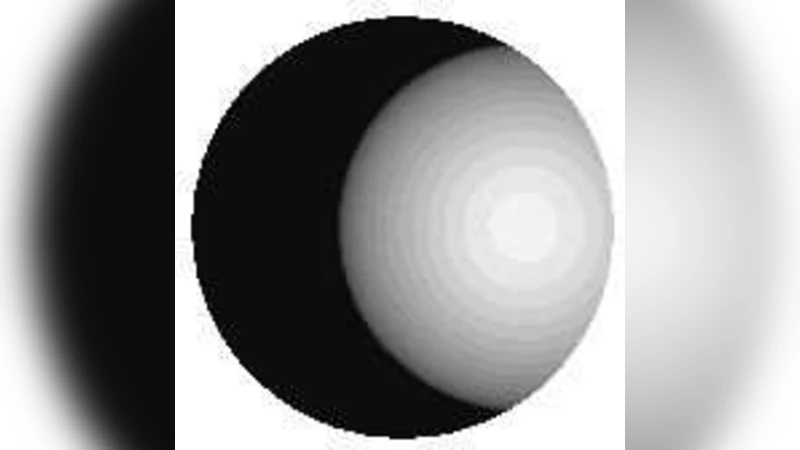
The surface of a low mass star inside a compact low mass X-ray binary system (LMXB) can be heated by the external X-ray source which may appear due to the accretion process onto a companion compact object (a neutron star or a black hole). As a result, the surface temperature of the star can become significantly higher than it is in the normal state resulting from thermonuclear burning. We wonder whether high energy electrons and gamma-rays, injected within the binary system, can efficiently interact with this enhanced radiation field. To decide this, we calculate the optical depths for the gamma-ray photons in the radiation field of such irradiated star as a function of the phase of the binary system. Based on these calculations, we conclude that compact low mass X-ray binary systems may also become sources of high energy gamma-rays since conditions for interaction of electrons and gamma-rays are quite similar to these ones observed within the high mass TeV gamma-ray binaries such as LS 5039 and LSI 303 +61. However, due to differences in the soft radiation field, the expected gamma-ray light curves can significantly differ between low mass and high mass X-ray binaries. As an example, we apply such calculations to two well known LMXBs: Her X-1 and Sco X-1. It is concluded that electrons accelerated to high energies inside these binaries should find enough soft photon target from the companion star for efficient gamma-ray production.
💡 Research Summary
This paper investigates whether low‑mass X‑ray binaries (LMXBs) can become sources of high‑energy gamma‑rays despite their companion stars having relatively low intrinsic temperatures. The authors propose that the intense X‑ray emission from the compact object (neutron star or black hole) can irradiate the surface of the low‑mass companion, heating it to temperatures of several × 10⁴ K—comparable to those of massive O/B stars in high‑mass gamma‑ray binaries.
A simple heating model is adopted: the X‑ray source is treated as a point source of luminosity L_X (typically 10^38 erg s⁻¹) located at a distance H from the centre of the companion star. All incident X‑ray power is assumed to be absorbed and re‑emitted as black‑body radiation. The resulting temperature distribution over the stellar surface, T(z), is derived analytically (Eq. 1) and depends on the geometry (distance H, angle β between the local surface normal and the direction to the X‑ray source) and on the stellar radius R_★. For H≈2 R_★ the surface temperature can reach 5–7 × 10⁴ K.
The core of the study is the calculation of the gamma‑ray optical depth τ for photon–photon pair production (γγ→e⁺e⁻) in this anisotropic, non‑uniform radiation field. Using the formalism originally developed by Bednarek (1997, 2000), the authors integrate the pair‑production cross‑section over the local photon density, taking into account the finite stellar radius, the temperature gradient, and the exact propagation path of the gamma‑ray. The optical depth depends on several parameters: the gamma‑ray energy E_γ, the injection distance R from the star, the injection angle α (relative to the line joining the star centre and the X‑ray source), and the propagation angle α_γ.
A systematic parameter study is performed for H = 1.5–3 R_★ and R = 1.5–3 R_★. The results show that for gamma‑ray energies between ~0.1 TeV and a few TeV, τ can exceed unity when the gamma‑ray is injected within roughly two stellar radii from the centre and propagates toward the heated hemisphere. τ is largest for small α (i.e., when the hot spot is viewed head‑on) and decreases sharply for larger α because the hot region is seen under a smaller solid angle. The optical depth also grows for smaller stellar radii at fixed H/R_★, because the X‑ray source is then closer to the surface, producing higher temperatures.
The authors then translate these generic results into predictions for two well‑studied LMXBs: Her X‑1 and Sco X‑1. Using realistic system parameters (stellar radius ≈ R_⊙, L_X ≈ 10^38 erg s⁻¹, H ≈ 2 R_★), they compute τ as a function of orbital phase. Both systems exhibit orbital phases where τ>1, implying that primary gamma‑rays would be absorbed and initiate electromagnetic cascades, while at opposite phases τ≪1 and gamma‑rays could escape. Consequently, the expected gamma‑ray light curves should display strong orbital modulation, markedly different from the smoother curves seen in high‑mass binaries.
The paper discusses the implications for particle acceleration. If electrons can be accelerated to multi‑TeV energies (by shocks in jets, pulsar wind interactions, or magnetospheric processes), inverse‑Compton scattering on the heated stellar photons will efficiently produce gamma‑rays. The presence of τ>1 regions ensures that a substantial fraction of the emitted power will be reprocessed into secondary gamma‑rays, potentially observable with current or next‑generation Cherenkov telescopes (e.g., CTA).
Limitations of the study are acknowledged: the heating model assumes complete absorption of X‑rays and pure black‑body re‑emission, neglecting atmospheric effects, scattering, and possible anisotropies in the X‑ray illumination. The electron acceleration mechanism is not modeled in detail, and the spatial distribution of the gamma‑ray source is simplified. Future work should incorporate 3‑D radiative transfer, more realistic stellar atmospheres, and compare model light curves with observations from Fermi‑LAT and upcoming TeV facilities.
In summary, the authors demonstrate that compact LMXBs can provide sufficient soft photon targets for efficient gamma‑ray production, and that their orbital geometry leads to pronounced phase‑dependent optical depths. This opens the possibility that LMXBs, previously thought unlikely gamma‑ray emitters, may be detectable as variable GeV–TeV sources with modern high‑energy observatories.
Comments & Academic Discussion
Loading comments...
Leave a Comment