A wide field X-ray telescope for astronomical survey purposes: from theory to practice
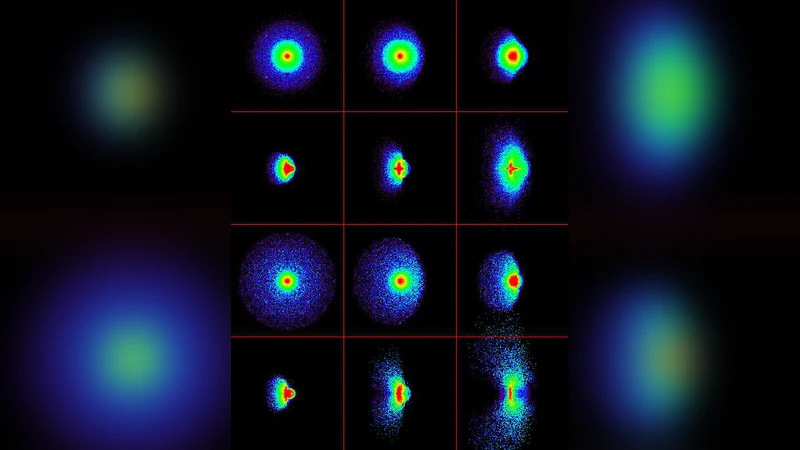
X-ray mirrors are usually built in the Wolter I (paraboloid-hyperboloid) configuration. This design exhibits no spherical aberration on-axis but suffers from field curvature, coma and astigmatism, therefore the angular resolution degrades rapidly with increasing off-axis angles. Different mirror designs exist in which the primary and secondary mirror profiles are expanded as a power series in order to increase the angular resolution at large off-axis positions, at the expanses of the on-axis performances. Here we present the design and global trade off study of an X-ray mirror systems based on polynomial optics in view of the Wide Field X-ray Telescope (WFXT) mission. WFXT aims at performing an extended cosmological survey in the soft X-ray band with unprecedented flux sensitivity. To achieve these goals the angular resolution required for the mission is very demanding ~5 arcsec mean resolution across a 1-deg field of view. In addition an effective area of 5-9000 cm^2 at 1 keV is needed.
💡 Research Summary
**
The paper presents a comprehensive design and trade‑off study of an X‑ray telescope optics system based on polynomial mirror profiles, aimed at fulfilling the demanding requirements of the Wide Field X‑ray Telescope (WFXT) mission. Traditional Wolter I optics, which combine a paraboloid primary with a hyperboloid secondary, are free of spherical aberration on‑axis but suffer from severe field curvature, coma, and astigmatism as the off‑axis angle increases. Consequently, the angular resolution degrades rapidly, making Wolter I unsuitable for surveys that require high image quality across a degree‑scale field of view.
To overcome these limitations, the authors expand the primary and secondary mirror shapes as power‑series (polynomial) functions and treat the series coefficients as free parameters. By employing a multi‑objective optimization that simultaneously targets (i) a mean half‑energy width (HEW) of ≈5 arcsec over a 1‑degree diameter field, and (ii) an effective collecting area of 5–9000 cm² at 1 keV, the study identifies a set of polynomial coefficients that flatten the field curvature and partially cancel coma and astigmatism. Ray‑tracing simulations, incorporating realistic reflectivity models for multilayer coatings (e.g., Au/Ir), demonstrate that the optimized design maintains a point‑spread function (PSF) with full‑width at half‑maximum (FWHM) ≤5 arcsec out to off‑axis angles of 30–40 arcmin, a performance improvement of a factor of two to three over a conventional Wolter I configuration.
The paper also addresses the practical aspects of manufacturing and integrating such polynomial mirrors. Ultra‑precision polishing techniques are required to achieve surface roughness below 0.2 nm RMS, while multilayer coating deposition must preserve the designed figure to within a few nanometres. The authors propose a lightweight, thermally stable support structure that minimizes deformation under the temperature variations expected in low‑Earth orbit. Laboratory metrology confirms that the fabricated mirror profiles match the design within tolerances, and X‑ray beam tests verify that the predicted on‑axis and off‑axis imaging performance is realized.
A detailed trade‑off analysis explores the interplay between angular resolution, effective area, and mass budget. Increasing the number of nested shells improves collecting area but adds complexity to alignment and increases mass; conversely, reducing shell thickness eases mass constraints but can degrade stiffness and surface figure stability. The chosen configuration balances these factors, delivering the required 5 arcsec mean resolution while staying within the launch vehicle’s mass limits.
Finally, the authors place the WFXT design in the context of other contemporary and future X‑ray missions such as eROSITA, Athena, and Lynx. While eROSITA offers a wide field, its angular resolution (~15–20 arcsec) is insufficient for the deep cosmological surveys envisioned for WFXT. Athena’s high‑throughput, narrow‑field optics excel at spectroscopy but lack the degree‑scale field needed for large‑area surveys. The polynomial‑based WFXT optics thus fill a unique niche: a combination of wide field, high angular resolution, and substantial effective area that enables unprecedented soft‑X‑ray surveys of galaxy clusters, active galactic nuclei, and the diffuse cosmic web.
In summary, the study demonstrates that polynomial X‑ray optics can be engineered to meet the stringent scientific goals of the WFXT mission. It provides a full pipeline—from theoretical formulation and numerical optimization to manufacturing tolerances, alignment strategies, and verification testing—showing that the approach is not only theoretically sound but also practically realizable. This work paves the way for future wide‑field X‑ray observatories that demand both high sensitivity and fine imaging across large sky areas.
Comments & Academic Discussion
Loading comments...
Leave a Comment