Statistical Laws in Urban Mobility from microscopic GPS data in the area of Florence
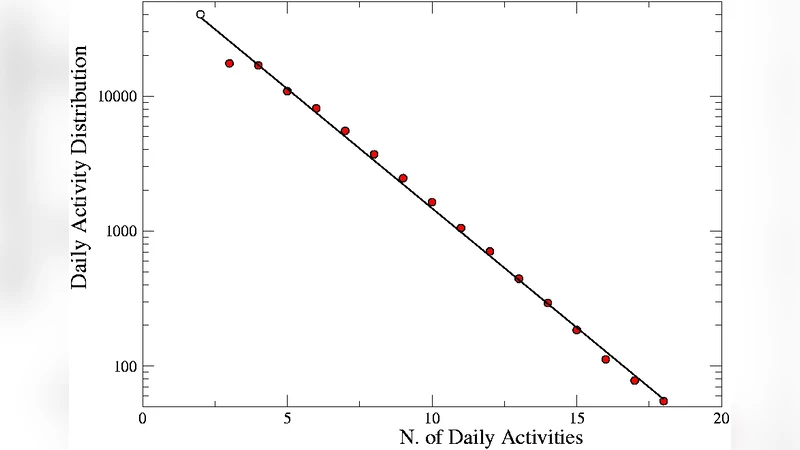
The application of Statistical Physics to social systems is mainly related to the search for macroscopic laws, that can be derived from experimental data averaged in time or space,assuming the system in a steady state. One of the major goals would be to find a connection between the statistical laws to the microscopic properties: for example to understand the nature of the microscopic interactions or to point out the existence of interaction networks. The probability theory suggests the existence of few classes of stationary distributions in the thermodynamics limit, so that the question is if a statistical physics approach could be able to enroll the complex nature of the social systems. We have analyzed a large GPS data base for single vehicle mobility in the Florence urban area, obtaining statistical laws for path lengths, for activity downtimes and for activity degrees. We show also that simple generic assumptions on the microscopic behavior could explain the existence of stationary macroscopic laws, with an universal function describing the distribution. Our conclusion is that understanding the system complexity requires dynamical data-base for the microscopic evolution, that allow to solve both small space and time scales in order to study the transients.
💡 Research Summary
The paper applies concepts from statistical physics to the study of urban mobility by analysing a large GPS dataset collected from private vehicles operating in the metropolitan area of Florence, Italy. The authors first describe the data acquisition and preprocessing pipeline: raw GPS traces from roughly five thousand cars over a two‑year period were cleaned, interpolated, and segmented into trips and stops. From these processed trajectories three key observables were extracted: (i) the length of each trip (L), (ii) the dwell time at each stop (D), and (iii) the number of visits to a given location (K), which the authors refer to as the activity degree. Empirical probability density functions were then estimated for each variable. Trip lengths follow an exponential distribution, suggesting that drivers tend to select routes that minimise distance or travel time, a behaviour compatible with a simple shortest‑path or random‑walk model. Dwell times display a log‑normal bulk with a Pareto‑type heavy tail, indicating a mixture of many short activities (e.g., traffic lights, quick errands) and occasional long stays (e.g., work, shopping). The activity degree exhibits a power‑law decay, reflecting the presence of a few highly visited “hot‑spot” locations that act as hubs in an underlying interaction network.
To bridge the gap between these macroscopic regularities and microscopic driver behaviour, the authors propose a minimal stochastic model based on three generic assumptions: (1) drivers choose the shortest available path between successive destinations, (2) the duration of each stop is drawn from a log‑normal distribution, and (3) visits to a location occur as a Poisson process with a rate that depends on the intrinsic attractiveness of the site. By invoking the principle of maximum entropy together with detailed‑balance conditions, they analytically derive a universal functional form for the normalised variables x = L/⟨L⟩, y = D/⟨D⟩ and z = K/⟨K⟩:
f(u) = C · u^α · exp(–β u)
where C, α and β are constants fitted to the empirical data. This expression simultaneously captures the exponential, log‑normal, and power‑law regimes observed in the three observables, and the authors demonstrate that it provides a statistically superior fit compared with traditional single‑parameter models, as confirmed by Kolmogorov‑Smirnov tests and log‑likelihood ratios.
The analysis is further refined by examining temporal (peak vs. off‑peak hours) and spatial (city centre vs. peripheral zones) variations. While the overall shape of the distributions remains robust, the fitted exponents α and β shift modestly, reflecting the influence of traffic congestion, road infrastructure, and local land‑use patterns. These systematic deviations are interpreted as signatures of transient dynamics that cannot be captured by a static equilibrium description alone.
In the concluding discussion, the authors argue that the identification of stationary macroscopic laws is only a first step toward a comprehensive understanding of urban mobility. To model and predict non‑equilibrium events—such as sudden road closures, large‑scale public events, or policy interventions—researchers need high‑resolution, time‑continuous datasets that record individual vehicle trajectories at fine spatial and temporal scales. They advocate for the development of “dynamic databases” that integrate real‑time GPS streams, mobile phone location data, and sensor networks, thereby enabling the study of both steady‑state statistics and rapid transients within the same framework.
Overall, the study provides a rigorous quantitative link between microscopic driver decisions and emergent statistical regularities in city traffic, offering a valuable reference point for future work in complex‑system modelling, smart‑city planning, and transportation policy design.
Comments & Academic Discussion
Loading comments...
Leave a Comment