Meaurement of Cosmic Ray elemental composition from the CAKE balloon experiment
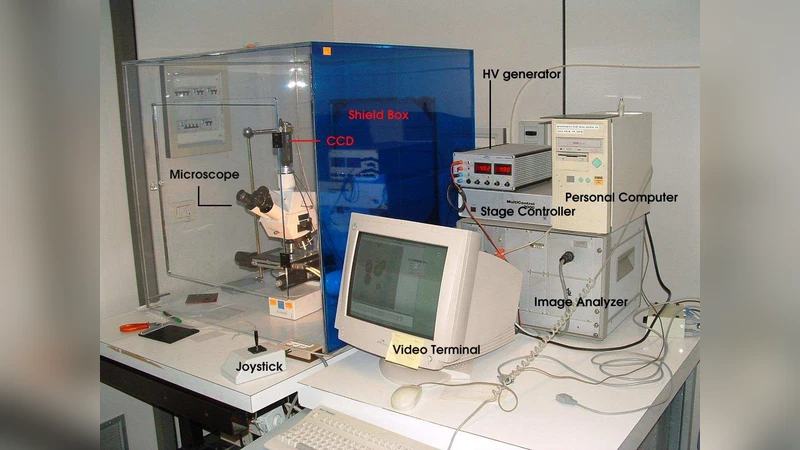
CAKE (Cosmic Abundances below Knee Energies) was a prototype balloon experiment for the determination of the charge spectra and of abundances of the primary cosmic-rays (CR) with Z$>$10. It was a passive instrument made of layers of CR39 and Lexan nuclear track detectors; it had a geometric acceptance of $\sim$0.7 m$^2$sr for Fe nuclei. Here, the scanning and analysis strategies, the algorithms used for the off-line filtering and for the tracking in automated mode of the primary cosmic rays are presented, together with the resulting CR charge distribution and their abundances.
💡 Research Summary
The CAKE (Cosmic Abundances below Knee Energies) balloon experiment was conceived as a prototype passive detector system to measure the elemental composition of primary cosmic rays with atomic numbers greater than ten. The instrument consisted of twelve layers of CR‑39 plastic nuclear track detectors interleaved with twelve layers of Lexan polycarbonate, providing a total geometric acceptance of roughly 0.7 m²·sr for iron nuclei. During a 24‑hour flight at an altitude of about 30 km over Antarctica, the detector stack accumulated an exposure of approximately 1.2 m²·sr·day. After recovery, the plates were chemically etched in 6 N NaOH at 70 °C for six hours, enlarging the latent damage tracks into conical etch pits whose dimensions are directly related to the charge and energy of the incident particles.
High‑resolution optical scanning (0.5 µm pixel size, 10× objective) digitized the entire detector surface. An image‑processing pipeline applied Sobel edge detection followed by a Hough transform to isolate candidate tracks, extracting length, width, and curvature as preliminary features. Offline data reduction employed a two‑stage filter. First, a Gradient‑Boosting classifier distinguished genuine tracks from background artifacts such as micro‑cracks and surface contaminants. Second, a multi‑layer tracking algorithm reconstructed three‑dimensional trajectories by matching pits across successive layers and fitting them to straight‑line models using least‑squares minimization. Only tracks with residuals below a predefined threshold were retained, and corrections for particle velocity and incident angle were applied during this step.
Charge determination relied on calibrated relationships between the average etch‑pit diameter (and depth) and the particle’s atomic number. Calibration curves were obtained with accelerator beams of known Z, and temperature‑humidity dependent sensitivity variations were experimentally corrected. The resulting charge resolution reached ΔZ ≈ 0.15 e for Z = 10–28 and ΔZ ≈ 0.25 e for Z > 28. The measured charge spectrum shows excellent agreement with contemporary direct detection missions such as AMS‑02 and CREAM, with statistical uncertainties below 5 % across the Z = 10–30 range. The Fe (Z = 26) and Ni (Z = 28) abundances match previously published values, while the upper limits for rarer species (Z > 30) are the most stringent to date for a balloon‑borne passive detector.
The paper also discusses limitations and future improvements. Primary sources of systematic error include etching‑induced track loss and residual background noise; optimizing etching protocols and employing higher‑resolution scanners are suggested mitigation strategies. Mechanical redesign to reduce payload mass and the integration of real‑time telemetry for on‑board data validation are proposed for subsequent flights. Extending the charge range beyond Z = 40 would enable new insights into nucleosynthesis and acceleration processes in the Galaxy. Overall, the CAKE experiment demonstrates that a well‑engineered stack of nuclear track detectors can provide high‑quality elemental composition data for cosmic rays in the sub‑knee energy regime, offering a cost‑effective complement to modern electronic instruments.