Non-parametric Deprojection of Surface Brightness Profiles of Galaxies in Generalised Geometries
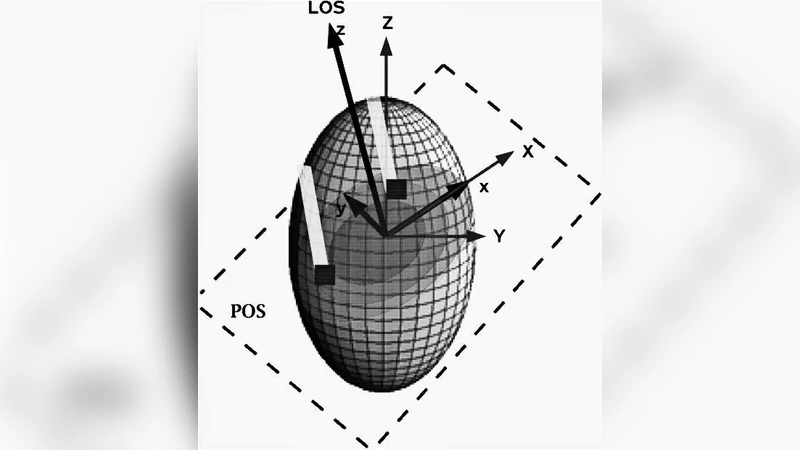
We present a new Bayesian non-parametric deprojection algorithm DOPING (Deprojection of Observed Photometry using and INverse Gambit), that is designed to extract 3-D luminosity density distributions $\rho$ from observed surface brightness maps $I$, in generalised geometries, while taking into account changes in intrinsic shape with radius, using a penalised likelihood approach and an MCMC optimiser. We provide the most likely solution to the integral equation that represents deprojection of the measured $I$ to $\rho$. In order to keep the solution modular, we choose to express $\rho$ as a function of the line-of-sight (LOS) coordinate $z$. We calculate the extent of the system along the ${\bf z}$-axis, for a given point on the image that lies within an identified isophotal annulus. The extent along the LOS is binned and density is held a constant over each such $z$-bin. The code begins with a seed density and at the beginning of an iterative step, the trial $\rho$ is updated. Comparison of the projection of the current choice of $\rho$ and the observed $I$ defines the likelihood function (which is supplemented by Laplacian regularisation), the maximal region of which is sought by the optimiser (Metropolis Hastings). The algorithm is successfully tested on a set of test galaxies, the morphology of which ranges from an elliptical galaxy with varying eccentricity to an infinitesimally thin disk galaxy marked by an abruptly varying eccentricity profile. Applications are made to faint dwarf elliptical galaxy Ic~3019 and another dwarf elliptical that is characterised by a central spheroidal nuclear component superimposed upon a more extended flattened component. The result of deprojection of the X-ray image of triaxial cluster A1413 is also presented.
💡 Research Summary
The paper introduces DOPING (Deprojection of Observed Photometry using and INverse Gambit), a Bayesian non‑parametric algorithm designed to recover three‑dimensional luminosity density distributions (ρ) from two‑dimensional surface‑brightness maps (I) in galaxies and clusters with arbitrary geometry. Traditional deprojection suffers from non‑uniqueness because the line‑of‑sight (LOS) integration that relates I to ρ is ill‑posed, especially when intrinsic shapes vary with radius. DOPING addresses this by parameterising ρ directly as a function of the LOS coordinate z, dividing the LOS extent for each image pixel (or isophotal annulus) into a set of bins and assuming a constant density within each bin.
The workflow begins with an initial seed density. In each iteration a trial density ρ′ is generated by perturbing the current density in the z‑bins. The trial density is projected back onto the image plane, producing a synthetic surface‑brightness map I′. The discrepancy between I′ and the observed I defines a likelihood term, while a Laplacian regularisation term penalises rapid spatial variations in ρ, enforcing smoothness. The total log‑posterior is
ln ℒ = −½ ∑
Comments & Academic Discussion
Loading comments...
Leave a Comment