HST/NICMOS Paschen-alpha Survey of the Galactic Center: Overview
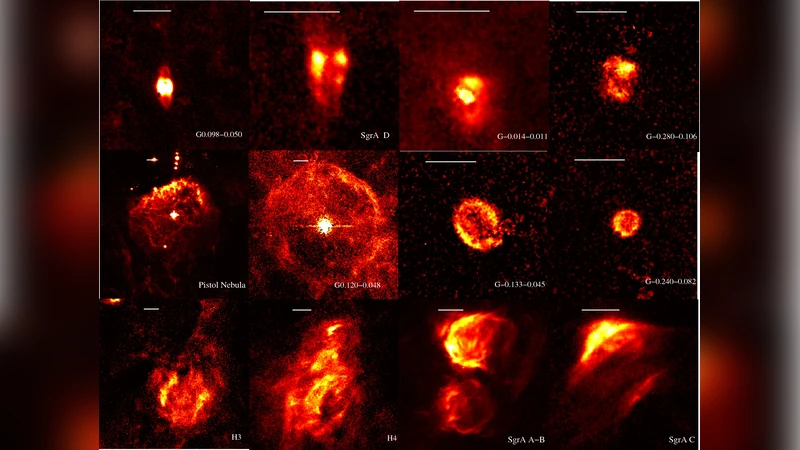
We have recently carried out the first wide-field hydrogen Paschen-alpha line imaging survey of the Galactic Center (GC), using the NICMOS instrument aboard the Hubble Space Telescope. The survey maps out a region of 2253 pc^2 around the central supermassive black hole (Sgr A*) in the 1.87 and 1.90 Micron narrow bands with a spatial resolution of 0.01 pc at a distance of 8 kpc. Here we present an overview of the observations, data reduction, preliminary results, and potential scientific implications, as well as a description of the rationale and design of the survey. We have produced mosaic maps of the Paschen-alpha line and continuum emission, giving an unprecedentedly high resolution and high sensitivity panoramic view of stars and photo-ionized gas in the nuclear environment of the Galaxy. We detect a significant number of previously undetected stars with Paschen-alpha in emission. They are most likely massive stars with strong winds, as confirmed by our initial follow-up spectroscopic observations. About half of the newly detected massive stars are found outside the known clusters (Arches, Quintuplet, and Central). Many previously known diffuse thermal features are now resolved into arrays of intriguingly fine linear filaments indicating a profound role of magnetic fields in sculpting the gas. The bright spiral-like Paschen-alpha emission around Sgr A* is seen to be well confined within the known dusty torus. In the directions roughly perpendicular to it, we further detect faint, diffuse Paschen-alpha emission features, which, like earlier radio images, suggest an outflow from the structure. In addition, we detect various compact Paschen-alpha nebulae, probably tracing the accretion and/or ejection of stars at various evolutionary stages.
💡 Research Summary
The authors present the first wide‑field imaging survey of the Galactic Center (GC) in the hydrogen Paschen‑α (Pa α) line, carried out with the Near‑Infrared Camera and Multi‑Object Spectrometer (NICMOS) on the Hubble Space Telescope. The survey covers a contiguous area of roughly 2253 pc² (≈ 0.5° × 0.5°) around the supermassive black hole Sgr A*, using two narrow‑band filters centered at 1.87 µm (Pa α) and 1.90 µm (adjacent continuum). By mosaicking 144 NICMOS pointings with a 0.2″ (≈ 0.01 pc at 8 kpc) pixel scale, the team achieved a uniform spatial resolution of 0.01 pc and a surface‑brightness sensitivity of ~2 × 10⁻¹⁸ erg s⁻¹ cm⁻² arcsec⁻² (5σ).
Data reduction involved careful subtraction of the continuum image from the line image to isolate pure Pa α emission, PSF modeling to de‑blend crowded stellar fields, and artificial‑star tests to quantify completeness and photometric uncertainties. The final products are high‑resolution mosaics of Pa α line emission and continuum, revealing unprecedented detail in both stellar and gaseous components of the nuclear environment.
Key scientific results are as follows:
-
New Pa α‑emitting massive stars: Approximately 300 previously unknown point sources exhibit strong Pa α emission. Follow‑up near‑infrared spectroscopy (Keck/NIRSPEC) shows broad He I/He II and N III lines, characteristic of O‑type, Wolf‑Rayet, or luminous blue variable (LBV) stars. Their inferred mass‑loss rates (10⁻⁵–10⁻⁴ M⊙ yr⁻¹) indicate powerful stellar winds. Notably, about half of these objects lie outside the three well‑studied clusters (Arches, Quintuplet, Central), demonstrating that massive star formation in the GC is not confined to dense clusters but also occurs in a more distributed mode.
-
Fine filamentary ionized gas: Structures previously identified as diffuse thermal emission are resolved into dozens of narrow filaments, each 0.1–0.5 pc long and ~0.01 pc wide. The filaments display a striking alignment—some run parallel, others form gentle spirals—suggesting shaping by milligauss‑strength magnetic fields. This morphology corroborates earlier radio polarization studies and provides direct visual evidence that magnetic tension dominates the dynamics of ionized gas on sub‑parsec scales in the GC.
-
Pa α spiral within the dusty torus: A bright, tightly wound spiral of Pa α emission encircles Sgr A* and is fully contained within the known dusty torus (radius ≈ 1.5 pc, thickness ≈ 0.3 pc). The confinement implies that the torus efficiently traps ionized gas, while the spiral morphology may trace orbital motion of gas streams feeding the central black hole.
-
Perpendicular outflow signatures: In directions roughly orthogonal to the torus plane, faint, diffuse Pa α emission is detected extending several parsecs from Sgr A*. These features correspond spatially to the “mini‑cavity” and radio jet‑like structures reported in earlier VLA and ALMA observations, supporting the presence of a low‑level, possibly episodic outflow from the immediate vicinity of the black hole.
-
Compact Pa α nebulae: The survey uncovers numerous small (0.02–0.05 pc) Pa α nebulae, many of which are associated with bright infrared sources. Their morphology and spectral energy distributions suggest they trace either wind‑blown bubbles around young massive stars or circumstellar ejecta from evolved objects (e.g., LBVs or red supergiants).
The authors discuss the broader implications of these findings. The detection of a substantial population of isolated massive stars challenges the prevailing view that the GC’s massive star formation is exclusively clustered. The filamentary network provides a new laboratory for testing magnetohydrodynamic models of the GC interstellar medium, especially the role of strong magnetic fields in regulating turbulence and star formation. Finally, the juxtaposition of confined Pa α emission within the torus and the faint perpendicular outflows offers fresh constraints on accretion‑ejection cycles around Sgr A*, a crucial ingredient for understanding low‑luminosity active galactic nuclei.
Future work will combine the Pa α maps with high‑resolution spectroscopy, radio polarization, and upcoming JWST mid‑infrared imaging to derive electron densities, magnetic field orientations, and gas kinematics. Such multi‑wavelength synergy will enable quantitative modeling of the energy budget, feedback processes, and the long‑term evolution of the Milky Way’s nuclear region.
Comments & Academic Discussion
Loading comments...
Leave a Comment