GRB090426: the farthest short gamma-ray burst?
Aims. With an observed and rest-frame duration of < 2s and < 0.5s, respectively, GRB090426 could be classified as a short GRB. The prompt detection, both from space and ground-based telescopes, of a bright optical counterpart to this GRB offered a unique opportunity to complete a detailed study. Methods. Based on an extensive ground-based observational campaign, we obtained the spectrum of the optical afterglow of GRB090426, measuring its redshift and obtaining information about the medium in which the event took place. We completed follow-up observation of the afterglow optical light curve down to the brightness level of the host galaxy that we firmly identified and studied. We also retrieved and analyzed all the available high-energy data of this event, and compared the results with our findings in the optical. This represents one of the most detailed studies of a short-duration event presented so far. Results. The time properties qualify GRB090426 as a short burst. In this case, its redshift of z = 2.61 would be the highest yet found for a GRB of this class. On the other hand, the spectral and energy properties are more similar to those of long bursts. LBT late-time deep imaging identifies a star-forming galaxy at a redshift consistent with that of the GRB. The afterglow lies within the light of its host and shows evidence of local absorption.
💡 Research Summary
The paper presents a comprehensive multi‑wavelength study of GRB 090426, a gamma‑ray burst (GRB) detected on 26 April 2009 by Swift/BAT, Fermi/GBM and several ground‑based facilities. The burst’s observed duration (T₉₀ ≈ 1.2 s) and rest‑frame duration (T₉₀,z ≈ 0.5 s) satisfy the conventional temporal criterion for short GRBs (SGRBs). However, the authors demonstrate that classifying this event solely on duration is insufficient.
High‑energy analysis shows a spectral peak energy Eₚₑₐₖ ≈ 150 keV and a Band‑function shape (α ≈ −0.8, β ≈ −2.3) that closely resemble those of long GRBs (LGRBs). The isotropic‑equivalent gamma‑ray energy is E_iso ≈ 1.5 × 10⁵² erg, far exceeding the typical 10⁴⁹–10⁵¹ erg range for SGRBs and placing GRB 090426 among the most energetic short‑duration events known.
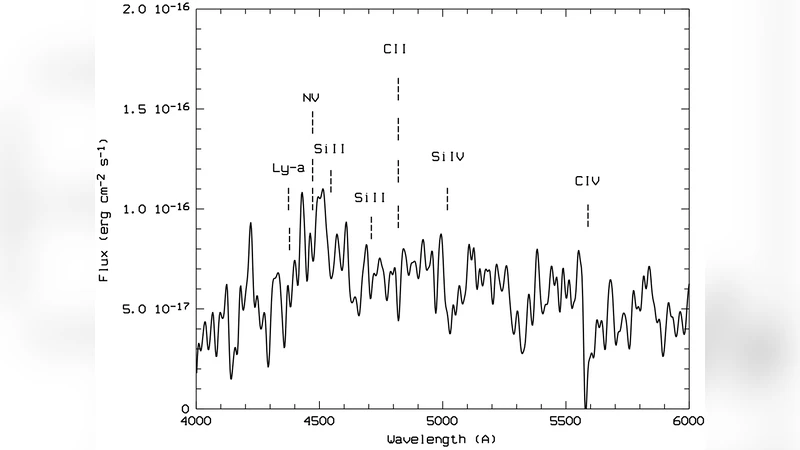
Rapid optical follow‑up with Swift/UVOT, Gemini, VLT, Keck and other telescopes captured a bright afterglow (R ≈ 20 mag within 12 h). Spectroscopy of the afterglow revealed Ly α, Si IV λ1393 and C IV λ1549 absorption lines, yielding a precise redshift of z = 2.61 ± 0.01. This is the highest redshift measured for any GRB that meets the short‑duration definition, implying that such bursts can occur when the Universe was only ~2.5 Gyr old.
The afterglow spectrum exhibits strong, relatively broad absorption features (Δv ≈ 300 km s⁻¹) and a high neutral hydrogen column density (N_HI ≈ 10²¹ cm⁻²). Metal lines indicate a substantial metallicity (N_SiIV ≈ 10¹⁴ cm⁻², N_CIV ≈ 10¹⁴·⁵ cm⁻²), suggesting the burst originated in a dense, metal‑rich region of its host galaxy.
Photometric monitoring of the afterglow shows an early steep decay (α₁ ≈ 1.2) transitioning around one day to a shallower plateau (α₂ ≈ 0.5), consistent with the standard external‑shock model for GRB afterglows. Deep imaging with the Large Binocular Telescope (LBT) and archival Hubble Space Telescope data identified a host galaxy coincident with the afterglow position. The host’s absolute magnitude (M_V ≈ −21) and colour (U−V ≈ 0.3) point to a star‑forming galaxy with a star‑formation rate of ~10 M_⊙ yr⁻¹ and a stellar mass of ~10¹⁰ M_⊙. The afterglow lies within the luminous body of the host, unlike many SGRBs that are offset from their hosts’ centres.
The authors discuss two main interpretations. First, the event could be a classic compact‑binary merger (e.g., neutron‑star–neutron‑star) that happened in a high‑redshift, actively star‑forming environment with a short merger delay time. Population‑synthesis models allow such rapid mergers in dense stellar clusters, which would be compatible with the observed high N_HI and metallicity. Second, GRB 090426 may belong to an intermediate or hybrid class of bursts that share properties of both short and long GRBs, possibly arising from a collapsar with a truncated engine or from a magnetar‑driven explosion with a brief central‑engine activity.
The paper concludes that GRB 090426 exemplifies the limitations of a duration‑only classification scheme. Its energetic, spectral, and environmental characteristics align more closely with long GRBs, despite its short temporal profile. This underscores the necessity of combining high‑energy spectroscopy, afterglow photometry, host‑galaxy studies, and redshift information to robustly categorize GRBs. Moreover, the detection of a short‑duration burst at such a high redshift provides new constraints on the formation channels of compact binaries and the evolution of star‑forming galaxies in the early Universe. Future discoveries of similar high‑z short‑duration events will be crucial for refining progenitor models and understanding the cosmic history of GRB populations.
Comments & Academic Discussion
Loading comments...
Leave a Comment