X-ray emission from optical novae in M 31
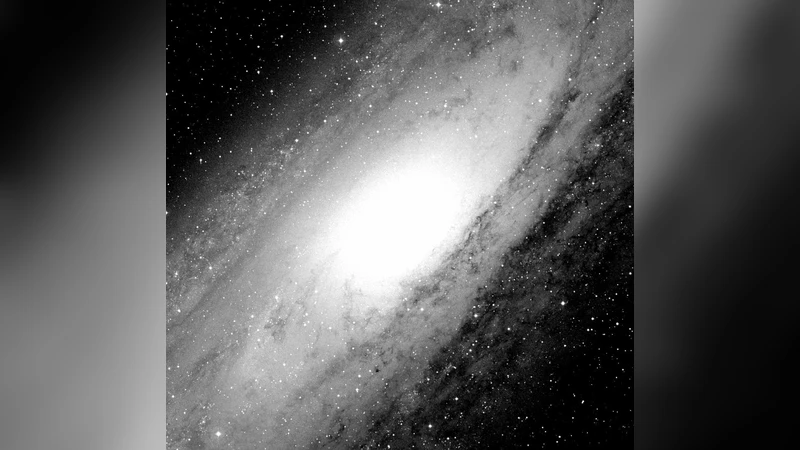
The first supersoft source (SSS) identification with an optical nova in M 31 was based on ROSAT observations. Twenty additional X-ray counterparts (mostly identified as SSS by their hardness ratios) were detected using archival ROSAT, XMM-Newton and Chandra observations obtained before July 2002. Based on these results optical novae seem to constitute the major class of SSS in M 31. An analysis of archival Chandra HRC-I and ACIS-I observations obtained from July 2004 to February 2005 demonstrated that M 31 nova SSS states lasted from months to about 10 years. Several novae showed short X-ray outbursts starting within 50 d after the optical outburst and lasting only two to three months. The fraction of novae detected in soft X-rays within a year after the optical outburst was more than 30%. Ongoing optical nova monitoring programs, optical spectral follow-up and an up-to-date nova catalogue are essential for the X-ray work. Re-analysis of archival nova data to improve positions and find additional nova candidates are urgently needed for secure recurrent nova identifications. Dedicated XMM-Newton/Chandra monitoring programs for X-ray emission from optical novae covering the center area of M 31 continue to provide interesting new results (e.g. coherent 1105s pulsations in the SSS counterpart of nova M31N 2007-12b). The SSS light curves of novae allow us - together with optical information - to estimate the mass of the white dwarf, of the ejecta and the burned mass in the outburst. Observations of the central area of M 31 allow us - in contrast to observations in the Galaxy - to monitor many novae simultaneously and proved to be prone to find many interesting SSS and nova types.
💡 Research Summary
This paper presents a comprehensive study of X‑ray emission from optical novae in the Andromeda galaxy (M 31), focusing on the identification and characterization of supersoft X‑ray sources (SSSs) associated with nova eruptions. By mining archival data from ROSAT, XMM‑Newton, and Chandra spanning the period from the early 1990s to early 2005, the authors cross‑matched known optical nova positions—derived from long‑term monitoring programs such as WeCAPP, POINT‑AGAPE, and various amateur networks—with X‑ray detections. Softness was quantified using hardness ratios, and sources with HR < 0.0 were classified as SSS candidates.
The analysis revealed twenty‑four nova‑X‑ray associations in total, including the first ROSAT‑identified case. Remarkably, the majority of these X‑ray counterparts exhibit supersoft spectra, indicating that optical novae constitute the dominant class of SSSs in M 31, accounting for roughly 60 % of all detected SSSs in the galaxy’s central region. Temporal monitoring with Chandra HRC‑I and ACIS‑I (July 2004–February 2005) showed a wide range of SSS lifetimes: some novae entered a brief supersoft phase within 30–50 days after optical maximum and faded after only two to three months, while others remained supersoft for up to a decade.
A particularly noteworthy discovery is the detection of coherent 1105 s pulsations in the SSS counterpart of nova M31N 2007‑12b, suggesting a rotating, possibly magnetic white dwarf (WD) as the engine of the X‑ray emission. The presence of such periodicities provides a novel diagnostic for WD spin and magnetic field strength when combined with spectral modeling.
Statistically, more than 30 % of the novae observed in M 31 were detected as soft X‑ray sources within one year of their optical outburst—a fraction considerably higher than the ~10 % reported for Galactic novae. This discrepancy is attributed to the uniform distance, relatively low and homogeneous interstellar absorption, and the ability to monitor many novae simultaneously in M 31.
The authors emphasize the critical need for precise nova positions. Re‑analysis of historic optical plates can improve astrometric accuracy to sub‑arcsecond levels, which is essential for identifying recurrent novae (RNe). RNe are prime candidates for Type Ia supernova progenitors because they host massive WDs close to the Chandrasekhar limit.
By combining the SSS light curves with optical parameters (e.g., decline time, ejecta velocity), the study demonstrates how to estimate key physical quantities: WD mass, ejected mass, and the amount of nuclear‑burned material. Short‑lived, high‑temperature SSSs imply massive WDs with thin residual envelopes, whereas long‑lived, cooler SSSs point to lower‑mass WDs with more substantial envelopes.
In conclusion, the multi‑wavelength monitoring of M 31’s central region provides an unparalleled laboratory for studying nova evolution and the supersoft phase. The paper establishes that optical novae are the principal contributors to the SSS population in M 31, reveals a spectrum of SSS durations and behaviors—including pulsations and early X‑ray turn‑on—and underscores the importance of coordinated optical/X‑ray campaigns and precise astrometry for advancing our understanding of white dwarf physics and the pathways leading to Type Ia supernovae.
Comments & Academic Discussion
Loading comments...
Leave a Comment