The SXI telescope on board EXIST: scientific performances
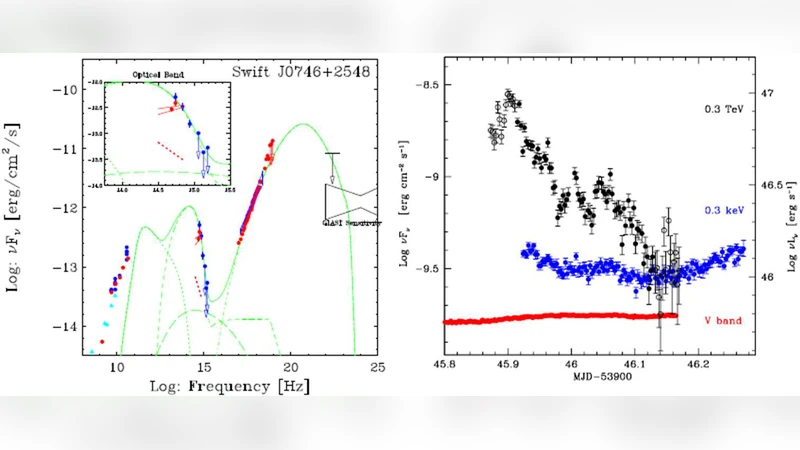
The SXI telescope is one of the three instruments on board EXIST, a multiwavelength observatory in charge of performing a global survey of the sky in hard X-rays searching for Supermassive Black Holes. One of the primary objectives of EXIST is also to study with unprecedented sensitivity the most unknown high energy sources in the Universe, like high redshift GRBs, which will be pointed promptly by the Spacecraft by autonomous trigger based on hard X-ray localization on board. The recent addition of a soft X-ray telescope to the EXIST payload complement, with an effective area of ~950 cm2 in the energy band 0.2-3 keV and extended response up to 10 keV will allow to make broadband studies from 0.1 to 600 keV. In particular, investigations of the spectra components and states of AGNs and monitoring of variability of sources, study of the prompt and afterglow emission of GRBs since the early phases, which will help to constrain the emission models and finally, help the identification of sources in the EXIST hard X-ray survey and the characterization of the transient events detected. SXI will also perform surveys: a scanning survey with sky coverage of about 2pi and limiting flux of 5x10^{-14}cgs plus other serendipitous. We give an overview of the SXI scientific performance and also describe the status of its design emphasizing how it has been derived by the scientific requirements.
💡 Research Summary
The paper presents a comprehensive overview of the Soft X‑ray Imager (SXI) that will be mounted on the proposed Energetic X‑ray Imaging Survey Telescope (EXIST) mission. EXIST is a multi‑wavelength observatory designed to conduct an all‑sky survey in hard X‑rays (5–600 keV) with the High‑Energy Telescope (HET) while simultaneously providing coverage at softer energies through SXI (0.2–10 keV) and an infrared/optical telescope (IOT). SXI’s primary technical specifications include an effective collecting area of approximately 950 cm² in the 0.2–3 keV band, an extended response up to 10 keV, an energy resolution better than 0.1 keV, and a point‑spread function delivering sub‑arcsecond localization (≈1″). The detector is a low‑temperature (−120 °C) CCD array with modular replaceable units, designed to suppress dark current and radiation‑induced degradation. Background mitigation is achieved through a combination of optical blocking filters, graded shielding, and an optimized focal‑plane geometry, resulting in a background rate of order 10⁻⁴ counts s⁻¹ keV⁻¹.
Two operational modes are defined. In the scanning mode, the spacecraft’s spin‑stabilized orbit enables continuous sky coverage of roughly 2π steradians over a six‑month period, with an average exposure per sky element of ~200 s. This mode yields a limiting sensitivity of 5 × 10⁻¹⁴ erg cm⁻² s⁻¹ (0.5–2 keV) for a 5σ detection, sufficient to detect thousands of previously unknown faint sources and to provide rapid identification of hard‑X‑ray detections made by HET. In the pointing mode, triggered autonomously by HET’s hard‑X‑ray transient localizations, SXI can slew to the target within seconds, delivering high‑throughput, high‑resolution spectra and precise positions for the early afterglow of gamma‑ray bursts (GRBs) and for variable active galactic nuclei (AGNs). The fast response (≤1 s) and the broad energy coverage enable simultaneous measurement of thermal and non‑thermal components, allowing direct tests of emission models such as synchrotron self‑Compton in GRBs or reflection‑dominated spectra in heavily absorbed AGNs.
The scientific drivers are fourfold. First, SXI will provide the soft‑X‑ray counterpart for the hard‑X‑ray sources discovered by HET, dramatically improving source classification, redshift estimation, and population studies of supermassive black holes. Second, it will enable detailed spectral decomposition of AGNs, measuring column densities from 10²¹ to >10²⁴ cm⁻² with ≤10 % uncertainty, detecting Fe Kα line profiles, and tracking state transitions on timescales of hours to days. Third, SXI’s capability to observe GRB prompt emission down to 0.1 keV within seconds of trigger will capture the earliest thermal photospheric signatures and the onset of high‑energy afterglow, constraining jet composition and radiation mechanisms. Fourth, the scanning survey will generate a serendipitous catalog of faint, transient, and variable sources, expanding the known soft‑X‑ray sky and providing targets for follow‑up with IOT and ground‑based facilities.
Simulation results indicate that a 10 ks exposure yields a 5σ detection limit of ~10⁻¹⁴ erg cm⁻² s⁻¹ in the 0.5–2 keV band, and that spectral fitting of AGN models can recover key parameters (photon index, absorption, reflection fraction) with high fidelity. For GRBs, time‑resolved spectroscopy with sub‑second bins can differentiate between blackbody and power‑law components, offering a direct probe of the jet photosphere. The paper concludes that SXI’s design, derived directly from these scientific requirements, positions EXIST to achieve unprecedented sensitivity and temporal coverage across the 0.1–600 keV range, opening a new window on the high‑energy universe and enabling transformative studies of black hole growth, transient phenomena, and the physics of extreme environments.
Comments & Academic Discussion
Loading comments...
Leave a Comment