Cloudbus Toolkit for Market-Oriented Cloud Computing
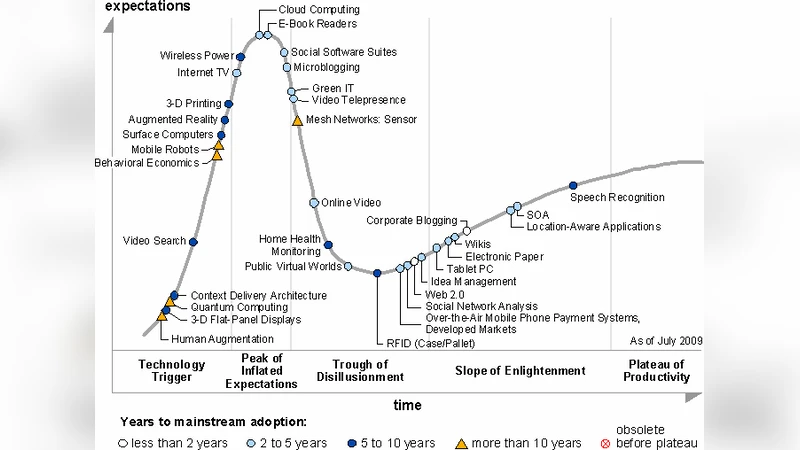
This keynote paper: (1) presents the 21st century vision of computing and identifies various IT paradigms promising to deliver computing as a utility; (2) defines the architecture for creating market-oriented Clouds and computing atmosphere by leveraging technologies such as virtual machines; (3) provides thoughts on market-based resource management strategies that encompass both customer-driven service management and computational risk management to sustain SLA-oriented resource allocation; (4) presents the work carried out as part of our new Cloud Computing initiative, called Cloudbus: (i) Aneka, a Platform as a Service software system containing SDK (Software Development Kit) for construction of Cloud applications and deployment on private or public Clouds, in addition to supporting market-oriented resource management; (ii) internetworking of Clouds for dynamic creation of federated computing environments for scaling of elastic applications; (iii) creation of 3rd party Cloud brokering services for building content delivery networks and e-Science applications and their deployment on capabilities of IaaS providers such as Amazon along with Grid mashups; (iv) CloudSim supporting modelling and simulation of Clouds for performance studies; (v) Energy Efficient Resource Allocation Mechanisms and Techniques for creation and management of Green Clouds; and (vi) pathways for future research.
💡 Research Summary
The paper outlines a forward‑looking vision of “computing as a utility” for the 21st century and proposes a comprehensive, market‑oriented cloud architecture that leverages virtualization, dynamic pricing, and risk‑aware resource management. It begins by surveying contemporary IT paradigms—cloud, grid, utility computing, and the Internet of Things—and argues that virtual machines provide the essential abstraction layer that enables on‑demand, pay‑as‑you‑go consumption of compute resources.
Two complementary pillars form the core of the proposed market‑driven architecture. The first pillar, Customer‑Driven Service Management, allows users to express quality expectations through Service Level Agreements (SLAs) covering latency, availability, and cost. An SLA‑aware scheduler then maps these constraints to concrete resource allocations, automatically adjusting prices, priorities, and scaling actions to meet the agreed‑upon service levels. The second pillar, Computational Risk Management, equips cloud providers with quantitative models of demand volatility, price fluctuations, and potential service disruptions. By treating resource provisioning as a portfolio‑optimization problem, providers can hedge against uncertainty, maintain profitability, and honor SLAs even under volatile market conditions.
The Cloudbus initiative operationalizes these concepts through a suite of integrated tools and platforms:
-
Aneka – a .NET‑based Platform‑as‑a‑Service (PaaS) that supplies a rich SDK for building applications using diverse programming models (MapReduce, workflow, parallel loops, etc.). Aneka can deploy workloads on private clouds or public IaaS providers such as Amazon EC2, and it embeds market‑based scheduling and pricing mechanisms so that developers receive cost‑optimal resource assignments without manual tuning.
-
Internetworking of Clouds – a federation layer that dynamically interconnects heterogeneous IaaS clouds. Standardized APIs, a metadata registry, and a lightweight discovery‑reservation‑transfer protocol enable automatic scaling across provider boundaries when workload spikes exceed the capacity of a single cloud. This eliminates vendor lock‑in and creates a globally elastic compute fabric.
-
Cloud Brokerage Services – third‑party brokers that match user requirements (latency, budget, data‑sovereignty) with the most suitable combination of IaaS, grid, and specialized resources. The broker can orchestrate hybrid deployments such as content‑delivery networks that span multiple data centers, thereby simplifying the complexity of multi‑cloud management for end‑users.
-
CloudSim – a modular simulation framework that models data‑center hardware, virtualization overhead, network topology, and energy consumption. Researchers can evaluate new scheduling algorithms, pricing policies, or SLA enforcement strategies in a controlled environment before deploying them in production, thus reducing risk and accelerating innovation.
-
Energy‑Efficient Resource Allocation Mechanisms – a “green cloud” component that integrates dynamic voltage and frequency scaling (DVFS) with workload consolidation heuristics. By formulating a multi‑objective optimization problem that minimizes power usage while respecting SLA constraints, the system can achieve substantial reductions in operational electricity costs without compromising performance.
The paper also describes an end‑to‑end workflow: developers write applications with the Aneka SDK, specify SLA and budget constraints, and submit the job to a broker. The broker discovers a suitable federation of clouds, triggers the market‑aware scheduler, and optionally runs a CloudSim pre‑analysis to predict performance and cost. During execution, continuous SLA monitoring and risk‑management modules adjust pricing or re‑allocate resources in response to anomalies, ensuring both user satisfaction and provider profitability.
Finally, the authors identify several promising research directions: (i) advanced multi‑objective SLA optimization algorithms, (ii) blockchain‑based transparent accounting for cloud transactions, (iii) tighter integration with edge‑computing resources, (iv) AI‑driven demand forecasting to improve market predictions, and (v) participation in international standardization efforts to guarantee interoperability across heterogeneous clouds. Collectively, these efforts aim to mature the market‑oriented cloud ecosystem into a truly utility‑grade computing platform that is economically efficient, reliable, and environmentally sustainable.
Comments & Academic Discussion
Loading comments...
Leave a Comment