Why are there strong radio AGNs in the center of "non-cool core" clusters?
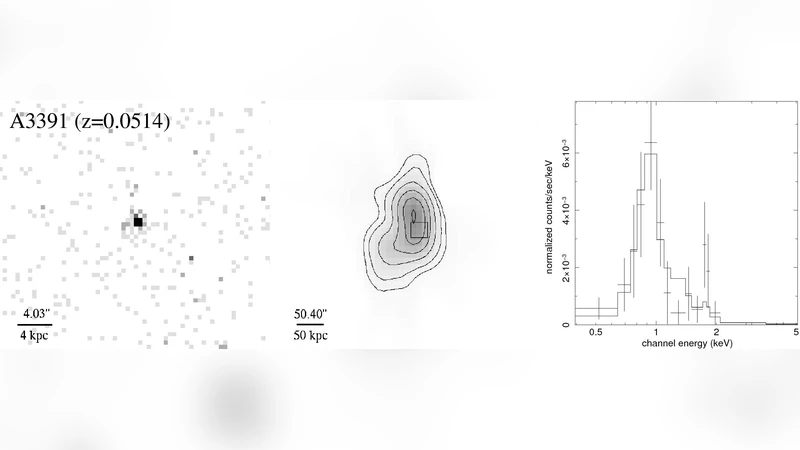
Radio AGN feedback in X-ray cool cores has been proposed as a crucial ingredient in the evolution of baryonic structures. However, it has long been known that strong radio AGNs also exist in “noncool core” clusters, which brings up the question whether an X-ray cool core is always required for radio feedback. We present a systematic analysis of 152 groups and clusters to show that every BCG with a strong radio AGN has an X-ray cool core. Those strong radio AGNs in the center of the “noncool core” systems identified before are in fact associated with small X-ray cool cores with typical radii of < 5 kpc (we call them coronae). Small coronae are most likely of ISM origin and they carry enough fuel to power radio AGNs. Our results suggest that the traditional cool core/noncool core dichotomy is too simple. A better alternative is the cool core distribution function with the enclosed X-ray luminosity. Other implications of our results are also discussed, including a warning on the simple extrapolation of the density profile to derive Bondi accretion rate.
💡 Research Summary
This paper addresses a long‑standing puzzle in extragalactic astrophysics: strong radio‑loud active galactic nuclei (AGNs) are frequently observed in the brightest cluster galaxies (BCGs) of clusters that have been classified as “non‑cool‑core” systems. Conventional models of AGN feedback assume that a dense, centrally peaked X‑ray cool core is a prerequisite for sustaining powerful radio jets, yet numerous exceptions have been reported. To resolve this apparent contradiction, the authors performed a systematic, homogeneous analysis of 152 galaxy groups and clusters using archival Chandra X‑ray observations combined with radio data from the VLA, GMRT, and other facilities.
The methodology involved (1) identifying BCGs that host strong radio AGNs, defined as having a 1.4 GHz radio power >10^24 W Hz⁻¹; (2) extracting high‑resolution surface‑brightness profiles for each BCG’s X‑ray emission; (3) fitting these profiles with multi‑component β‑models to separate any central excess from the surrounding intracluster medium (ICM); and (4) measuring key physical parameters of any detected central component—radius, electron density, temperature, and X‑ray luminosity (L_X). The authors also estimated Bondi accretion rates using the measured central densities and temperatures, and compared these rates with the mechanical power inferred from the radio jets.
The principal findings are strikingly clear: every BCG that hosts a strong radio AGN possesses an X‑ray cool core of some kind. In clusters previously labeled “non‑cool‑core,” the authors discovered compact cool cores—referred to as “coronae”—with typical radii ≤5 kpc and X‑ray luminosities in the range 10^41–10^43 erg s⁻¹. These coronae are distinct from the large‑scale cool cores (r ≳ 30 kpc, L_X ≳ 10^44 erg s⁻¹) that dominate the classic cool‑core classification. Spectral analysis indicates that the coronae are composed of high‑density, high‑temperature gas of interstellar origin, likely supplied by stellar mass loss and supernova heating within the BCG itself. Their central electron densities (≈0.1–0.5 cm⁻³) and temperatures (≈1 keV) are sufficient to provide Bondi accretion rates of ≈10⁻³–10⁻² M_⊙ yr⁻¹, more than enough to power the observed radio jets.
A critical methodological insight emerges from the Bondi‑rate calculations. The authors demonstrate that naïvely extrapolating the large‑scale ICM density profile inward (using a simple β‑model) can dramatically overestimate the true accretion rate at the black hole’s sphere of influence. Because the density profile steepens sharply inside the corona, a direct measurement of the central density is essential; otherwise, the inferred Bondi power can exceed the jet power by orders of magnitude, leading to misleading conclusions about the fueling mechanism.
Beyond the specific case of radio‑loud BCGs, the paper argues that the traditional binary classification of clusters into “cool‑core” and “non‑cool‑core” is overly simplistic. The authors propose a more nuanced “cool‑core distribution function,” which treats the enclosed X‑ray luminosity (or equivalently, the integrated gas mass within a given radius) as a continuous variable. In this framework, large cool cores, modest mini‑cool cores, and the newly identified coronae all occupy different regions of a single distribution, reflecting a spectrum of thermodynamic states rather than a dichotomy. This perspective has important implications for models of cluster evolution, AGN heating cycles, and the interpretation of scaling relations such as L_X–T and Y_X–M.
The discussion also touches on several broader implications. First, the presence of coronae implies that AGN feedback can be sustained even in systems where the ICM is not centrally cooling, because the BCG’s own interstellar medium supplies the requisite fuel. Second, the coronae may be transient structures, potentially disrupted by major mergers or strong AGN outbursts, suggesting a dynamic interplay between galaxy‑scale and cluster‑scale processes. Third, the authors caution that future studies estimating Bondi accretion rates must rely on high‑resolution X‑ray data capable of resolving the innermost few kiloparsecs, or else adopt physically motivated models that account for the steep density gradient.
In summary, the paper provides compelling observational evidence that strong radio AGNs are never truly “hosted” by clusters lacking a cool core; instead, they are always associated with a compact X‑ray corona that can be regarded as a miniature cool core of interstellar origin. This finding refines our understanding of AGN fueling, challenges the conventional cool‑core/non‑cool‑core taxonomy, and underscores the necessity of high‑resolution X‑ray observations for accurate assessments of black‑hole accretion in massive halos.
Comments & Academic Discussion
Loading comments...
Leave a Comment