Observing Ultra High Energy Cosmic Particles from Space: SEUSO, the Super Extreme Universe Space Observatory Mission
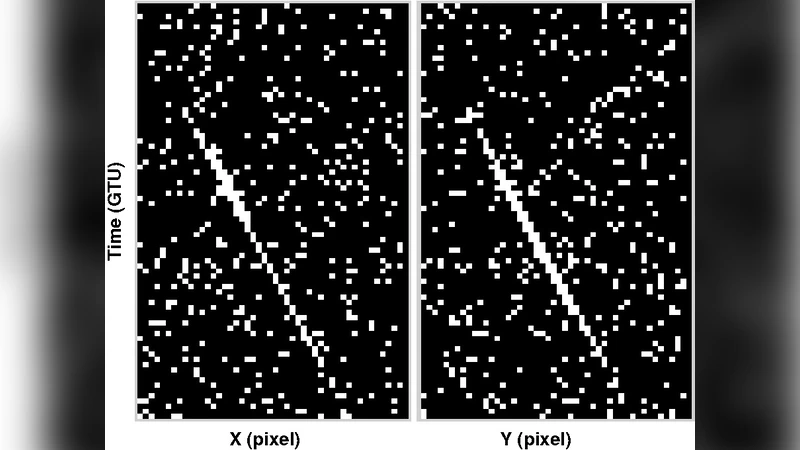
The experimental search for ultra high energy cosmic messengers, from $E\sim 10^{19}$ eV to beyond $E\sim 10^{20}$ eV, at the very end of the known energy spectrum, constitutes an extraordinary opportunity to explore a largely unknown aspect of our universe. Key scientific goals are the identification of the sources of ultra high energy particles, the measurement of their spectra and the study of galactic and local intergalactic magnetic fields. Ultra high energy particles might, also, carry evidence of unknown physics or of exotic particles relics of the early universe. To meet this challenge a significant increase in the integrated exposure is required. This implies a new class of experiments with larger acceptances and good understanding of the systematic uncertainties. Space based observatories can reach the instantaneous aperture and the integrated exposure necessary to systematically explore the ultra high energy universe. In this paper, after briefly summarising the science case of the mission, we describe the scientific goals and requirements of the SEUSO concept. We then introduce the SEUSO observational approach and describe the main instrument and mission features. We conclude discussing the expected performance of the mission.
💡 Research Summary
The paper presents the concept, scientific motivations, design, and expected performance of the Super Extreme Universe Space Observatory (SEUSO), a space‑based mission dedicated to the detection of ultra‑high‑energy cosmic particles (UHECP) in the energy range from ~10¹⁹ eV up to and beyond 10²⁰ eV. Current ground‑based observatories such as the Pierre Auger Observatory and Telescope Array have provided valuable data on the spectrum and anisotropy of ultra‑high‑energy cosmic rays (UHECRs), but their exposure is limited by the finite area of the Earth’s surface that can be instrumented and by duty‑cycle constraints. Consequently, the number of events above 10²⁰ eV remains extremely low, preventing definitive identification of sources, precise measurement of the GZK cutoff, and robust studies of magnetic‑field‑induced deflections. SEUSO is proposed to overcome these limitations by moving the detector to low‑Earth orbit, where a single instrument can monitor a vast fraction of the planet’s atmosphere continuously, achieving an integrated exposure of order 2 × 10⁵ km²·sr·yr per year—an order of magnitude larger than any existing ground array.
Scientific objectives are fourfold: (1) pinpoint the astrophysical sources of UHECRs and measure their energy spectra with ΔE/E ≈ 20 % and angular resolution ≤1°, (2) probe Galactic and intergalactic magnetic fields through the observed deflection patterns of charged particles, (3) search for ultra‑high‑energy neutrinos and gamma rays that would signal exotic physics such as super‑massive particle decay or top‑down scenarios, and (4) refine our understanding of the interaction of cosmic rays with background photon fields (CMB, infrared) by precisely locating the GZK suppression. Achieving these goals requires a detector capable of capturing both the nitrogen fluorescence (300–400 nm) generated by extensive air showers and the Cherenkov light emitted by the relativistic particle cascade.
The observational approach relies on a wide‑field ultraviolet/optical telescope mounted on a satellite in a near‑circular orbit at ~500 km altitude with an inclination of ~97.5°. The optical system features a multi‑mirror assembly with an effective aperture of ~5 m and a field‑of‑view exceeding 30°, enabling coverage of a ground footprint of several hundred thousand square kilometres at any instant. The focal plane is populated by high‑gain micro‑channel plate (MCP) photomultipliers coupled to fast ASIC readout electronics. Each pixel provides sub‑nanosecond timing and sub‑0.1° angular granularity, allowing reconstruction of the shower geometry and energy from the temporal and spatial development of the fluorescence track, while the Cherenkov component assists in particle‑type discrimination.
To control systematic uncertainties, SEUSO incorporates auxiliary sensors (lidar, infrared cloud imager, atmospheric radio sounder) that continuously monitor atmospheric transparency, cloud coverage, and aerosol content. On‑board calibration sources (UV LEDs and stellar references) are used to track the optical throughput and detector gain over the mission lifetime. Data are compressed on board and transmitted to ground stations via high‑rate laser communication links, ensuring that the large volume of triggered events (thousands per second) can be handled without excessive latency.
Performance simulations indicate that, over a nominal three‑year mission, SEUSO would detect on the order of 30–50 events above 10²⁰ eV per year, providing a statistically robust sample for anisotropy studies. The angular resolution of ≤1° will allow correlation with known astrophysical objects (active galactic nuclei, starburst galaxies, galaxy clusters), while the energy resolution will enable precise mapping of the spectrum’s high‑energy tail and the GZK cutoff. The instrument’s ability to separate hadronic from electromagnetic showers with >80 % efficiency opens a window on ultra‑high‑energy neutrinos and gamma rays, offering a complementary probe to ground‑based neutrino telescopes.
Technical challenges discussed include background suppression (night‑glow, city lights, auroral emissions), radiation damage to the MCPs and ASICs, thermal control in low‑Earth orbit, and the need for reliable high‑bandwidth data downlink. The authors propose a mitigation strategy that combines multi‑band optical filtering, real‑time background estimation algorithms, radiation‑hardened components, and a staged development program that includes a path‑finder satellite and extensive ground‑based test‑beds (atmospheric shower simulators, optical calibration facilities).
In conclusion, SEUSO represents a paradigm shift for ultra‑high‑energy astrophysics. By leveraging the unique advantages of a space‑based platform—global coverage, near‑continuous duty cycle, and unprecedented exposure—SEUSO can address the most pressing questions about the origin, composition, and propagation of the most energetic particles in the universe. The mission is positioned to become a cornerstone of multi‑messenger astronomy, providing critical data that will synergize with next‑generation ground observatories, neutrino detectors, and gamma‑ray telescopes, and potentially uncover new physics beyond the Standard Model.
Comments & Academic Discussion
Loading comments...
Leave a Comment