Euler integration over definable functions
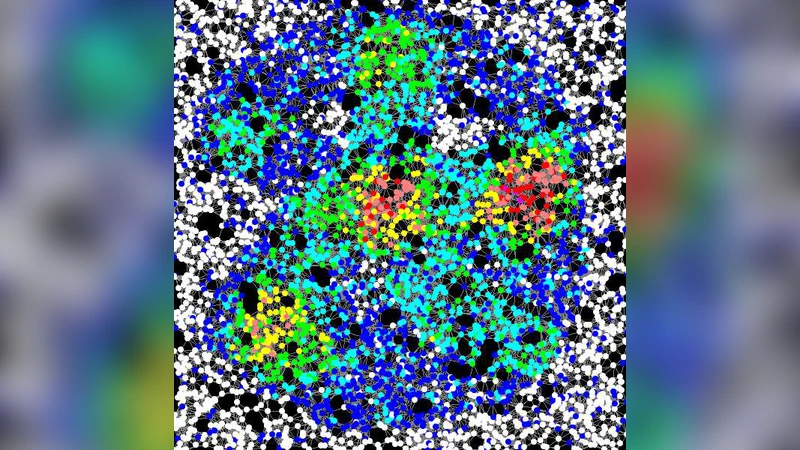
We extend the theory of Euler integration from the class of constructible functions to that of “tame” real-valued functions (definable with respect to an o-minimal structure). The corresponding integral operator has some unusual defects (it is not a linear operator); however, it has a compelling Morse-theoretic interpretation. In addition, we show that it is an appropriate setting in which to do numerical analysis of Euler integrals, with applications to incomplete and uncertain data in sensor networks.
💡 Research Summary
The paper “Euler integration over definable functions” expands the classical theory of Euler integration—originally confined to constructible (integer‑valued, finite‑sum) functions—so that it applies to a broad class of real‑valued functions that are definable in an o‑minimal structure. The authors begin by recalling that the traditional Euler integral of a constructible function f on a tame space X is defined by summing the Euler characteristic χ of the sublevel sets f⁻¹((−∞,t]) over integer thresholds. This construction works because constructible functions have only finitely many distinct level sets, each of which is a finite union of cells, guaranteeing that χ is well defined and that the integral is linear.
To move beyond this restrictive setting, the authors introduce the notion of definability with respect to an o‑minimal structure. An o‑minimal structure on the real line ensures that every definable set admits a finite cell decomposition, has bounded topological complexity, and behaves nicely under projection. Consequently, any definable real‑valued function f : X → ℝ (with X a definable set) possesses a well‑behaved family of sublevel sets {f⁻¹((−∞,t])}_t∈ℝ that vary only at finitely many critical values. Using this property, they define a new Euler integral
∫X f dχ := ∫{ℝ} χ(f⁻¹((−∞,t])) dt,
where dt is the ordinary Lebesgue measure and χ denotes the Euler characteristic of the sublevel set. This definition coincides with the classical one when f is constructible, but it introduces a striking defect: the operator is not linear. In general
∫_X (f+g) dχ ≠ ∫_X f dχ + ∫_X g dχ,
because the Euler characteristic of a union of sublevel sets does not decompose additively when the underlying sets change topology at overlapping critical values. The authors term this phenomenon “Euler non‑linearity” and explore its consequences throughout the paper.
Despite the loss of linearity, the new integral possesses a compelling Morse‑theoretic interpretation. For a definable smooth function, the only points where χ(f⁻¹((−∞,t])) can jump are the Morse critical points of f. At each critical point of index λ, the Euler characteristic changes by (−1)^λ. Hence the integral ∫_X f dχ equals the sum over all critical points of (−1)^λ · Δt, where Δt is the infinitesimal increase in the threshold. In other words, the Euler integral records the total Morse index contribution of f, providing a topological “signature” of the function that is independent of metric data.
The paper then turns to computational aspects, proposing an algorithmic framework suitable for sensor‑network applications where data are incomplete, noisy, or only partially observed. The key steps are:
- Discretize the domain X into a finite cell complex compatible with the o‑minimal structure.
- Pre‑compute χ for each cell (cells are contractible, so χ = 1, and χ of unions can be obtained by inclusion‑exclusion).
- Sort the observed function values and sweep through the thresholds, updating χ only when a cell’s value crosses the current threshold.
- Accumulate the product of the current χ and the incremental change in the threshold to approximate the integral.
Because χ changes only at a finite set of critical thresholds, the algorithm runs in time proportional to the number of distinct values rather than the size of the ambient space. Moreover, when only upper or lower bounds on measurements are available, the method yields interval estimates for the Euler integral, offering a natural way to quantify uncertainty.
In the discussion, the authors compare Euler integration to persistent homology, a staple of topological data analysis (TDA). While persistence diagrams track the birth and death of individual Betti numbers across scales, the Euler integral aggregates these changes into a single alternating sum, effectively providing a “compressed” topological descriptor. This can be advantageous in settings where a scalar summary is needed for downstream statistical or machine learning pipelines.
Finally, the paper acknowledges limitations and outlines future work. The non‑linearity prevents the development of a full algebraic calculus (e.g., a chain rule or product rule) for Euler integrals, and extending efficient cell‑decomposition algorithms to high‑dimensional definable sets remains challenging. The authors suggest exploring probabilistic extensions—defining expected Euler integrals under random noise models—and integrating the technique with modern deep‑learning architectures for shape‑aware feature extraction.
In summary, the authors succeed in generalizing Euler integration to all definable real‑valued functions, revealing a deep connection with Morse theory, and delivering a practical computational scheme that can handle incomplete and uncertain data. This work bridges a gap between pure topological invariants and applied data analysis, opening new avenues for both theoretical exploration and real‑world sensor‑network applications.
Comments & Academic Discussion
Loading comments...
Leave a Comment