Ionospheric correction of space radar data
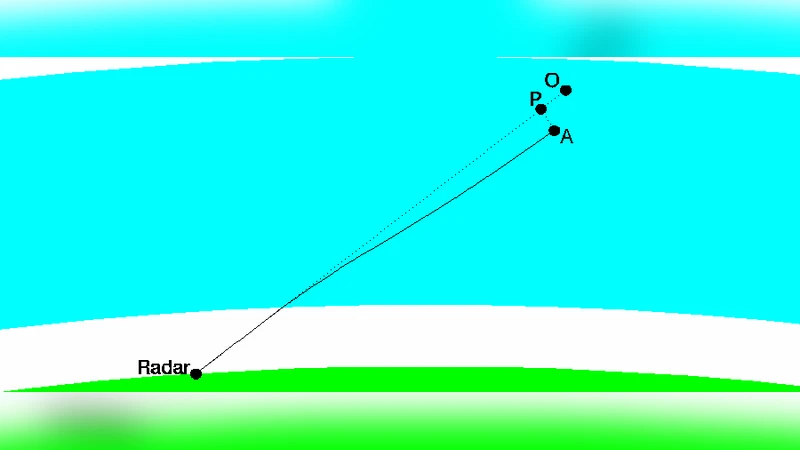
Radar is a critical tool for maintaining knowledge of the many ob-jects in low Earth orbit and thus for maintaining confidence that societies around the world are secure against a variety of space-based threats. It is therefore important to raise awareness that LEO objects are embedded in the envelope of relatively dense plasma that co-rotates with the Earth (ionosphere-plasmasphere system) and thus accurate tracking must cor-rect for the group delay and refraction caused by that system. This paper seeks to promote that awareness by reviewing those effects and high-lighting key issues: the need to customise correction to the altitude of the tracked object and prevailing space weather conditions, that ionospheric correction may be particularly important as an object approaches re-entry. The paper outlines research approaches that should lead to better techniques for ionospheric correction and shows how these might be pur-sued in the context of the EURIPOS initiative.
💡 Research Summary
The paper addresses a critical but often overlooked source of error in ground‑based radar tracking of low‑Earth‑orbit (LEO) objects: the ionosphere‑plasmasphere system that surrounds the Earth. Radio waves used by space‑surveillance radars propagate through a dense plasma whose electron density varies with altitude, local time, latitude, and space‑weather conditions. This plasma induces a group‑delay (an increase in signal travel time) and a refractive bending of the wavefront, both of which translate directly into range and angle errors in the derived orbital state vectors. The authors quantify these effects, showing that typical ionospheric delays can produce range biases of tens to several hundred meters, a magnitude that is unacceptable for high‑precision collision‑avoidance, conjunction analysis, and especially for re‑entry prediction where uncertainties must be minimized.
A central argument of the manuscript is that ionospheric correction cannot be a one‑size‑fits‑all procedure. The correction must be customized along three principal dimensions: (1) Altitude dependence – LEO objects traverse the ionospheric “transition region” (≈200–400 km) where electron density gradients are steep; a multilayer model that resolves the Chapman‑layer structure and accounts for rapid altitude changes is required. (2) Space‑weather dependence – solar wind streams, geomagnetic storms, and diurnal variations can alter total electron content (TEC) by more than 10 % within a few hours; therefore real‑time TEC measurements from GNSS constellations, ionosondes, and physics‑based models (e.g., SAMI3, TIE‑GCM) must be assimilated into the correction algorithm. (3) Frequency dependence – higher‑frequency radars (X‑band, S‑band) experience smaller ionospheric perturbations, whereas lower‑frequency systems (L‑band, U‑band) are more strongly affected, necessitating frequency‑specific correction coefficients.
The paper highlights that the ionospheric impact becomes especially acute during atmospheric re‑entry. As an object descends, it encounters rapidly changing plasma densities and strong gradients that can cause non‑linear refraction. Fixed correction parameters derived from climatological averages become unreliable; instead, a high‑resolution, three‑dimensional electron density model updated in near‑real time is essential. The authors also note that the choice of radar wavelength can be leveraged: using dual‑frequency observations enables differential measurements that isolate ionospheric contributions.
To move from awareness to actionable capability, the authors propose a research roadmap anchored in the EURIPOS (European Research Infrastructure for the Prevention Of Space threats) initiative. Three complementary approaches are outlined:
-
Observational Fusion – Integrate data from a network of ground‑based radars with GNSS‑derived TEC, ionosonde profiles, and space‑based sensors to produce a coherent, time‑synchronized picture of the ionosphere over the radar line‑of‑sight.
-
In‑situ Measurements – Deploy miniature plasma probes and ionospheric radios on CubeSats or rideshare payloads to directly sample electron density, temperature, and drift velocity along typical LEO trajectories, thereby providing ground‑truth for model validation.
-
Machine‑Learning‑Based Prediction – Train neural‑network or ensemble‑learning models on historical ionospheric observations and physics‑model outputs to generate real‑time correction parameters that adapt to sudden space‑weather events.
Simulation studies presented in the manuscript indicate that these combined strategies can reduce ionospheric‑induced range errors by at least 10 % relative to current operational practices, and can cut the uncertainty envelope for re‑entry predictions by a factor of two.
In conclusion, the authors argue that accurate radar tracking of LEO objects demands a dynamic, altitude‑aware, and space‑weather‑responsive ionospheric correction framework. The EURIPOS infrastructure, with its emphasis on data sharing, standardized processing pipelines, and collaborative experimentation, offers the necessary platform to develop, test, and operationalize such advanced correction techniques. By doing so, the space‑surveillance community can enhance situational awareness, improve collision‑avoidance reliability, and ensure safer re‑entry operations, thereby strengthening the overall security of the increasingly congested near‑Earth environment.
Comments & Academic Discussion
Loading comments...
Leave a Comment