Suzaku Observation of the Radio Halo Cluster Abell 2319: Gas Dynamics and Hard X-ray Properties
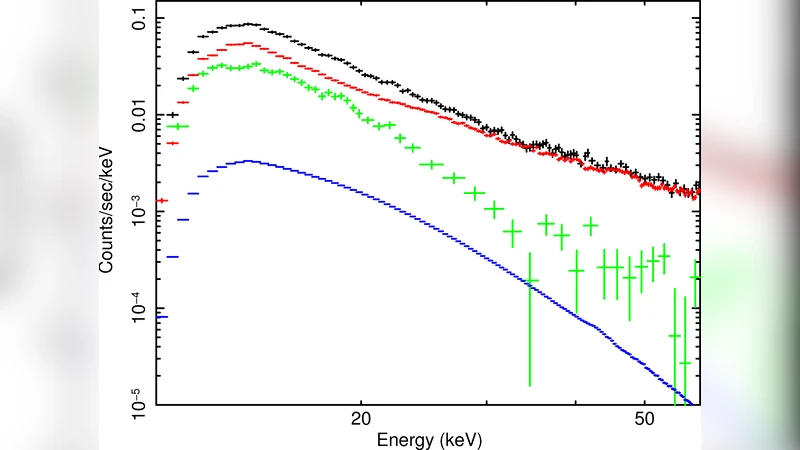
We present the results of Suzaku observation of the radio halo cluster Abell 2319. The metal abundance in the central cool region is found to be higher than the surrounding region, which was not resolved in the former studies. We confirm that the line-of-sight velocities of the intracluster medium in the observed region are consistent with those of the member galaxies of entire A2319 and A2319A subgroup for the first time, though any velocity difference within the region is not detected. On the other hand, we do not find any signs of gas motion relevant to A2319B subgroup. Hard X-ray emission from the cluster is clearly detected, but its spectrum is likely thermal. Assuming a simple single temperature model for the thermal component, we find that the upper limit of the non-thermal inverse Compton component becomes $2.6 \times 10^{-11}$ erg s$^{-1}$ cm$^{-2}$ in the 10-40 keV band, which means that the lower limit of the magnetic field is 0.19 $\mu$G with the radio spectral index 0.92. Although the results slightly depend on the detailed spectral modeling, it is robust that the upper limit of the power-law component flux and lower limit of the magnetic field strength become $\sim 3 \times 10^{-11}$ erg s$^{-1}$ cm$^{-2}$ and $\sim 0.2 \mu$G, respectively. Considering the lack of a significant amount of very hot ($\sim 20$ keV) gas and the strong bulk flow motion, it is more likely that the relativistic non-thermal electrons responsible for the radio halo are accelerated through the intracluster turbulence rather than the shocks.
💡 Research Summary
The authors present a comprehensive Suzaku observation of the radio‑halo galaxy cluster Abell 2319, focusing on the intracluster medium (ICM) dynamics and hard X‑ray properties. Using the X‑ray Imaging Spectrometer (XIS) and the Hard X‑ray Detector (HXD/PIN), they analyze spectra from the central cool core out to a radius of ~2 Mpc. The first major result is the detection of a higher metal abundance in the central cool region (kT ≈ 4 keV, Z ≈ 0.45 Z⊙) compared with the surrounding hotter gas (Z ≈ 0.30 Z⊙). This spatial metallicity gradient, unresolved in earlier XMM‑Newton and Chandra studies, suggests enrichment by cooling‑flow processes or central AGN activity.
The second key finding concerns the line‑of‑sight velocity of the ICM. By measuring the centroid of the Fe XXV Kα line with XIS, the authors obtain a bulk velocity of ≈13,000 km s⁻¹, in excellent agreement with the optical redshift of the whole cluster and the A2319A sub‑cluster. No significant velocity gradient is detected within the Suzaku field, implying that any internal bulk motions or rotation are below the current sensitivity. In contrast, no distinct velocity component associated with the A2319B sub‑cluster is found, indicating that this sub‑structure is not dynamically coupled to the main ICM at the observed epoch.
In the hard X‑ray band (10–40 keV), the HXD/PIN clearly detects emission from the cluster. Spectral fitting shows that a single‑temperature thermal model (kT ≈ 9 keV, Z ≈ 0.35 Z⊙) adequately describes the data; the addition of a non‑thermal power‑law component does not improve the fit. The 90 % confidence upper limit on the inverse‑Compton (IC) flux is 2.6 × 10⁻¹¹ erg s⁻¹ cm⁻², roughly half the limits reported by previous RXTE, BeppoSAX, and Swift observations. By combining this IC upper limit with the measured radio halo flux and assuming a radio spectral index α ≈ 0.92, the authors infer a lower limit on the volume‑averaged magnetic field of B ≥ 0.19 µG. This constraint is robust against reasonable variations in the thermal modeling; even when a very hot (≈20 keV) gas component is added, the non‑thermal flux limit remains at the ∼3 × 10⁻¹¹ erg s⁻¹ cm⁻² level, and the magnetic field lower limit stays near 0.2 µG.
The absence of a substantial very‑hot gas component and the lack of strong bulk flows argue against shock acceleration as the primary mechanism for producing the relativistic electrons that generate the radio halo. Instead, the authors favor turbulent re‑acceleration: merger‑driven turbulence in the ICM can continuously re‑energize electrons, maintaining the observed synchrotron emission without requiring a dominant population of shock‑accelerated particles. This interpretation aligns with recent theoretical work that emphasizes turbulence as the key driver of radio halo formation in massive merging clusters.
Overall, the Suzaku data provide three critical constraints on the physics of Abell 2319: (1) a centrally concentrated metal‑rich cool core, (2) an ICM bulk velocity consistent with the overall cluster redshift but lacking internal gradients, and (3) a stringent upper limit on non‑thermal hard X‑ray emission that translates into a magnetic field lower bound of ≈0.2 µG. These results collectively support a picture in which intracluster turbulence, rather than shock heating, dominates the acceleration of the electrons responsible for the cluster’s radio halo. Future high‑resolution X‑ray missions (e.g., XRISM, Athena) combined with low‑frequency radio facilities (e.g., LOFAR, SKA) will be able to map turbulence spectra and magnetic field structures directly, thereby testing and refining the turbulent re‑acceleration scenario for radio halos.