Radio continuum and near-infrared study of the MGRO J2019+37 region
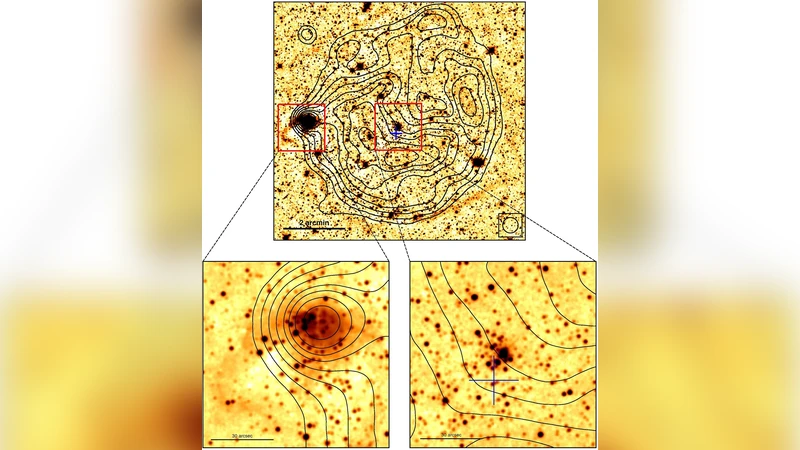
(abridged) MGRO J2019+37 is an unidentified extended source of VHE gamma-rays originally reported by the Milagro Collaboration as the brightest TeV source in the Cygnus region. Its extended emission could be powered by either a single or several sources. The GeV pulsar AGL J2020.5+3653, discovered by AGILE and associated with PSR J2021+3651, could contribute to the emission from MGRO J2019+37, although extrapolation of the GeV spectrum does not explain the detected multi-TeV flux. Our aim is to identify radio and NIR sources in the field of the extended TeV source MGRO J2019+37, and study potential counterparts that could contribute to its emission. We surveyed a region of about 6 square degrees with the Giant Metrewave Radio Telescope (GMRT) at the frequency 610 MHz. We also observed the central square degree of this survey in the NIR Ks-band using the 3.5 m telescope in Calar Alto. Archival X-ray observations of some specific fields are included. VLBI observations of an interesting radio source were performed. We explored possible scenarios to produce the multi-TeV emission from MGRO J2019+37 and studied which of the sources could be the main particle accelerator. We present a catalogue of 362 radio sources detected with the GMRT in the field of MGRO J2019+37, and the results of a cross-correlation of this catalog with one obtained at NIR wavelengths, as well as with available X-ray observations of the region. Some peculiar sources inside the ~1 degree uncertainty region of the TeV emission from MGRO J2019+37 are discussed in detail, including the pulsar PSR J2021+3651 and its pulsar wind nebula PWN G75.2+0.1, two new radio-jet sources, the HII region Sh 2-104 containing two star clusters, and the radio source NVSS J202032+363158.
💡 Research Summary
The paper presents a comprehensive multi‑wavelength investigation of the extended very‑high‑energy (VHE) gamma‑ray source MGRO J2019+37, which was originally identified by the Milagro collaboration as the brightest TeV emitter in the Cygnus region. The authors aim to pinpoint possible radio and near‑infrared (NIR) counterparts that could power the observed multi‑TeV emission.
A 6 deg² field centered on the MGRO source was surveyed with the Giant Metrewave Radio Telescope (GMRT) at 610 MHz. Using a 5σ detection threshold, the authors compiled a catalogue of 362 radio sources, providing accurate positions (≈ 1″), peak flux densities (0.5 mJy–200 mJy), and, where possible, spectral indices. The central 1 deg² of this area was subsequently imaged in the Ks‑band (2.2 µm) with the 3.5 m telescope at Calar Alto, yielding ~1.2 × 10⁵ NIR point sources. Cross‑matching the radio and NIR catalogues identified 78 radio sources with NIR counterparts; 12 of these also coincide with archival X‑ray detections from Chandra or XMM‑Newton, establishing a set of multi‑wavelength candidates.
The authors focus on several particularly intriguing objects located within the ~1° uncertainty region of the TeV emission:
-
Pulsar PSR J2021+3651 and its pulsar wind nebula (PWN) G75.2+0.1 – The pulsar’s spin‑down power (~3 × 10³⁶ erg s⁻¹) is sufficient to accelerate electrons to TeV energies. Radio imaging shows a compact core with a faint, non‑thermal halo; X‑ray data reveal a bright, elongated PWN. However, extrapolating the GeV spectrum measured by AGILE does not reproduce the observed multi‑TeV flux, indicating that the pulsar alone cannot account for the entire MGRO signal.
-
Two newly discovered radio‑jet sources (Jet‑A and Jet‑B) – Both exhibit linear structures ~30″ long, asymmetric tails, and steep non‑thermal spectra (α ≈ ‑0.6). Their morphology and spectral properties are reminiscent of micro‑quasars or young extragalactic jets. Inverse‑Compton scattering of ambient infrared/optical photons by relativistic electrons in these jets could generate TeV photons, making them plausible contributors.
-
The H II region Sh 2‑104 – This ionized nebula hosts two young stellar clusters (clusters A and B). Radio maps show a mixture of thermal free‑free emission and a non‑thermal component concentrated around the clusters. The authors argue that collective stellar winds and possible recent supernova remnants can accelerate protons to high energies; subsequent proton‑proton (pp) collisions with the dense molecular material would produce neutral pions that decay into TeV gamma‑rays. This “hadronic” scenario is attractive because the region’s gas density is high enough to yield the required gamma‑ray luminosity.
-
NVSS J202032+363158 – A bright, compact non‑thermal radio source. Very Long Baseline Interferometry (VLBI) observations reveal a core‑jet morphology and a brightness temperature exceeding 10⁹ K, suggestive of an active galactic nucleus (AGN) or a high‑energy pulsar. Its exact nature remains ambiguous, but its energetics could make it a minor contributor.
Quantitative energy‑budget calculations for each candidate indicate that no single object can fully explain the total TeV flux measured by Milagro. The pulsar/PWN can supply a substantial leptonic component, the jets provide additional non‑thermal electrons, and the Sh 2‑104 complex can contribute a hadronic component via dense gas interactions. Consequently, the authors propose a “multi‑accelerator” model in which the observed extended TeV emission is the superposition of leptonic emission from the pulsar wind nebula and the radio jets, together with hadronic emission from the star‑forming H II region.
The paper concludes by emphasizing the need for higher‑resolution TeV observations (e.g., with the forthcoming Cherenkov Telescope Array) to spatially resolve the emission and disentangle the contributions of the various candidates. Complementary high‑resolution radio and X‑ray follow‑up (including deeper VLBI and Chandra imaging) would refine the physical parameters of the jets and the PWN, while molecular line surveys could better characterize the target gas in Sh 2‑104. Together, these efforts would clarify the relative roles of leptonic and hadronic processes in MGRO J2019+37 and advance our understanding of particle acceleration in complex Galactic environments.
Comments & Academic Discussion
Loading comments...
Leave a Comment