Extrasolar planets and brown dwarfs around A-F type stars - VII. Theta Cygni radial velocity variations: planets or stellar phenomenon?
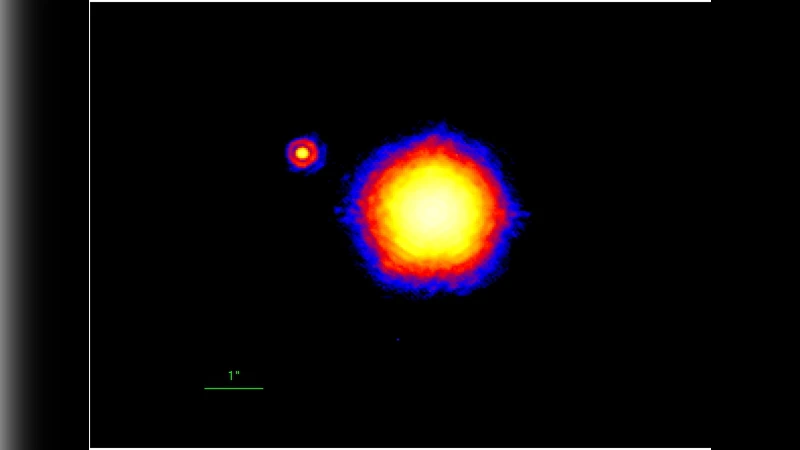
(abridged) In the frame of the search for extrasolar planets and brown dwarfs around early-type main-sequence stars, we present the results obtained on the early F-type star Theta Cygni. Elodie and Sophie at OHP were used to obtain the spectra. Our dedicated radial-velocity measurement method was used to monitor the star’s radial velocities over five years. We also use complementary, high angular resolution and high-contrast images taken with PUEO at CFHT. We show that Theta Cygni radial velocities are quasi-periodically variable, with a ~150-day period. These variations are not due to the ~0.35-Msun stellar companion that we detected in imaging at more than 46 AU from the star. The absence of correlation between the bisector velocity span variations and the radial velocity variations for this 7 km/s vsini star, as well as other criteria indicate that the observed radial velocity variations are not due to stellar spots. The observed amplitude of the bisector velocity span variations also seems to rule out stellar pulsations. However, we observe a peak in the bisector velocity span periodogram at the same period as the one found in the radial velocity periodogram, which indicates a probable link between these radial velocity variations and the low amplitude lineshape variations which are of stellar origin. Long-period variations are not expected from this type of star to our knowledge. If a stellar origin (hence of new type) was to be confirmed for these long-period radial velocity variations, this would have several consequences on the search for planets around main-sequence stars, both in terms of observational strategy and data analysis. An alternative explanation for these variable radial velocities is the presence of at least one planet of a few Jupiter masses orbiting at less than 1 AU. (abridged)
💡 Research Summary
In the context of expanding the search for exoplanets and brown dwarfs around early‑type main‑sequence stars, this paper presents a five‑year radial‑velocity (RV) monitoring campaign of the early F‑type star Theta Cygni (θ Cyg, spectral type F4 V, v sin i ≈ 7 km s⁻¹). High‑resolution spectra were obtained with the ELODIE and SOPHIE spectrographs at the Observatoire de Haute‑Provence (OHP). A dedicated RV extraction algorithm, tailored to handle the broad and blended lines of a relatively fast rotator, delivered typical internal precisions of ~3 m s⁻¹ with SOPHIE and ~10 m s⁻¹ with ELODIE.
The RV time series exhibits a quasi‑periodic signal with a period of roughly 150 days and a semi‑amplitude of 120–180 m s⁻¹. A Lomb‑Scargle periodogram confirms the significance of this peak (false‑alarm probability < 10⁻⁴). In parallel, high‑contrast, high‑angular‑resolution imaging with the PUEO adaptive‑optics system on the CFHT revealed a low‑mass stellar companion (≈ 0.35 M☉) at a projected separation larger than 0.6″ (≈ 46 AU). Dynamical considerations show that this distant companion cannot be responsible for the observed 150‑day RV modulation.
To assess whether stellar activity could mimic a planetary signal, the authors measured the bisector velocity span (BVS) of the cross‑correlation functions for each spectrum. The BVS shows no significant correlation with the RVs (Pearson r ≈ 0.08), indicating that rotating starspots are unlikely to be the cause. Moreover, the star’s rotation period, inferred from its v sin i and radius, is about 7 days, far shorter than the observed RV period. Classical pulsation mechanisms typical of δ Scuti or γ Doradus stars also fail to explain the data: expected BVS amplitudes for such pulsations would be orders of magnitude larger than the measured ~30 m s⁻¹, and their periods are usually hours to a few days.
Interestingly, the BVS periodogram does display a peak at the same ~150‑day period as the RVs, albeit with much lower power. This suggests a subtle line‑shape modulation that is linked to the RV variations, pointing toward a stellar origin that is not captured by standard activity or pulsation models. The authors propose that this could represent a new type of long‑term variability in early‑type stars, perhaps related to weak magnetic cycles, internal structural changes, or unknown convective phenomena.
Nevertheless, the planetary hypothesis cannot be ruled out. Assuming a Keplerian orbit with a period of 150 days, the minimum mass (m sin i) of a putative companion would be in the range of 2–4 M_Jup, orbiting at 0.6–0.9 AU. Such a planet would produce negligible BVS variations, consistent with the lack of a strong BVS–RV correlation, but would not naturally explain the modest BVS peak at the same period. Distinguishing between these scenarios will require additional data: continued high‑precision RV monitoring (e.g., with HARPS‑North or ESPRESSO), simultaneous photometric and spectroscopic activity diagnostics, transit searches, and astrometric measurements (Gaia) to detect any reflex motion.
The paper concludes that the 150‑day RV signal in θ Cyg challenges the current understanding of stellar variability in early‑type stars. If the signal originates from a previously unrecognized stellar phenomenon, it has profound implications for planet searches around such stars, demanding more sophisticated activity indicators and longer baseline observations to avoid false positives. Conversely, if a Jovian planet is confirmed, it would be one of the few massive planets detected around an early F‑type dwarf, providing valuable constraints on planet formation theories in high‑mass stellar environments. The authors advocate for a multi‑technique follow‑up campaign to resolve the nature of the signal definitively.
Comments & Academic Discussion
Loading comments...
Leave a Comment