The Stability and Prospects of the Detection of Terrestrial/Habitable Planets in Multiplanet and Multiple Star Systems
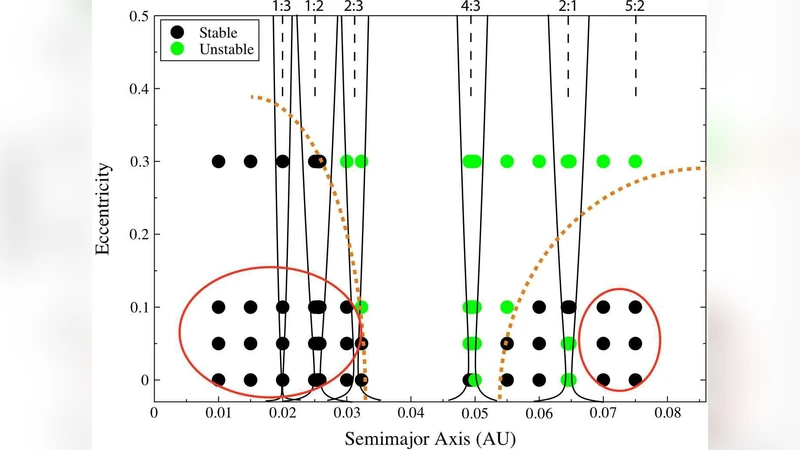
Given the tendency of planets to form in multiples, and the observational evidence in support of the existence of potential planet-hosting stars in binaries or clusters, it is expected that extrasolar terrestrial planes are more likely to be found in multiple body systems. This paper discusses the prospects of the detection of terrestrial/habitable planets in multibody systems by presenting the results of a study of the long-term stability of these objects in systems with multiple giant planets (particularly those in eccentric and/or in mean-motion resonant orbits), systems with close-in Jupiter-like bodies, and systems of binary stars. The results of simulations show that while short-period terrestrial-class objects that are captured in near mean-motion resonances with migrating giant planets are potentially detectable via transit photometry or the measurement of the variations of the transit-timing due to their close-in Jovian-mass planetary companions, the prospect of the detection of habitable planets with radial velocity technique is higher in systems with multiple giant planets outside the habitable zone and binary systems with moderately separated stellar companions.
💡 Research Summary
The paper addresses the growing recognition that most planetary systems are not isolated but contain multiple giant planets, close‑in “hot‑Jupiter” type bodies, or belong to binary star configurations. By conducting extensive N‑body integrations over timescales up to a billion years, the authors evaluate the long‑term orbital stability of Earth‑mass planets placed within the classical habitable zone (HZ) under three distinct dynamical environments.
In the first scenario, systems with several giant planets are examined for a range of eccentricities (0.0–0.4) and for both resonant (2:1, 3:2) and non‑resonant configurations. The simulations reveal that strong mean‑motion resonances (MMR) dramatically amplify the perturbations on a terrestrial companion, often driving its eccentricity beyond 0.2 and leading to orbit crossing, ejection, or collision with the host star. Conversely, when the giants are non‑resonant and possess low eccentricities (<0.1), a broad “co‑orbital stability zone” emerges inside the HZ. In this regime, Earth‑mass planets can survive for >10⁸ yr with only modest eccentricity variations, suggesting that such systems are prime targets for radial‑velocity (RV) surveys because the giant planets themselves generate detectable RV signatures while leaving the inner HZ relatively undisturbed.
The second scenario focuses on systems that host a close‑in Jupiter‑mass planet (period <10 days). The authors model inward migration of the hot‑Jupiter across the HZ and track the capture of a terrestrial body into a near‑resonant orbit. Capture produces a characteristic transit‑timing variation (TTV) signal of 10–30 seconds, well within the detection limits of current space‑based photometers (TESS, PLATO, CHEOPS). Importantly, once migration halts, the captured planet often remains locked in resonance, preserving a stable orbit that can be monitored over many years. This finding highlights TTV analysis as a powerful indirect method for finding Earth‑size planets that would otherwise be invisible to RV due to the overwhelming signal of the hot‑Jupiter.
The third scenario investigates binary star systems with separations ranging from 20 to 100 AU and stellar eccentricities up to 0.5. The results show a clear stability boundary: binaries with separations of 30–50 AU and eccentricities ≤0.2 allow an Earth‑mass planet in the HZ to remain dynamically stable for >10⁹ yr. Closer or more eccentric binaries induce strong three‑body perturbations that raise the terrestrial planet’s eccentricity above 0.3, eventually leading to ejection or collision. Because the binary orbit can be precisely characterized, the RV signal of any giant planets residing outside the HZ can be measured with sub‑meter‑per‑second precision, providing an indirect clue that a stable inner HZ may exist.
Synthesizing these three lines of investigation, the authors propose a practical observational hierarchy. First, prioritize RV monitoring of multi‑giant systems that are non‑resonant and have low eccentricities, as they offer the highest probability of harboring long‑lived habitable worlds. Second, apply high‑precision TTV analysis to transiting hot‑Jupiter systems to search for resonantly trapped Earth‑mass companions. Third, target moderately wide binaries (30–50 AU, low eccentricity) with combined RV and direct‑imaging campaigns, as these configurations maximize the likelihood of stable habitable planets while still producing detectable signals from outer giants.
Overall, the study provides quantitative dynamical criteria that can be directly incorporated into future exoplanet survey strategies, guiding the allocation of telescope time and the design of data‑analysis pipelines aimed at discovering terrestrial, potentially habitable planets in the complex environments that appear to dominate our galaxy.
Comments & Academic Discussion
Loading comments...
Leave a Comment