Precision Astrometry of a Sample of Speckle Binaries and Multiples with the Adaptive Optics Facilities at the Hale and Keck II Telescopes
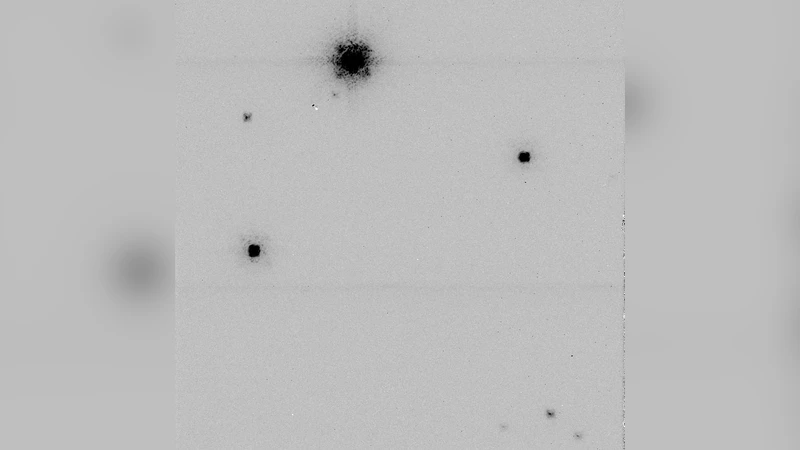
Using the adaptive optics facilities at the 200-in Hale and 10-m Keck II, we observed in the near infrared a sample of 12 binary and multiple stars and one open cluster. We used the near diffraction limited images of these systems to measure the relative separations and position angles between their components. In this paper, we investigate and correct for the influence of the differential chromatic refraction and chip distortions on our relative astrometric measurements. Over one night, we achieve an astrometric precision typically well below 1 miliarcsecond and occasionally as small as 40 microarcseconds. Such a precision is in principle sufficient to astrometrically detect planetary mass objects around the components of nearby binary and multiple stars. Since we have not had sufficiently large data sets for the observed sample of stars to detect planets, we provide the limits to planetary mass objects based on the obtained astrometric precision.
💡 Research Summary
The paper presents a high‑precision astrometric study of a sample of speckle binaries, multiples, and one open cluster using the adaptive‑optics (AO) facilities on the 200‑inch Hale telescope and the 10‑m Keck II telescope. Observations were carried out in the near‑infrared (J, H, and K bands) where the AO systems deliver near‑diffraction‑limited images (≈0.04–0.06 arcsec FWHM). The authors selected twelve binary or multiple systems spanning a range of distances (5–50 pc), spectral types (F–M), and known orbital parameters, together with an open cluster used as a dense astrometric reference field.
A central focus of the work is the rigorous treatment of systematic error sources that traditionally limit ground‑based AO astrometry: differential chromatic refraction (DCR) and detector (chip) geometric distortion. For DCR, the authors recorded atmospheric temperature, pressure, humidity, and airmass at the time of each exposure and applied a wavelength‑dependent refraction model to correct the relative positions of components observed through different filters. Chip distortion was calibrated using both standard astrometric fields and a custom‑fabricated grid mask; a two‑dimensional polynomial transformation (up to third order) was derived for each instrument to map raw pixel coordinates onto a distortion‑free reference frame. After applying these corrections, point‑spread‑function (PSF) fitting with multi‑Gaussian models yielded centroid positions for each component, from which separations and position angles were computed.
The authors assess the achieved precision by repeating measurements of the same targets within a single night. The root‑mean‑square (RMS) scatter in relative separation typically falls below 1 milliarcsecond (mas), and under the best atmospheric and AO conditions it reaches as low as 40 micro‑arcseconds (µas). This level of precision surpasses most previous ground‑based AO astrometry (generally 1–2 mas) and approaches the regime required to detect the reflex motion induced by planetary‑mass companions (≈1 MJup) around nearby binary components.
Because the current data set does not contain enough epochs to fit full orbital solutions, the paper does not claim any planet detections. Instead, the authors translate their measurement precision into upper limits on detectable companion masses for each system. By inserting the achieved astrometric error into the standard astrometric amplitude equation (α ≈ (Mp/M⋆)·a/D, where Mp is planet mass, M⋆ stellar mass, a orbital semi‑major axis, and D distance), they show, for example, that a 0.5 mas precision on a 10 pc binary would allow detection of a 5 MJup companion at 5 AU. The limits vary with distance, primary mass, and orbital separation, and the authors stress that detailed Monte‑Carlo simulations are required for each target to produce realistic detection curves.
The discussion emphasizes the broader implications of achieving sub‑mas precision with AO. It demonstrates that, with careful calibration of DCR and detector distortion, ground‑based facilities can rival space‑based missions for certain niche applications, especially for bright nearby binaries where the AO correction is optimal. The authors outline a roadmap for future work: a multi‑year monitoring campaign to accumulate sufficient epochs for orbital fitting, incorporation of Bayesian or Kalman‑filter techniques to jointly model orbital motion and systematic errors, and expansion of the target sample to include hierarchical triples and young stellar associations where planetary formation signatures may be present.
In conclusion, the study establishes a robust methodology for ultra‑precise relative astrometry using existing AO infrastructure, achieving precisions down to 40 µas. While no planetary companions are reported, the derived mass limits demonstrate that the technique is already sensitive to giant planets in favorable systems. Continued long‑term monitoring, combined with the calibration framework presented here, promises to open a new window on the dynamical architecture of binary and multiple star systems and to enable the detection of low‑mass companions that have so far eluded other detection methods.
Comments & Academic Discussion
Loading comments...
Leave a Comment