Stellar Encounters: A Stimulus for Disc Fragmentation?
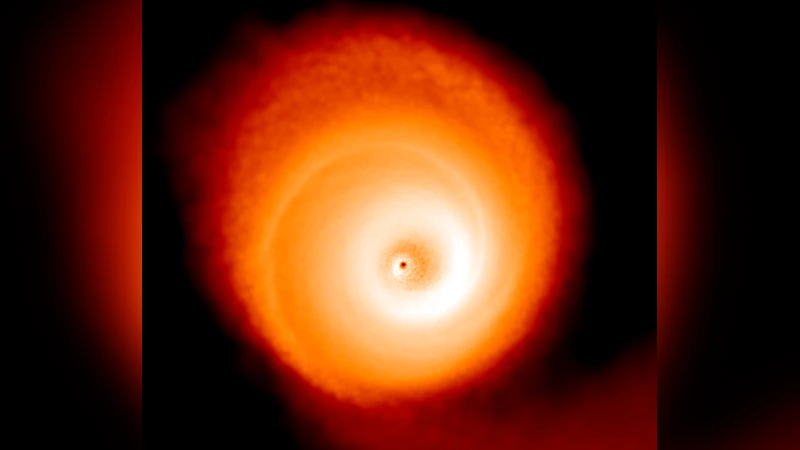
An interaction between a star-disc system and another star will perturb the disc, possibly resulting in a significant modification of the disc structure and its properties. It is still unclear if such an encounter can trigger fragmentation of the disc to form brown dwarfs or gas giant planets. This paper details high resolution Smoothed Particle Hydrodynamics (SPH) simulations investigating the influence of stellar encounters on disc dynamics. Star-star encounters (where the primary has a self-gravitating, marginally stable protostellar disc, and the secondary has no disc) were simulated with various orbital parameters to investigate the resulting disc structure and dynamics. This work is the first of its kind to incorporate realistic radiative transfer techniques to realistically model the resulting thermodynamics. The results suggest that the effect of stellar encounters is to prohibit fragmentation - compressive and shock heating stabilises the disc, and the radiative cooling is insufficient to trigger gravitational instability. The encounter strips the outer regions of the disc (either through tidal tails or by capture of matter to form a disc around the secondary), which triggers a readjustment of the primary disc to a steeper surface density profile (and a flatter Toomre Q profile). The disc around the secondary plays a role in the potential capture of the secondary to form a binary. However, this applies only to orbits that are parabolic - hyperbolic encounters do not form a secondary disc, and are not captured.
💡 Research Summary
The paper investigates whether close encounters between a star‑disc system and a passing star can trigger gravitational fragmentation of the disc, potentially leading to the formation of brown dwarfs or gas‑giant planets. Using high‑resolution Smoothed Particle Hydrodynamics (SPH) coupled with a realistic radiative transfer scheme (Flux‑Limited Diffusion), the authors model a primary star surrounded by a marginally stable, self‑gravitating protostellar disc (Toomre Q ≈ 1) and a secondary star that initially lacks a disc. A suite of simulations explores a range of orbital parameters—impact parameter, inclination, relative velocity—and distinguishes between parabolic and hyperbolic trajectories.
Key findings emerge from the detailed thermodynamic and dynamical evolution observed during the encounters. First, the tidal interaction strips material from the outer regions of the primary disc. Depending on the geometry, this material either forms tidal tails that are ejected from the system or becomes captured around the secondary, creating a secondary disc. The loss of outer mass forces the remaining disc to readjust its surface‑density profile, steepening the Σ(r) relation and flattening the radial Toomre Q profile. Second, the encounter generates strong compressive waves and shock fronts that heat the gas dramatically. The heating raises the local sound speed and pressure support, pushing Q well above the critical value of unity. Although radiative cooling is active, the FLD implementation shows that cooling cannot keep pace with the rapid heating, especially in the dense inner regions that have become more massive after the outer stripping. Consequently, the disc remains thermally stable throughout the encounter.
The orbital nature of the encounter further influences the outcome. In parabolic encounters, sufficient material is captured by the secondary to build a modest disc, which can act as a sink for angular momentum and may facilitate the long‑term capture of the secondary, potentially forming a bound binary. Hyperbolic encounters, by contrast, do not allow significant mass capture; the secondary remains disc‑less and is not captured. This dichotomy underscores that the formation of a secondary disc is not a prerequisite for disc fragmentation; rather, it is a by‑product of the specific angular momentum exchange in low‑energy (parabolic) encounters.
Overall, the simulations demonstrate that stellar encounters tend to stabilize rather than destabilize protostellar discs. The combined effect of compressive heating, shock dissipation, and insufficient radiative cooling outweighs any transient increase in surface density that might otherwise lower Q. The net result is a disc that is less prone to gravitational collapse, contradicting earlier, more idealised studies that suggested encounters could act as a catalyst for fragmentation.
The authors conclude that, in realistic star‑forming environments where encounters are common, such interactions are unlikely to be a dominant pathway for producing brown dwarfs or massive planets via disc fragmentation. Instead, encounters primarily reshape disc structure, steepen density gradients, and may contribute to binary formation when the encounter is parabolic. Future work is suggested to explore scenarios with pre‑existing discs around both stars, multiple successive encounters, and the inclusion of magnetic fields, which could modify the balance between heating and cooling and potentially reopen a pathway to encounter‑induced fragmentation.
Comments & Academic Discussion
Loading comments...
Leave a Comment