The JANUS X-Ray Flash Monitor
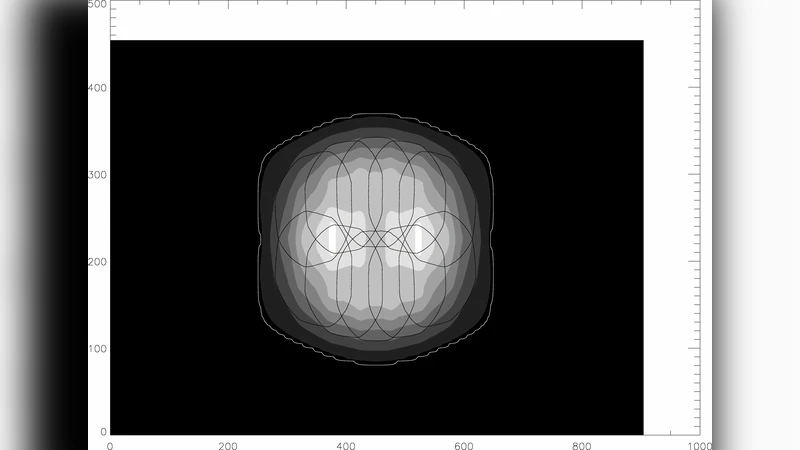
JANUS is a NASA small explorer class mission which just completed phase A and was intended for a 2013 launch date. The primary science goals of JANUS are to use high redshift (6<z<12) gamma ray bursts and quasars to explore the formation history of the first stars in the early universe and to study contributions to reionization. The X-Ray Flash Monitor (XRFM) and the Near-IR Telescope (NIRT) are the two primary instruments on JANUS. XRFM has been designed to detect bright X-ray flashes (XRFs) and gamma ray bursts (GRBs) in the 1-20 keV energy band over a wide field of view (4 steradians), thus facilitating the detection of z>6 XRFs/GRBs, which can be further studied by other instruments. XRFM would use a coded mask aperture design with hybrid CMOS Si detectors. It would be sensitive to XRFs/GRBs with flux in excess of approximately 240 mCrab. The spacecraft is designed to rapidly slew to source positions following a GRB trigger from XRFM. XRFM instrument design parameters and science goals are presented in this paper.
💡 Research Summary
The paper presents the design, scientific motivation, and expected performance of the X‑Ray Flash Monitor (XRFM), one of the two primary instruments on NASA’s Small Explorer‑class mission JANUS. JANUS is intended to launch in 2013 and to address fundamental questions about the formation of the first stars and the re‑ionization of the early Universe by exploiting high‑redshift (6 < z < 12) gamma‑ray bursts (GRBs) and quasars. To achieve this, JANUS carries a wide‑field X‑ray monitor (XRFM) and a near‑infrared telescope (NIRT). XRFM is tasked with detecting bright X‑ray flashes (XRFs) and GRBs in the 1–20 keV band, providing rapid localizations that enable the spacecraft to slew the NIRT for follow‑up spectroscopy.
Key technical features of XRFM include a coded‑mask aperture that yields an instantaneous field of view of roughly 4 steradians (about one third of the sky). The mask, fabricated from thin tungsten, projects a shadow pattern onto an array of hybrid CMOS silicon detectors. Each detector module consists of a 256 × 256 pixel array with a 30 µm pitch, delivering sub‑keV energy resolution and frame rates faster than 10 ms, which is essential for capturing the brief (seconds‑long) XRF events. The hybrid CMOS technology offers low power consumption, radiation tolerance, and fast readout compared with traditional CCDs.
The sensitivity of XRFM is estimated at ~240 mCrab (≈2 × 10⁻⁹ erg cm⁻² s⁻¹) for a 5σ detection, a level well suited to catching high‑z GRBs whose spectra typically peak at lower energies than those observed by higher‑energy missions such as Swift/BAT. On‑board processing, implemented on an FPGA‑based data‑handling unit, continuously deconvolves the mask shadow, evaluates signal‑to‑noise ratios, and triggers an alert when the predefined threshold is exceeded. The spacecraft can then slew at up to 5 deg s⁻¹ to point the NIRT, which operates from 0.9 to 5 µm, allowing near‑infrared spectroscopy of the afterglow within minutes of the trigger. Trigger information is transmitted via X‑band to the ground and disseminated in real time through the Gamma‑ray Coordinates Network (GCN), enabling the broader community to conduct rapid follow‑up observations.
Thermal and radiation considerations are addressed by maintaining the detector modules at approximately –30 °C using passive radiators and modest active cooling, while aluminum shielding reduces the dose from trapped particles and cosmic rays. The low‑power design, combined with the modest mass budget of a SMEX mission, demonstrates that high‑performance X‑ray monitoring can be achieved without the expense of larger flagship observatories.
Scientifically, XRFM’s wide field and low‑energy sensitivity are expected to increase the detection rate of z > 6 GRBs by a factor of several compared with existing missions. The rapid localization and subsequent NIRT spectroscopy will provide redshifts, host‑galaxy properties, and constraints on the ionizing photon budget of the early Universe. By building a statistically significant sample of high‑z GRBs, JANUS aims to quantify the star‑formation rate density, metal enrichment, and the contribution of massive stars to cosmic re‑ionization. Moreover, the mission serves as a technology demonstrator for hybrid CMOS detectors and coded‑mask imaging in a small‑satellite platform, offering a roadmap for future low‑cost, high‑impact astrophysics missions.
In summary, the XRFM instrument combines a 4‑steradian coded‑mask field of view, hybrid CMOS Si detectors, and fast on‑board trigger processing to detect and localize X‑ray flashes and GRBs in the 1–20 keV band. Its design enables rapid spacecraft slewing to the NIRT for near‑infrared follow‑up, thereby addressing key questions about the first luminous sources and the epoch of re‑ionization. The paper details the instrument specifications, simulated performance, and mission operations, concluding that, if launched as planned, JANUS will significantly advance our understanding of the early Universe while showcasing cost‑effective technologies for future small‑explorer missions.
Comments & Academic Discussion
Loading comments...
Leave a Comment