Contribution of a Disk Component to Single Peaked Broad Lines of Active Galactic Nuclei
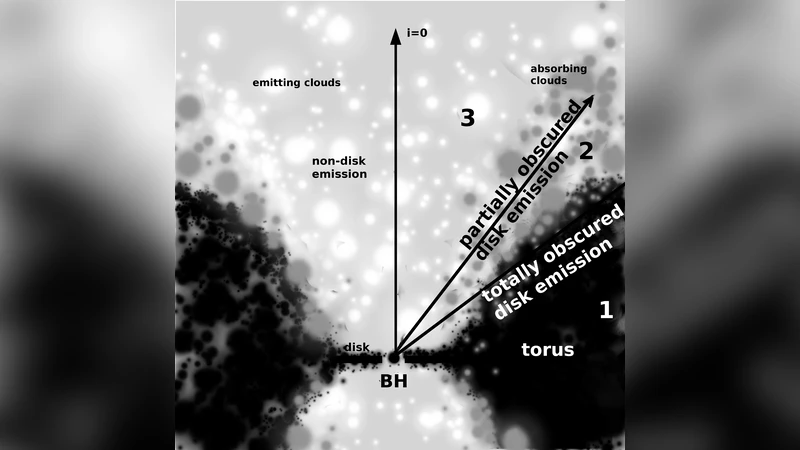
We study the disk emission component hidden in the single-peaked Broad Emission Lines (BELs) of Active Galactic Nuclei (AGN). We compare the observed broad lines from a sample of 90 Seyfert 1 spectra taken from the Sloan Digital Sky Survey with simulated line profiles. We consider a two-component Broad Line Region (BLR) model where an accretion disk and a surrounding non-disk region with isotropic cloud velocities generate the simulated BEL profiles. The analysis is mainly based in measurements of the full widths (at 10%, 20% and 30% of the maximum intensity) and of the asymmetries of the line profiles. Comparing these parameters for the simulated and observed H$\alpha$ broad lines, we {found} that the hidden disk emission {may} be present in BELs even if the characteristic {of two peaked line profiles is} absent. For the available sample of objects (Seyfert 1 galaxies with single-peaked BELs), our study indicates that, {in the case of the hidden disk emission in single peaked broad line profiles}, the disk inclination tends to be small (mostly $i<25^\circ$) and that the contribution of the disk emission to the total flux should be smaller than the contribution of the surrounding region.
💡 Research Summary
The paper investigates whether a hidden accretion‑disk component can be detected in the single‑peaked broad emission lines (BELs) of active galactic nuclei (AGN), specifically in the Hα line of Seyfert 1 galaxies. While double‑peaked profiles are traditionally interpreted as direct signatures of a rotating disk, the majority of AGN display single‑peaked BELs, raising the question of whether a disk contribution is simply masked by other kinematic components.
To address this, the authors assembled a sample of 90 Seyfert 1 spectra from the Sloan Digital Sky Survey (SDSS). For each Hα profile they measured three “full‑width” parameters at 10 %, 20 % and 30 % of the line’s maximum intensity, as well as the asymmetry at the same intensity levels. These metrics are sensitive to the presence of a disk: a moderately inclined disk produces broader wings and a subtle blue‑red asymmetry, even when the central peak remains single.
A two‑component broad‑line region (BLR) model was constructed. Component 1 is a geometrically thin, Keplerian accretion disk whose emissivity follows a standard power‑law and whose line shape is described by a relativistic “double‑peaked” profile (R‑F profile). The disk is characterized by inclination i, inner and outer radii (R_in, R_out), and a flux contribution factor Q (disk flux / total flux). Component 2 represents a surrounding, roughly spherical cloud ensemble with isotropic velocities; the clouds are assumed to have a Gaussian velocity distribution with a dispersion σ ≈ 1000 km s⁻¹. Synthetic line profiles are generated by adding the two components and then subjected to the same width‑and‑asymmetry measurements as the observed spectra.
By scanning a wide grid of (i, R_in/R_out, Q) values, the authors identified the region of parameter space that best reproduces the observed width‑asymmetry trends. The key findings are:
-
Hidden disk signatures are common – many single‑peaked Hα profiles exhibit width‑asymmetry combinations that can only be reproduced when a disk contributes a non‑negligible fraction of the total line flux.
-
Low inclination dominates – the best‑fit inclinations are almost exclusively i < 25°, indicating that the disks are viewed nearly face‑on. In this geometry the classic double‑peak splits merge into a single central peak, while the high‑velocity wings remain broadened.
-
Disk flux is sub‑dominant – the disk typically supplies 20 %–40 % of the total Hα flux, with the isotropic cloud component providing the majority of the emission. This explains why the overall line shape appears single‑peaked.
-
Geometrical parameters affect asymmetry – the ratio of inner to outer disk radius and the steepness of the emissivity law strongly influence the measured asymmetry. Larger inner radii or flatter emissivity profiles reduce the blue‑red imbalance, consistent with the modest asymmetries observed.
These results challenge the simplistic view that only double‑peaked lines betray a disk. Instead, the study demonstrates that a disk can be present even when the line profile looks “normal,” provided the disk is viewed at a small angle and its flux is diluted by a more isotropic component. The authors suggest that future work should combine high‑resolution spectroscopy with reverberation mapping to disentangle the temporal response of the two components, thereby refining estimates of BLR geometry, kinematics, and the physical conditions within the disk and surrounding clouds.
In summary, the paper provides a robust statistical framework for detecting hidden disk emission in single‑peaked BELs, quantifies typical disk inclinations and flux contributions for a sizable Seyfert 1 sample, and underscores the need for multi‑epoch, high‑quality data to fully resolve the complex structure of AGN broad‑line regions.
Comments & Academic Discussion
Loading comments...
Leave a Comment