Turbulence-induced magnetic fields and the structure of Cosmic Ray modified shocks
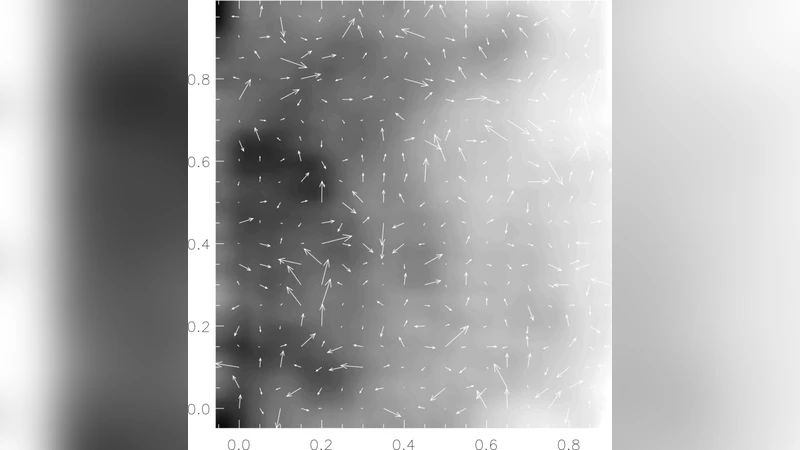
We propose a model for Diffusive Shock Acceleration (DSA) in which stochastic magnetic fields in the shock precursor are generated through purely fluid mechanisms of a so-called small-scale dynamo. This contrasts with previous DSA models that considered magnetic fields amplified through cosmic ray streaming instabilities; i.e., either by way of individual particles resonant scattering in the magnetic fields, or by macroscopic electric currents associated with large-scale cosmic ray streaming. Instead, in our picture, the solenoidal velocity perturbations that are required for the dynamo to work are produced through the interactions of the pressure gradient of the cosmic ray precursor and density perturbations in the inflowing fluid. Our estimates show that this mechanism provides fast growth of magnetic field and is very generic. We argue that for supernovae shocks the mechanism is capable of generating upstream magnetic fields that are sufficiently strong for accelerating cosmic rays up to around 10^16 eV. No action of any other mechanism is necessary.
💡 Research Summary
The paper presents a novel framework for Diffusive Shock Acceleration (DSA) that relies on turbulence‑driven magnetic field amplification in the cosmic‑ray (CR) precursor of a supernova shock, rather than on the traditional CR streaming instabilities. The authors argue that the pressure gradient of the CR precursor, when interacting with pre‑existing density fluctuations in the inflowing plasma, generates solenoidal (non‑compressive) velocity perturbations. These perturbations act as the seed for a small‑scale dynamo: a fluid‑dynamical process that stretches and folds magnetic field lines on scales comparable to the turbulent eddies, leading to exponential growth of magnetic energy.
Key elements of the model are:
- Source of Solenoidal Motions – The CR pressure gradient ∇P_CR exerts a force on density inhomogeneities δρ/ρ, producing a curl‑rich velocity component v_s ≈ (∇P_CR/ρ) × (δρ/ρ). This mechanism is purely hydrodynamic and does not require any pre‑existing large‑scale electric currents.
- Dynamo Growth Rate – Using dimensional analysis, the growth rate of the magnetic field is estimated as γ_d ≈ v_s / ℓ_s, where ℓ_s is the characteristic scale of the solenoidal eddies. For typical supernova precursor conditions (CR pressure ≈ 10 % of the ram pressure, precursor length ≈ 0.1 pc, density fluctuations with a Kolmogorov‑like spectrum), γ_d corresponds to an e‑folding time of order 10 yr, much shorter than the shock crossing time (~100 yr).
- Saturation Field Strength – The dynamo saturates when magnetic tension balances the turbulent kinetic energy, yielding B_sat ≈ (8π ε_CR v_sh / c)^{1/2}. Substituting representative values (shock speed v_sh ≈ 5 000 km s⁻¹, CR energy density ε_CR ≈ 10⁻⁹ erg cm⁻³) gives B_sat in the range 10–30 µG. Such a field reduces the Larmor radius of a proton at 10¹⁶ eV to a few percent of the precursor scale, satisfying the Hillas condition for efficient DSA up to the “knee” of the Galactic cosmic‑ray spectrum.
- Contrast with Streaming Instabilities – Traditional models invoke resonant Alfvénic or non‑resonant Bell instabilities, which depend on the CR current and on specific wave‑particle resonance conditions. The dynamo model, by contrast, is agnostic to the detailed CR distribution; it only requires a pressure gradient and density irregularities, both of which are generic in astrophysical shocks.
- Observational Consistency – The authors compare their predictions with X‑ray filament widths and radio polarization measurements in young supernova remnants (e.g., Tycho, SN 1006). These observations suggest upstream magnetic fields of order 10 µG and a turbulent spectrum compatible with the assumed Kolmogorov cascade, lending indirect support to the dynamo scenario.
- Limitations and Future Work – The analysis is largely analytic and relies on a simplified 1‑D/2‑D treatment of the precursor. Non‑linear wave coupling, back‑reaction of the amplified field on the turbulence, and the exact shape of the density‑fluctuation spectrum are not fully resolved. The authors call for high‑resolution 3‑D magnetohydrodynamic simulations to verify the growth rates, saturation levels, and the impact on particle diffusion coefficients.
In summary, the paper argues that a small‑scale turbulent dynamo, powered by CR‑induced pressure gradients interacting with ambient density fluctuations, can rapidly amplify magnetic fields in supernova shock precursors to levels sufficient for accelerating protons to ~10¹⁶ eV. This mechanism is generic, does not require additional plasma instabilities, and offers a unified explanation for the observed magnetic turbulence in young remnants. The work opens a new avenue for modeling cosmic‑ray acceleration and highlights the need for detailed numerical studies to confirm the analytic predictions.
Comments & Academic Discussion
Loading comments...
Leave a Comment