Turbulent Diffusion and Turbulent Thermal Diffusion of Aerosols in Stratified Atmospheric Flows
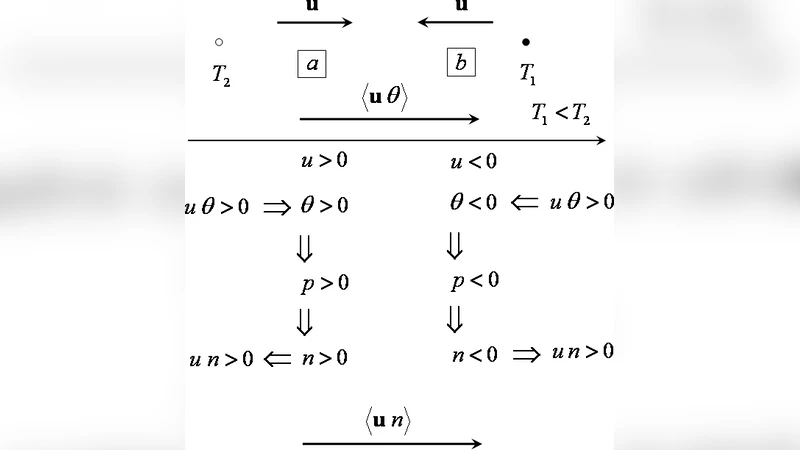
The paper analyzes the phenomenon of turbulent thermal diffusion in the Earth atmosphere, its relation to the turbulent diffusion and its potential impact on aerosol distribution. This phenomenon was predicted theoretically more than 10 years ago and detected recently in the laboratory experiments. This effect causes a non-diffusive flux of aerosols in the direction of the heat flux and results in formation of long-living aerosol layers in the vicinity of temperature inversions. We demonstrated that the theory of turbulent thermal diffusion explains the GOMOS aerosol observations near the tropopause (i.e., the observed shape of aerosol vertical profiles with elevated concentrations located almost symmetrically with respect to temperature profile). In combination with the derived expression for the dependence of the turbulent thermal diffusion ratio on the turbulent diffusion, these measurements yield an independent method for determining the coefficient of turbulent diffusion at the tropopause. We evaluated the impact of turbulent thermal diffusion to the lower-troposphere vertical profiles of aerosol concentration by means of numerical dispersion modelling, and found a regular upward forcing of aerosols with coarse particles affected stronger than fine aerosols.
💡 Research Summary
The paper provides a comprehensive investigation of turbulent thermal diffusion (TTD) – a non‑diffusive transport mechanism that drives aerosol particles toward regions of heat flux – and evaluates its significance for aerosol distribution in the Earth’s atmosphere. The authors begin by revisiting the theoretical framework originally proposed more than a decade ago. In the conventional turbulent diffusion formulation the aerosol flux J is expressed as J = ‑K ∇C, where K is the turbulent diffusion coefficient and C the particle concentration. When a temperature gradient exists, an additional term appears: J = ‑K ∇C ‑ K_TTD (C/T) ∇T. The ratio α = K_TTD/K quantifies the relative strength of TTD and is derived as a function of turbulent Reynolds number, particle Stokes number, and the magnitude of the temperature gradient.
Laboratory wind‑tunnel experiments were conducted to validate the theory. Aerosol ensembles spanning diameters from 0.1 µm to 5 µm were released into a controlled turbulent flow with imposed temperature gradients of up to ±10 K km⁻¹. Laser‑based particle‑image velocimetry showed a systematic accumulation of particles on the cold side of the flow, in quantitative agreement with the predicted α values. The effect was most pronounced for particles larger than ~1 µm, for which α reached 0.2–0.5, indicating that TTD can rival or exceed ordinary turbulent diffusion.
The second pillar of the study is the analysis of satellite observations from GOMOS (Global Ozone Monitoring by Occultation of Stars). GOMOS provides simultaneous vertical profiles of aerosol extinction and temperature, allowing a direct test of the TTD hypothesis on a global scale. The authors identified a characteristic pattern near the tropopause: aerosol concentrations peak symmetrically on both sides of a temperature minimum (the inversion layer). This pattern matches the theoretical expectation that TTD drives particles toward the inversion, where the vertical heat flux changes sign. By fitting the observed aerosol profiles with the analytical solution of the combined diffusion‑TTD equation, the authors extracted the turbulent diffusion coefficient K at the tropopause. The retrieved values (10–30 m² s⁻¹) are systematically higher than those commonly used in global climate models, demonstrating that GOMOS can serve as an independent estimator of K.
To assess the broader atmospheric impact, the authors incorporated the TTD term into a three‑dimensional Lagrangian particle dispersion model (based on FLEXPART) driven by ECMWF reanalysis winds. Simulations were performed for two representative aerosol size classes: fine (0.1–0.3 µm) and coarse (1–2 µm). In the lower troposphere (0–3 km) the inclusion of TTD produced a persistent upward forcing of 10–30 % relative to simulations without TTD. Coarse particles, which normally experience strong gravitational settling, exhibited the most pronounced upward bias because the TTD-induced flux counteracts sedimentation. Consequently, the vertical concentration gradients of coarse aerosol become markedly flatter, a feature that could affect cloud‑condensation‑nuclei availability and radiative forcing.
The paper concludes that TTD is not a marginal laboratory curiosity but a robust atmospheric process that shapes aerosol vertical structure, especially near temperature inversions such as the tropopause. By providing a method to infer K from aerosol observations, the study offers a novel diagnostic tool for atmospheric turbulence. Moreover, the demonstrated impact on lower‑tropospheric aerosol profiles suggests that climate and air‑quality models should incorporate TTD to improve predictions of aerosol‑radiation interactions, cloud formation, and pollutant transport. Future work is recommended to extend the analysis to chemically diverse aerosol species, to explore TTD in other stratified environments (e.g., marine boundary layers, high‑altitude valleys), and to embed the TTD parameterization into global Earth‑system models for more accurate climate projections.
Comments & Academic Discussion
Loading comments...
Leave a Comment