Gamma-Ray Telescopes (in "400 Years of Astronomical Telescopes")
The last half-century has seen dramatic developments in gamma-ray telescopes, from their initial conception and development through to their blossoming into full maturity as a potent research tool in astronomy. Gamma-ray telescopes are leading research in diverse areas such as gamma-ray bursts, blazars, Galactic transients, and the Galactic distribution of aluminum-26.
💡 Research Summary
The paper provides a comprehensive review of the evolution of gamma‑ray telescopes over the past half‑century, tracing their journey from early conceptual experiments to the sophisticated space‑borne and ground‑based observatories that now constitute a cornerstone of high‑energy astrophysics. It begins by emphasizing the unique scientific importance of gamma‑ray astronomy: photons in the MeV to TeV range arise from nuclear reactions, relativistic particle acceleration, and extreme gravity, offering a direct probe of phenomena that are inaccessible at longer wavelengths.
Historical development is divided into three eras. The first era (1960s‑1970s) featured ground‑based detectors that relied on atmospheric particle showers and early balloon‑borne scintillators. Sensitivity was low, sky coverage limited, and background contamination high. The second era was inaugurated by the launch of NASA’s Compton Gamma Ray Observatory (CGRO) in 1991, which carried four complementary instruments (BATSE, EGRET, COMPTEL, OSSE). This mission demonstrated the power of all‑sky monitoring, leading to the discovery of thousands of gamma‑ray bursts (GRBs) and establishing their cosmological origin. The third era, beginning with the Fermi Large Area Telescope (LAT) and the INTEGRAL mission, introduced sophisticated pair‑production tracking detectors and hybrid scintillator‑semiconductor spectrometers, achieving sub‑arcminute angular resolution and energy resolutions of a few percent across a broad band (∼30 keV to >300 GeV).
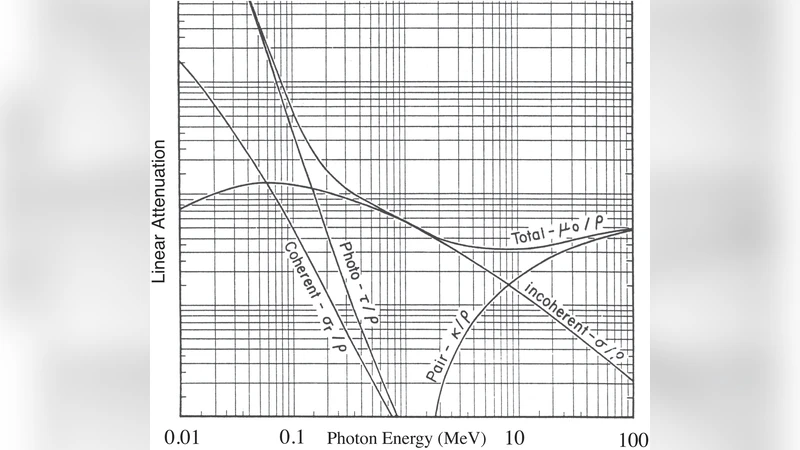
Technical analysis focuses on two principal detection principles. Pair‑production trackers use high‑Z converter layers (tungsten or lead) to convert incoming gamma photons into electron‑positron pairs; subsequent silicon strip or gas micro‑pattern detectors record the trajectories, enabling precise reconstruction of the photon’s direction and energy. This method excels at energies above ∼100 MeV and is the workhorse of Fermi‑LAT and future missions such as AMEGO. For lower energies (tens of keV to a few MeV), scintillation crystals (NaI, CsI) coupled with high‑purity germanium or CdZnTe detectors provide excellent spectral resolution and large effective area, as demonstrated by INTEGRAL/SPI and NuSTAR’s focusing optics. The combination of these technologies in a single payload yields continuous coverage across the historically “MeV gap.”
Data processing has evolved from simple count‑rate monitoring to advanced pipelines that incorporate machine‑learning classifiers, background modeling, and real‑time alert distribution. Modern systems can identify transient events within milliseconds, automatically generate GCN (Gamma‑ray Coordinates Network) notices, and trigger coordinated observations across optical, X‑ray, radio, and gravitational‑wave facilities. This multi‑messenger capability has been crucial for landmark events such as GRB 170817A, the gamma‑ray counterpart of the binary neutron‑star merger detected by LIGO/Virgo.
Scientific applications are illustrated through four case studies. (1) GRBs: high‑time‑resolution spectroscopy reveals prompt emission mechanisms, jet composition, and the role of magnetic reconnection. (2) Blazars and other active galactic nuclei: continuous monitoring of GeV–TeV fluxes constrains jet particle acceleration and external photon fields. (3) Galactic transients, including supernovae and magnetar flares: gamma‑ray line and continuum measurements trace nucleosynthesis and magnetic energy release. (4) The 1.809 MeV line from radioactive ^26Al: mapping this line across the Milky Way provides a direct view of recent massive‑star activity and the large‑scale distribution of freshly synthesized material.
The outlook section discusses upcoming facilities. The Cherenkov Telescope Array (CTA) will extend ground‑based sensitivity into the 20 GeV–300 TeV range with unprecedented angular resolution (∼0.05°) and sub‑minute temporal response, opening a new window on rapid variability in blazars and Galactic binaries. The proposed All‑sky Medium Energy Gamma‑ray Observatory (AMEGO) aims to fill the MeV gap with a combined Compton‑pair tracker, delivering all‑sky surveys from 200 keV to 10 GeV and enabling population studies of faint transients and diffuse emission. Both projects emphasize modular, low‑background designs and real‑time data pipelines, ensuring seamless integration with the broader multi‑messenger network.
In conclusion, the paper argues that gamma‑ray telescopes have transitioned from niche experiments to indispensable astronomical instruments, driven by advances in detector physics, spacecraft engineering, and data science. Their continued development promises deeper insight into the most energetic processes in the universe, from the birth of elements in supernovae to the physics of relativistic jets and the nature of dark matter annihilation signatures. The next generation of observatories will not only sharpen our view of known phenomena but also likely uncover entirely new classes of high‑energy transients, cementing gamma‑ray astronomy’s role at the frontier of astrophysical research.
Comments & Academic Discussion
Loading comments...
Leave a Comment