Wouthuysen-Field Coupling in the 21 cm Region Around High Redshift Sources
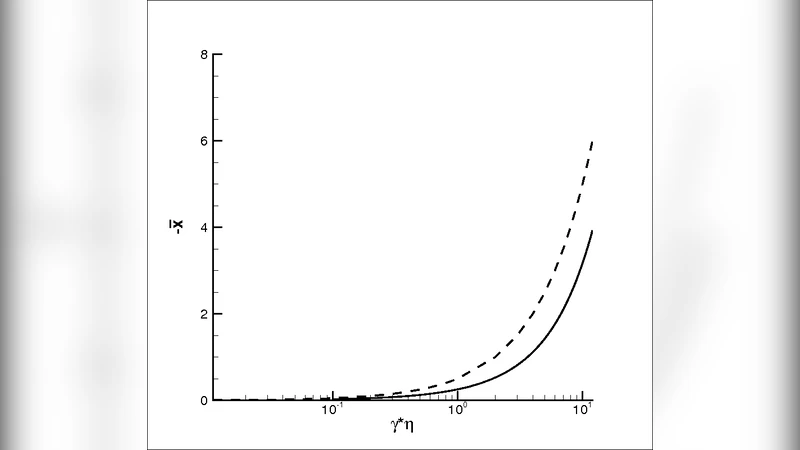
The 21 cm emission and absorption from gaseous halos around the first generation of star depend on the Wouthuysen-Field (W-F) coupling, which relates the spin temperature with the kinetic temperature of hydrogen gas via the resonant scattering between Lyman alpha photons and neutral hydrogen. Although the center object generally is a strong source of these photons, the transfer of these photons in the 21 cm region is inefficient, as the optical depth of the photons is large. Consequently, these photons from the source may not be able to transfer to the entire 21 cm region timely to provide the W-F coupling. This problem is important because the lifetime of first stars generally is short. The problem is investigated with numerical solution of the integro-differential equation, which describes the kinetics of these resonant photons in both physical and frequency spaces. We show that the photon transfer process in the physical space is actually coupled to that in the frequency space. Firstly diffusion in the frequency space provides a shortcut for the diffusion in the physical space. It makes the mean time for the escape of the resonant photon in optical depth \tau media roughly proportional to the optical depth \tau, not \tau^2. Secondly the resonant scattering is effective in bouncing photons with a frequency which is not equal to initial frequency back to the initial frequency. This process can restore initial frequency photons and establish the local Boltzmann distribution of the photon spectrum around the initial frequency. Therefore, the mechanism of ’escape via shortcut’ plus ‘bounce back’ enables W-F coupling to be properly realized in the 21 cm region around first stars. This mechanism also works for photons injected into the 21 cm region by redshift.
💡 Research Summary
The paper investigates how the Wouthuysen‑Field (W‑F) coupling— the process that ties the hydrogen spin temperature (Tₛ) to the kinetic temperature (Tₖ) via resonant scattering of Lyman‑α photons— operates in the 21 cm region surrounding the first generation of stars (Population III). A major obstacle is the extremely large optical depth (τ ≈ 10³–10⁴) of neutral hydrogen to Lyman‑α photons. In a conventional picture, photons would diffuse through the physical space on a timescale proportional to τ², far longer than the short lifetimes (a few Myr) of the first stars, implying that the Lyman‑α background could not be established throughout the whole 21 cm halo before the source disappears.
To resolve this, the authors solve the full integro‑differential radiative‑transfer equation for the photon distribution f(r, ν, t), which simultaneously tracks evolution in physical radius r and frequency ν. Two coupled mechanisms emerge.
-
Frequency‑space shortcut – During each resonant scattering, thermal motions of hydrogen atoms cause a Doppler shift, moving photons from the line centre ν₀ to frequencies ν₀ ± Δν. The optical depth at these offset frequencies is dramatically lower, allowing photons to travel a much larger effective distance per scattering event. Consequently, the mean escape time scales linearly with τ rather than τ². Numerical experiments confirm that for τ ≈ 10⁴ the average escape time is of order 10 τ, a reduction by two orders of magnitude.
-
Bounce‑back (re‑thermalisation) – Photons that have drifted away from ν₀ are repeatedly scattered back toward the line centre. This “bounce‑back” process restores the population of ν₀ photons and drives the spectrum near ν₀ toward a local Boltzmann distribution. As a result, the Lyman‑α photon density at the line centre remains high enough to sustain a strong W‑F coupling throughout the halo.
The study examines two photon sources: (i) Lyman‑α photons emitted directly by the central star, and (ii) photons that enter the halo after being red‑shifted by cosmic expansion. Both cases benefit from the shortcut‑plus‑bounce‑back mechanism; even red‑shifted photons, initially below ν₀, can diffuse in frequency space back to the line centre and contribute to the local coupling.
Key conclusions are:
- The combined spatial‑frequency diffusion dramatically accelerates photon transport, reducing the effective diffusion time from τ² to τ.
- The bounce‑back effect maintains a quasi‑thermal photon spectrum around ν₀, guaranteeing a persistent Lyman‑α background.
- Because of these effects, the W‑F coupling can be established across the entire 21 cm region well within the brief lifetimes of the first stars.
- This enhanced coupling implies that 21 cm absorption or emission signals from the epoch of the first galaxies may be stronger and more spatially extended than previously estimated, providing a more robust probe of early star formation, the thermal history of the intergalactic medium, and the onset of cosmic reionization.
Overall, the paper delivers a rigorous, numerically validated framework that reconciles the high optical depth of primordial halos with the rapid establishment of W‑F coupling, thereby refining theoretical predictions for upcoming 21 cm observations.
Comments & Academic Discussion
Loading comments...
Leave a Comment