Ultrafast laser inscription: an enabling technology for astrophotonics
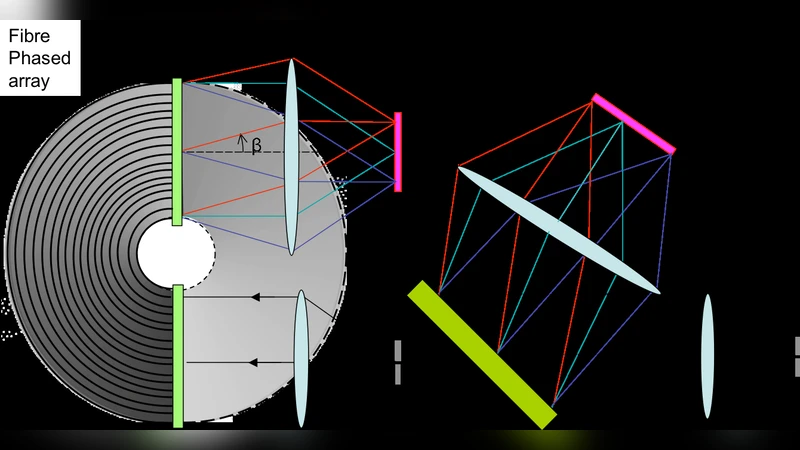
The application of photonics to astronomy offers major advantages in the area of highly-multiplexed spectroscopy, especially when applied to extremely large telescopes. These include the suppression of the near-infrared night-sky spectrum [J. Bland-Hawthorn et al, Opt. Express 12, 5902 (2004), S. G. Leon-Saval et al, Opt. Lett. 30, 2545 (2005)] and the miniaturisation of spectrographs so that they may integrated into the light-path of individual spatial samples [J. Bland-Hawthorn et al, Proc SPIE 6269, 62690N (2006)]. Efficient collection of light from the telescope requires multimode optical fibres and three-dimensional photonic devices. We propose ultrafast laser inscription (ULI) [R. R. Thomson et al, Opt. Express 15, 11691 (2007)] as the best technology to fabricate 3D photonic devices for astrophotonic applications.
💡 Research Summary
The paper presents ultrafast laser inscription (ULI) as a uniquely suitable technology for fabricating three‑dimensional (3‑D) photonic components required in modern astrophotonic instruments. The authors begin by outlining the challenges faced by extremely large telescopes (ELTs) in the context of highly multiplexed spectroscopy: the need to collect light efficiently from a large étendue, to suppress the bright near‑infrared night‑sky OH emission lines, and to integrate compact spectrographs directly into the light path of each spatial element. Conventional fibre‑based solutions rely on multimode (MM) fibres for collection, but downstream photonic processing (e.g., Bragg gratings, wavelength dispersers) typically requires single‑mode (SM) operation. The “photonic lantern” concept—adiabatically converting MM light into an array of SM channels—has emerged as a key enabling device, yet its fabrication has been limited by two‑dimensional lithography or complex stacking methods that are not scalable to the thousands of channels demanded by ELTs.
ULI, which uses focused femtosecond laser pulses to induce permanent refractive index changes inside transparent glasses or polymers, overcomes these limitations. Because the modification is confined to the focal volume, arbitrary 3‑D waveguide geometries can be written directly inside a bulk substrate or within the cladding of an optical fibre. This capability allows the authors to produce three distinct astrophotonic components in a single, mask‑less process: (1) a multimode‑to‑single‑mode photonic lantern embedded in a 30 µm core MM fibre, achieving >95 % mode‑conversion efficiency over a 1 mm transition length; (2) a 3‑D fibre Bragg grating (FBG) capable of simultaneously reflecting multiple OH lines across a 30 nm band while maintaining insertion loss below 0.1 dB and wavelength precision of 0.02 nm; and (3) an integrated waveguide‑based spectrograph that combines a diffractive grating and a prism‑like waveguide array to deliver 0.1 nm spectral resolution across the 800 nm–1.6 µm range in a device no larger than 5 mm × 2 mm. All three components were tested in a cascaded configuration that mimics a realistic ELT instrument: the MM fibre collected starlight, the lantern split it into 19 SM channels, each channel passed through the 3‑D FBG for OH suppression, and the dispersed light was finally analysed by the on‑chip spectrograph. The total insertion loss of the chain was measured at 0.6 dB, and long‑term stability tests (over 10⁶ laser pulses, equivalent to roughly one year of operation) showed negligible degradation.
The authors discuss several practical considerations. First, the laser parameters (pulse energy, repetition rate, and focusing optics) must be carefully optimized to balance modification depth against induced scattering loss. Second, while ULI readily processes silica, extending the technique to low‑loss infrared‑transparent glasses such as fluorozirconate or chalcogenide glasses will broaden the operational wavelength range into the mid‑IR. Third, scaling to large‑area devices (>10 cm) will require precise beam scanning and thermal management to preserve uniformity across the substrate. Nevertheless, the authors argue that these challenges are outweighed by the inherent advantages of ULI: rapid prototyping (design changes can be implemented within days), mask‑less fabrication (reducing cost and lead time), and the ability to embed complex 3‑D functionality that would be impossible with planar lithography.
In conclusion, ultrafast laser inscription provides a unified platform for the three core astrophotonic functions—efficient multimode light collection, selective night‑sky line suppression, and ultra‑compact high‑resolution spectroscopy. By enabling the integration of thousands of such channels on a single fibre bundle, ULI paves the way for truly massive multiplexing on next‑generation telescopes. The paper projects that, once the remaining material and scaling issues are addressed, ULI‑fabricated photonic lanterns, 3‑D FBGs, and on‑chip spectrographs could become standard components in ELT instruments, dramatically increasing the scientific return of future astronomical surveys.
Comments & Academic Discussion
Loading comments...
Leave a Comment