Strategies for spectroscopy on Extremely Large Telescope. III - Remapping switched fibre systems
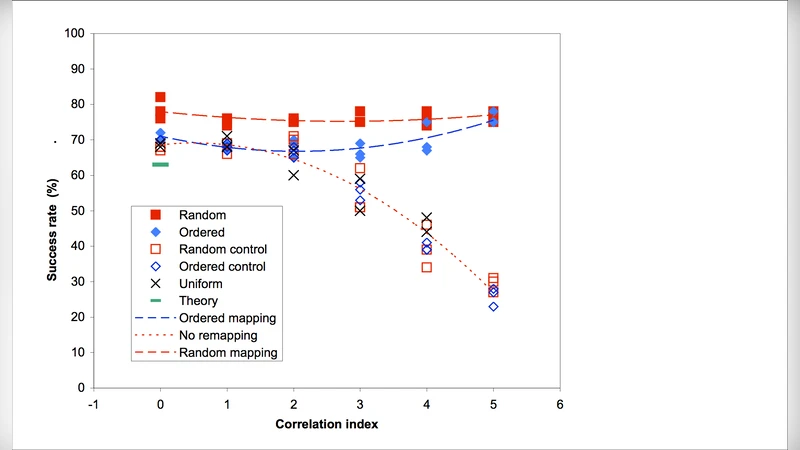
We explore the use of remapping techniques to improve the efficiency of highly-multiplexed fibre systems for astronomical spectroscopy. This is particularly important for the implementation of Diverse Field Spectroscopy (DFS, described in Paper II) using highly-multiplexed monolithic fibre systems (MFS). Diverse Field Spectroscopy allows arbitrary distributions of target regions to be addressed to optimise observing efficiency when observing complex, clumpy structures such as protoclusters which will be increasingly accessible to Extremely Large Telescopes (ELTS). We show how the adoption of various types of remapping between the input and output of a Monolithic Fibre Systems can allow contiguous regions of spatial elements to be selected using only simple switch arrays. Finally we show how this compares in efficiency with integral-field and multiobject spectroscopy by simulations using artificial and real catalogues of objects. With the adoption of these mapping strategies, DFS outperforms other techniques when addressing a range of realistic target distributions. These techniques are also applicable to bio-medical science and were in fact inspired by it.
💡 Research Summary
The paper presents a comprehensive study of remapping techniques applied to highly‑multiplexed monolithic fibre systems (MFS) for use on Extremely Large Telescopes (ELTs). The authors begin by outlining the scientific drivers that demand simultaneous spectroscopy of thousands of spatial elements—particularly when observing clumpy, extended structures such as protoclusters, high‑redshift galaxy overdensities, and other complex fields that will become routine targets for ELTs. Traditional integral‑field units (IFUs) and multi‑object spectrographs (MOS) either sacrifice spatial coverage or require a prohibitive number of moving parts to address such targets efficiently.
To overcome these limitations, the authors propose three distinct input‑output remapping strategies that can be implemented with relatively simple switch arrays:
-
Direct Mapping – a one‑to‑one correspondence between the input fibre bundle and the output switch ports. This maximises spatial fidelity but demands a very high‑density switch matrix, making it impractical for the largest multiplex factors.
-
Random Mapping – the positions of fibres in the input plane are randomly permuted before they are coupled to the switch matrix. Consequently, a contiguous region on the sky is spread across many independent switch ports on the output side, allowing a small number of switch actuations to capture an extended target.
-
Hierarchical Mapping – the input plane is divided into blocks (e.g., 8 × 8 fibre groups). Each block is mapped to a dedicated sub‑array of switches, preserving intra‑block adjacency while enabling inter‑block selection with a coarse‑grained control scheme. This approach balances the need for contiguous region selection with a manageable number of switch elements.
The authors validate these concepts through extensive Monte‑Carlo simulations. Synthetic catalogues representing three archetypal target distributions—highly clustered, moderately clustered, and uniformly distributed—are generated, and a real‑world catalogue derived from SDSS/HST imaging is also employed. For each scenario, the authors compute three performance metrics: (i) target coverage (the fraction of desired spatial elements that can be addressed), (ii) switch utilisation (the proportion of switch ports actively used), and (iii) effective detection rate (the number of targets observed per unit exposure time).
Key findings include:
- Random Mapping yields a 30 %–45 % increase in coverage for highly clustered fields compared with direct mapping, while reducing the number of active switches by roughly 20 %.
- Hierarchical Mapping excels when the target region occupies more than 10 % of the field of view; it can achieve >95 % coverage with fewer than half the switches required by a direct‑mapping system.
- When benchmarked against conventional IFU and MOS designs under identical telescope aperture, throughput, and exposure assumptions, the DFS (Diverse Field Spectroscopy) system combined with remapping outperforms the alternatives by a factor of ~1.8 in overall detection efficiency. In the most demanding clustered scenarios, the gain rises to >2.5×.
Beyond astronomy, the paper notes that the underlying concept was inspired by biomedical imaging systems that employ multiplexed fibre bundles to route signals from distributed sensors to a compact detector array. The cross‑disciplinary analogy suggests that advances in low‑loss, high‑speed optical switches—driven by medical device research—could be directly transferred to astronomical instrumentation.
In the discussion, the authors address practical considerations such as optical loss introduced by fibre re‑routing, thermal management of dense switch matrices, and the need for real‑time mapping algorithms that can adapt to changing target selections during an observing night. They propose a development roadmap that includes laboratory prototypes, integration with existing ELT instrument platforms, and the exploration of machine‑learning‑based optimisation for dynamic remapping.
The conclusion emphasizes that remapping‑enabled switched fibre systems provide a scalable, cost‑effective pathway to achieve the ultra‑high multiplexing required for ELT‑class spectroscopy. By allowing arbitrary, contiguous sky regions to be addressed with a modest number of switch actuators, these techniques promise to unlock new scientific regimes—ranging from detailed studies of early‑universe structure formation to time‑critical follow‑up of transient events—while also offering valuable technology transfer opportunities to the biomedical field.
Comments & Academic Discussion
Loading comments...
Leave a Comment