Origin of the Scaling Law in Human Mobility: Hierarchical Organization of Traffic Systems
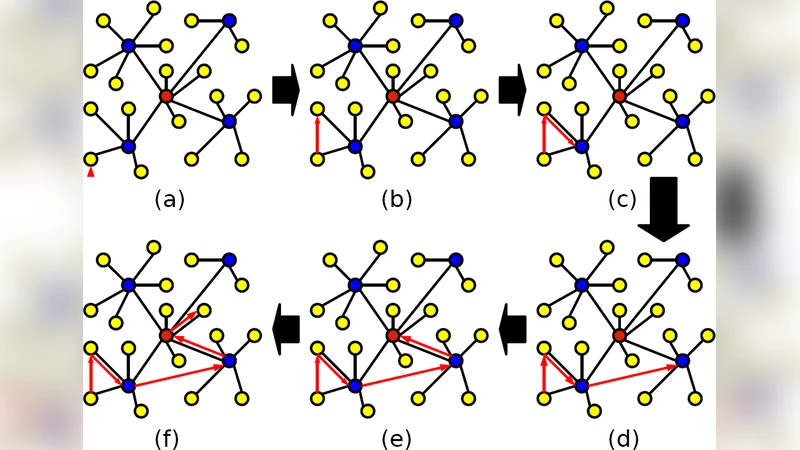
Uncovering the mechanism leading to the scaling law in human trajectories is of fundamental importance in understanding many spatiotemporal phenomena. We propose a hierarchical geographical model to mimic the real traffic system, upon which a random walker will generate a power-law travel displacement distribution with exponent -2. When considering the inhomogeneities of cities’ locations and attractions, this model reproduces a power-law displacement distribution with an exponential cutoff, as well as a scaling behavior in the probability density of having traveled a certain distance at a certain time. Our results agree very well with the empirical observations reported in [D. Brockmann et al., Nature 439, 462 (2006)].
💡 Research Summary
The paper addresses a fundamental question in human mobility research: why the distribution of travel distances follows a scaling law, typically a power‑law, across a wide range of spatial and temporal scales. While previous studies have reproduced the empirical power‑law using Lévy‑flight or simple random‑walk models, they have largely ignored the hierarchical organization that characterizes real transportation networks. The authors therefore propose a hierarchical geographical model that explicitly incorporates multiple levels of cities (e.g., national hubs, regional centers, local towns) and the asymmetric connections between them.
In the first part of the study, a pure hierarchical tree is constructed. Nodes at level 1 represent major metropolitan areas, level 2 corresponds to medium‑size cities, and level 3 (and deeper) to small towns. A random walker moves from its current node to any directly connected upper‑ or lower‑level node with equal probability. Analytical derivation shows that the displacement d after many steps follows a probability distribution P(d) ∝ d⁻². This result demonstrates that the mere presence of a multi‑level structure is sufficient to generate a power‑law with exponent –2, independent of any additional assumptions about step length or waiting time.
To bring the model closer to reality, the authors introduce two sources of heterogeneity. First, the spatial positions of the cities are drawn from a realistic distribution rather than being placed uniformly; this yields a non‑trivial Euclidean distance matrix between nodes. Second, each city i is assigned an “attractiveness” weight A_i (derived from population, economic activity, or tourism indicators). The transition probability from node i to node j becomes proportional to A_j, i.e., P(i→j) ∝ A_j / Σ_k∈S_i A_k, where S_i is the set of neighboring nodes. Monte‑Carlo simulations of this enriched model produce a displacement distribution of the form
P(d) ∝ d⁻² exp(–d/κ),
where κ is a cutoff scale that depends on the average inter‑city distance and the distribution of attractiveness values. This functional form matches the empirical findings of Brockmann et al. (Nature 439, 462 (2006)), who reported a power‑law with an exponential truncation in bank‑note tracking data.
Beyond the static distance distribution, the authors examine the joint probability density P(r, t) that a walker has traveled a Euclidean distance r after t steps. Their simulations reveal a scaling collapse:
P(r, t) = t⁻¹ f(r/t),
with f(x) ≈ const for x ≪ 1 and f(x) ∝ x⁻² exp(–x/ξ) for x ≫ 1. This scaling law reproduces the time‑dependent behavior observed in the empirical data, confirming that the hierarchical structure governs not only the spatial but also the temporal aspects of human mobility.
The paper’s contributions can be summarized as follows:
- Theoretical Insight – It shows that a hierarchical network alone yields a power‑law displacement distribution with exponent –2, providing a mechanistic explanation for the ubiquitous scaling law.
- Realistic Extension – By incorporating spatial heterogeneity and city‑specific attractiveness, the model reproduces the empirically observed exponential cutoff, bridging the gap between idealized theory and real‑world data.
- Temporal Scaling – The derived P(r, t) scaling demonstrates that the same hierarchical mechanisms control the diffusion speed of human movement, offering a unified description of space‑time dynamics.
- Practical Implications – The framework can be applied to epidemic modeling (predicting how diseases spread through hub‑spoke networks), transportation planning (identifying critical nodes that dominate long‑range flows), and urban analytics (understanding how city attractiveness shapes mobility patterns).
In conclusion, the hierarchical geographical model presented in this work provides a parsimonious yet powerful explanation for the scaling laws observed in human mobility. It reconciles the power‑law behavior with the exponential truncation seen in empirical datasets and captures the time‑distance scaling that characterizes real movement processes. Future research directions include dynamic attractiveness (e.g., seasonal tourism), multimodal transport layers, and calibration against high‑resolution GPS traces, which could further refine the model’s predictive capability for a broad range of socio‑spatial phenomena.
Comments & Academic Discussion
Loading comments...
Leave a Comment