Studying the spectral properties of Active Galactic Nuclei in the JWST era
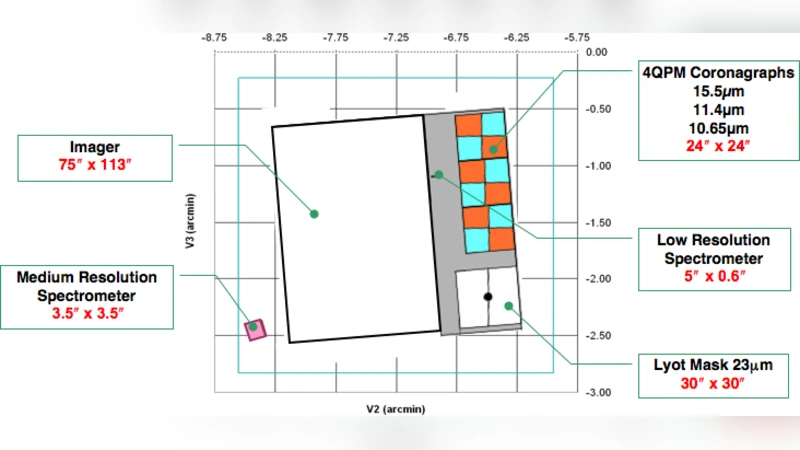
The James Webb Space Telescope (JWST), due to launch in 2014, shall provide an unprecedented wealth of information in the near and mid-infrared wavelengths, thanks to its high-sensitivity instruments and its 6.5 m primary mirror, the largest ever launched into space. NIRSpec and MIRI, the two spectrographs onboard JWST, will play a key role in the study of the spectral features of Active Galactic Nuclei in the 0.6-28 micron wavelength range. This talk aims at presenting an overview of the possibilities provided by these two instruments, in order to prepare the astronomical community for the JWST era.
💡 Research Summary
The paper provides an overview of the unprecedented opportunities that the James Webb Space Telescope (JWST) will bring to the study of active galactic nuclei (AGN) through its two primary spectrographs, NIRSpec and MIRI. JWST’s 6.5‑meter primary mirror and state‑of‑the‑art infrared detectors will deliver dramatically higher sensitivity and spatial resolution than any previous space‑based infrared observatory. NIRSpec covers the 0.6‑5 µm range with three spectral resolution modes (R≈100, 1000, 2700) and a multi‑object spectroscopy (MOS) capability that can observe up to a hundred targets simultaneously. This enables precise measurements of key near‑infrared emission lines such as Pa α, Br γ, and
Comments & Academic Discussion
Loading comments...
Leave a Comment