3D spectroscopic study of galactic rings: formation and kinematics
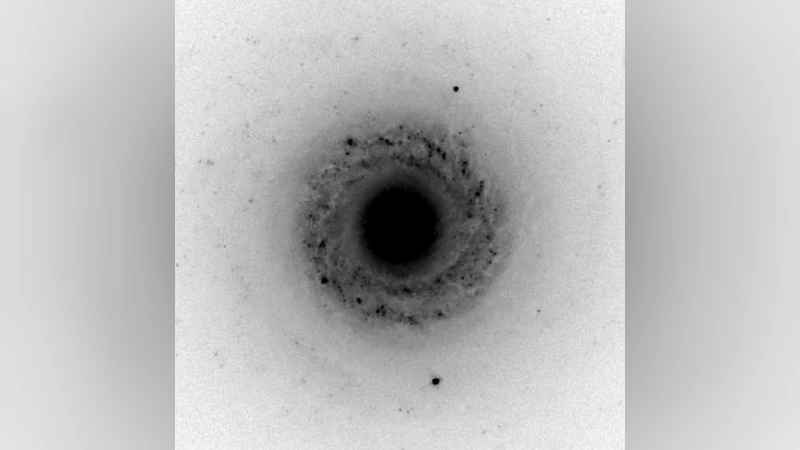
In this review we consider various ring structures that are observed in galaxies. Formation and evolution of the rings are interesting problems in studies of galactic morphology. They are related to such fundamental aspects of galactic evolution and dynamics as the nature and distribution of the dark matter in galaxies, galactic interactions and internal secular evolution of galactic substructures. A significant fraction of galactic rings forms in the disks due to gravitational torques from bar-like patterns. In contrast to this internally driven origin, the phenomenon of the polar-ring galaxies is closely connected with the processes of intergalactic interactions and merging. A rare class of collisional rings reveals the density waves triggered in the stellar and gaseous disks after a strong head-on collision with a companion. We briefly review the status of studies of gas kinematics in the rings of different origin. We stress that velocity fields of the ionized gas obtained with the Fabry-Perot interferometers provide a very important information for these studies.
💡 Research Summary
This review provides a comprehensive synthesis of the current understanding of galactic rings, focusing on their formation mechanisms, evolutionary pathways, and the kinematic information that can be extracted from three‑dimensional spectroscopic observations. The authors begin by classifying rings into three broad families: (i) resonance rings produced by bar‑driven gravitational torques, (ii) polar‑ring systems that arise from the accretion of external material during galaxy‑galaxy interactions or mergers, and (iii) collisional rings generated by head‑on impacts of a companion galaxy that launch outward‑propagating density waves in the host disk. Each class is discussed in the context of modern N‑body and hydrodynamical simulations, highlighting the key physical parameters—such as bar pattern speed, dark‑matter halo shape, impact velocity, and mass ratio—that dictate ring size, morphology, and longevity.
A central theme of the paper is the pivotal role of ionized‑gas velocity fields in diagnosing ring dynamics. The authors emphasize that Fabry‑Perot interferometers, with their combination of high spectral resolution and wide field of view, deliver two‑dimensional velocity maps of H α and
Comments & Academic Discussion
Loading comments...
Leave a Comment