Simulations of the Microwave Sky
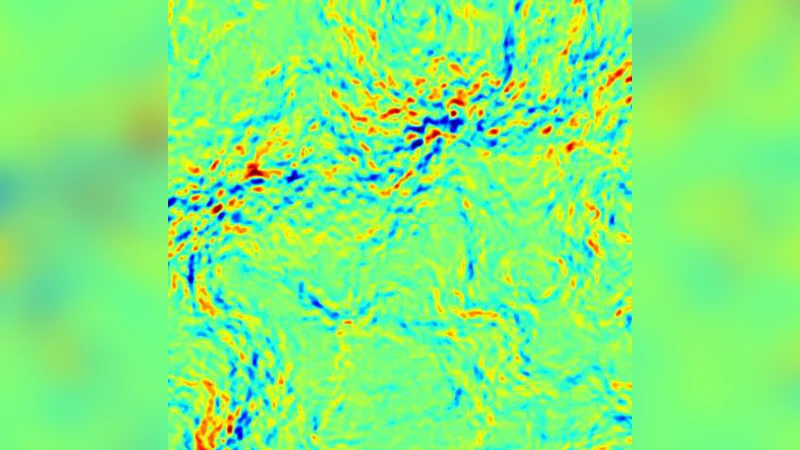
We create realistic, full-sky, half-arcminute resolution simulations of the microwave sky matched to the most recent astrophysical observations. The primary purpose of these simulations is to test the data reduction pipeline for the Atacama Cosmology Telescope (ACT) experiment; however, we have widened the frequency coverage beyond the ACT bands to make these simulations applicable to other microwave background experiments. Some of the novel features of these simulations are that the radio and infrared galaxy populations are correlated with the galaxy cluster populations, the CMB is lensed by the dark matter structure in the simulation via a ray-tracing code, the contribution to the thermal and kinetic Sunyaev-Zel’dovich (SZ) signals from galaxy clusters, groups, and the IGM has been included, and the gas prescription to model the SZ signals matches the most recent X-ray observations. Regarding the contamination of cluster SZ flux by radio galaxies, we find for 148 GHz (90 GHz) only 3% (4%) of halos have their SZ decrements contaminated at a level of 20% or more. We find the contamination levels higher for infrared galaxies. However, at 90 GHz, less than 20% of clusters with M_{200} > 2.5 x 10^{14} Msun and z<1.2 have their SZ decrements filled in at a level of 20% or more. At 148 GHz, less than 20% of clusters with M_{200} > 2.5 x 10^{14} Msun and z<0.8 have their SZ decrements filled in at a level of 50% or larger. Our models also suggest that a population of very high flux infrared galaxies, which are likely lensed sources, contribute most to the SZ contamination of very massive clusters at 90 and 148 GHz. These simulations are publicly available and should serve as a useful tool for microwave surveys to cross-check SZ cluster detection, power spectrum, and cross-correlation analyses.
💡 Research Summary
The paper presents a comprehensive set of full‑sky microwave sky simulations with a half‑arcminute (0.5′) angular resolution, designed primarily to test the data‑reduction pipeline of the Atacama Cosmology Telescope (ACT) but also made applicable to a broad range of current and future microwave background experiments. The authors combine several state‑of‑the‑art ingredients: a high‑resolution N‑body dark‑matter simulation provides the large‑scale structure; a ray‑tracing code projects the gravitational lensing of the Cosmic Microwave Background (CMB) through this structure; a gas prescription calibrated to the latest X‑ray observations yields realistic thermal and kinetic Sunyaev‑Zel’dovich (SZ) signals from galaxy clusters, groups, and the intergalactic medium (IGM); and empirically based catalogs of radio and infrared (IR) galaxies are placed in the simulation with explicit spatial correlations to the underlying halo population.
Key methodological steps include: (1) construction of a halo catalog with masses and redshifts spanning the range relevant for SZ studies; (2) assignment of gas pressure profiles that match observed X‑ray scaling relations, allowing the calculation of both thermal SZ (tSZ) and kinetic SZ (kSZ) contributions; (3) generation of radio AGN and dusty star‑forming galaxy (DSFG) populations using observed number counts, spectral indices, and clustering bias, ensuring that a fraction of these sources reside within massive halos; (4) implementation of multi‑frequency beam convolution (90 GHz, 148 GHz, 220 GHz, etc.) and realistic instrumental noise models. The resulting maps are provided in standard FITS format, enabling immediate use for power‑spectrum estimation, cluster detection tests, and cross‑correlation analyses with external data sets.
The authors quantify the impact of contaminating sources on SZ measurements. At 148 GHz, only about 3 % of halos have their SZ decrement reduced by 20 % or more due to embedded radio galaxies; at 90 GHz the figure is slightly higher at 4 %. Infrared galaxies produce a larger contamination, but even at 90 GHz fewer than 20 % of clusters with M₍₂₀₀₎ > 2.5 × 10¹⁴ M☉ and redshift z < 1.2 suffer a ≥20 % “filling‑in” of their SZ signal. At 148 GHz, the analogous fraction is below 20 % for clusters with the same mass cut but limited to z < 0.8 when the contamination threshold is set at 50 %. The study identifies a sub‑population of very bright IR galaxies—most likely strongly lensed high‑redshift DSFGs—as the primary drivers of SZ contamination in the most massive clusters at both frequencies.
The paper also discusses limitations. The gas model, while calibrated to X‑ray data, does not fully incorporate complex feedback processes (e.g., AGN jets, supernova heating) or metallicity variations, which could affect SZ predictions for low‑mass systems. The spectral energy distributions of radio and IR sources are treated with average indices, so source‑to‑source variability and extreme spectral curvature are not captured, introducing uncertainties especially at higher frequencies (>220 GHz). Moreover, the lensing model for IR galaxies relies on the underlying dark‑matter distribution and does not include possible baryonic effects on the lensing potential.
In conclusion, the authors deliver a publicly available, high‑fidelity microwave sky simulation suite that integrates CMB lensing, realistic SZ physics, and correlated foreground populations. These simulations constitute a valuable benchmark for testing cluster detection algorithms, assessing SZ‑induced biases, and performing cross‑correlation studies with optical, X‑ray, and spectroscopic surveys. By making the data openly accessible, the work provides the community with a versatile tool to validate analysis pipelines and to explore systematic effects in current and upcoming CMB experiments such as SPT‑3G, Simons Observatory, and CMB‑S4.
Comments & Academic Discussion
Loading comments...
Leave a Comment