The Fermi Gamma-Ray Burst Monitor
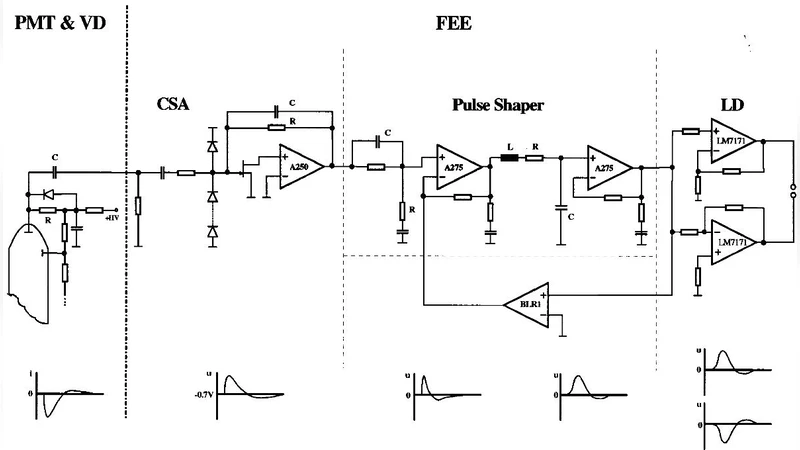
The Gamma-Ray Burst Monitor (GBM) will significantly augment the science return from the Fermi Observatory in the study of Gamma-Ray Bursts (GRBs). The primary objective of GBM is to extend the energy range over which bursts are observed downward from the energy range of the Large Area Telescope (LAT) on Fermi into the hard X-ray range where extensive previous data exist. A secondary objective is to compute burst locations on-board to allow re-orientiong the spacecraft so that the LAT can observe delayed emission from bright bursts. GBM uses an array of twelve sodium iodide scintillators and two bismuth germanate scintillators to detect gamma rays from ~8 keV to ~40 MeV over the full unocculted sky. The on-board trigger threshold is ~0.7 photons/cm2/s (50-300 keV, 1 s peak). GBM generates on-board triggers for ~250 GRBs per year.
💡 Research Summary
The Fermi Gamma‑Ray Burst Monitor (GBM) is a dedicated all‑sky instrument designed to complement the Large Area Telescope (LAT) on the Fermi observatory by extending GRB observations into the hard X‑ray regime and by providing rapid burst localizations for autonomous spacecraft repointing. GBM consists of an array of twelve sodium‑iodide (NaI(Tl)) scintillators covering 8 keV–1 MeV and two bismuth‑germanate (BGO) scintillators covering 200 keV–40 MeV. The twelve NaI detectors are arranged in four modules, each containing three detectors spaced 120° apart, giving roughly 70 % unocculted sky coverage and enabling coarse directional information from relative count rates. The two BGO detectors, mounted on opposite sides of the spacecraft, provide high‑energy overlap with the LAT and improve spectral continuity across the full instrument bandpass.
The primary scientific goal of GBM is to fill the low‑energy gap below the LAT’s ∼20 MeV threshold, thereby linking the wealth of historic hard‑X‑ray GRB data (e.g., from BATSE, Swift/BAT) with the high‑energy LAT observations. By doing so, GBM enables broadband spectral analyses that can constrain emission mechanisms, jet composition, and radiation physics across six decades of photon energy. The secondary goal is operational: on‑board trigger algorithms detect statistically significant count rate increases in the 50–300 keV band on timescales from 16 ms to 4 s. When a trigger exceeds the nominal threshold of ≈0.7 ph cm⁻² s⁻¹ (1 s peak), a maximum‑likelihood localization routine computes a sky position within about 15° (68 % containment) in less than six seconds. This position is transmitted to the spacecraft attitude control system, which can slew the LAT to observe delayed high‑energy emission that often follows the prompt phase.
GBM’s trigger system is highly configurable, allowing multiple energy bands and timescales to be monitored simultaneously. The instrument’s low threshold yields an average detection rate of roughly 250 GRBs per year, providing a statistically robust sample for population studies, time‑resolved spectroscopy, and joint LAT‑GBM analyses. In addition to GRBs, GBM continuously monitors the sky for other high‑energy transients such as solar flares, terrestrial gamma‑ray flashes, and magnetar bursts, making it a versatile tool for space‑based high‑energy astrophysics.
From an engineering perspective, GBM operates on a modest power budget (~30 W) and incorporates radiation‑hardened electronics, redundant data paths, and autonomous fault‑recovery algorithms to ensure high reliability over the mission lifetime. All triggered events and continuous background data are downlinked in near‑real time to the Fermi Science Support Center, where they are made publicly available through the GBM Burst Catalog and the Fermi Data Archive. This open data policy has fostered a broad community of researchers who combine GBM measurements with observations from ground‑based optical, radio, and X‑ray facilities, as well as with LAT data, to produce multi‑wavelength studies of transient phenomena.
In summary, the GBM dramatically expands Fermi’s scientific reach by providing continuous, wide‑band monitoring of the γ‑ray sky, delivering rapid burst localizations for autonomous repointing, and supplying a rich dataset that bridges the hard X‑ray and high‑energy γ‑ray domains. Its successful operation has already yielded numerous joint LAT‑GBM detections, refined our understanding of GRB prompt and delayed emission, and opened new avenues for investigating a variety of high‑energy astrophysical processes.
Comments & Academic Discussion
Loading comments...
Leave a Comment