Detecting short period variable stars with Gaia
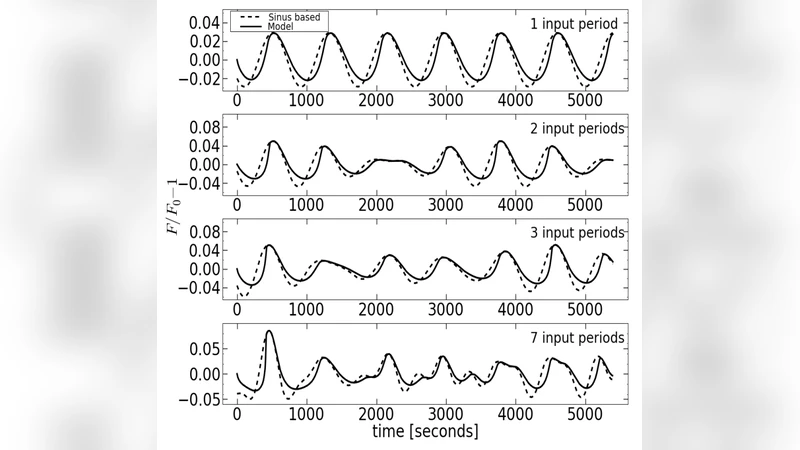
We analyzed the frequency domain of time series of simulated ZZ Ceti light-curves to investigate the detectability and period recovery performance of short period variables (periods < 2 hours) for the Gaia mission. In our analysis, first we used a non-linear ZZ Ceti light-curves simulator code to simulate the variability of ZZ Ceti stars (we assumed stationary power spectra over five years). Second we used the Gaia nominal scanning law and the expected photometric precision of Gaia to simulate ZZ Ceti time series with Gaia’s time sampling and photometric errors. Then we performed a Fourier analysis of these simulated time series. We found that a correct period can be recovered in ~65% of the cases if we consider Gaia per CCD time series of a G ~ 18 magnitude multiperiodic ZZ Ceti star with 5%-10% light-curve variation. In the pre-whitened power spectrum a second correct period was also recovered in ~26% of the cases.
💡 Research Summary
The paper investigates how well the Gaia mission can detect and recover periods of short‑period variable stars, focusing on ZZ Ceti white‑dwarf pulsators with periods shorter than two hours. The authors adopt a three‑step simulation approach. First, they generate synthetic light curves using a non‑linear ZZ Ceti simulator that reproduces multi‑mode pulsations with amplitudes between 5 % and 10 % and assumes a stationary power spectrum over the five‑year mission. Second, they apply Gaia’s nominal scanning law to these light curves, producing time stamps and per‑CCD photometric measurements that mimic Gaia’s actual observing cadence. Photometric uncertainties appropriate for a G≈18 mag star (≈2 mmag) are added as Gaussian noise. Third, they perform a classical Fourier analysis on the simulated time series, identify the highest peak in the power spectrum, and consider it a successful recovery if it matches the input period. They then pre‑whiten the data by subtracting the fitted sinusoid and search for a second peak, evaluating the recovery of a second independent period.
The results show that the primary period is correctly recovered in roughly 65 % of the simulated cases. After pre‑whitening, a second correct period is recovered in about 26 % of the cases. These percentages are contingent on the assumed amplitude, magnitude, and the number of Gaia observations (approximately 70 transits over five years, each providing several CCD measurements). The study highlights several key points. The irregular Gaia sampling does not preclude detection of short‑period signals; the mission’s cadence and photometric precision are sufficient to recover the dominant mode in the majority of cases. However, recovery efficiency drops sharply for lower amplitudes (<5 %) or fainter stars (G > 19 mag) because the noise level becomes comparable to the signal. The lower success rate for the second period reflects spectral leakage caused by the window function and the difficulty of extracting weaker modes once the dominant one has been removed.
The authors discuss the implications for broader variable‑star science. While the analysis is centered on ZZ Ceti stars, the methodology can be extended to other short‑period variables such as δ Scuti, rapidly oscillating Ap (roAp) stars, and pre‑supernova progenitors, all of which exhibit low‑amplitude, high‑frequency variability. The findings suggest that Gaia will provide a valuable, homogeneous data set for statistical studies of such objects, but that sophisticated signal‑processing techniques (e.g., Bayesian multi‑frequency modeling, iterative pre‑whitening, or machine‑learning classifiers) will be required to maximize period recovery, especially for multi‑mode pulsators.
Future work should incorporate real Gaia data once released, allowing validation of the simulation assumptions—particularly the stationarity of the power spectrum and the exact noise characteristics. Cross‑matching Gaia detections with ground‑based high‑cadence photometry will also help quantify false‑alarm rates and refine detection thresholds. In summary, the paper demonstrates that Gaia possesses significant capability to detect short‑period variability, achieving a primary‑period recovery rate of about two‑thirds for typical ZZ Ceti amplitudes at G≈18 mag, and a secondary‑period recovery rate of roughly one‑quarter after pre‑whitening. The study underscores both the promise and the limitations of Gaia for asteroseismology of compact pulsators, and it outlines pathways to improve detection efficiency through advanced analysis methods and empirical validation.
Comments & Academic Discussion
Loading comments...
Leave a Comment