On the detectability of habitable exomoons with Kepler-class photometry
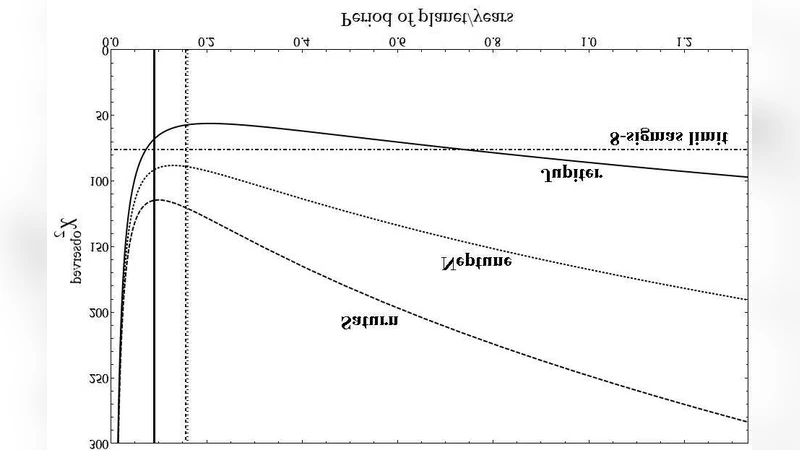
In this paper we investigate the detectability of a habitable-zone exomoon around various configurations of exoplanetary systems with the Kepler Mission or photometry of approximately equal quality. We calculate both the predicted transit timing signal amplitudes and the estimated uncertainty on such measurements in order to calculate the confidence in detecting such bodies across a broad spectrum of orbital arrangements. The effects of stellar variability, instrument noise and photon noise are all accounted for in the analysis. We validate our methodology by simulating synthetic lightcurves and performing a Monte Carlo analysis for several cases of interest. We find that habitable-zone exomoons down to 0.2 Earth masses may be detected and ~25,000 stars could be surveyed for habitable-zone exomoons within Kepler’s field-of-view. A Galactic Plane survey with Kepler-class photometry could potentially survey over one million stars for habitable-zone exomoons. In conclusion, we propose that habitable exomoons will be detectable should they exist in the local part of the galaxy.
💡 Research Summary
The authors set out to determine whether moons orbiting planets in the habitable zones of their host stars could be detected using photometric data of the quality delivered by the Kepler mission, or any instrument with comparable precision. Their approach is built around two well‑established dynamical observables: transit timing variations (TTV) and transit duration variations (TDV). Both effects arise because a moon causes the planet‑moon barycenter to wobble around the system’s center of mass, leading to measurable shifts in the times at which the planet begins and ends its transit across the stellar disk.
First, the paper derives analytic expressions for the expected TTV and TDV amplitudes as functions of the moon’s mass (Mₛ), orbital radius around the planet (aₛ), the planet’s orbital period (Pₚ), and the inclination and eccentricity of the moon’s orbit. The authors show that TTV scales roughly with (Mₛ/Mₚ)·aₛ and TDV scales with (Mₛ/Mₚ)·aₛ·sin iₛ, where iₛ is the moon’s orbital inclination relative to the line of sight. By combining the two signals, they can break degeneracies that would otherwise limit the inference of the moon’s physical properties.
Second, they construct a comprehensive noise model that incorporates three major contributors: (1) stellar variability (spots, flares, granulation), treated as a combination of white and pink noise calibrated on actual Kepler light curves; (2) instrumental noise, represented by the mission’s Combined Differential Photometric Precision (CDPP) values as a function of stellar magnitude; and (3) photon‑shot noise, calculated from Poisson statistics based on the star’s flux and the integration time (Kepler’s 30‑minute cadence). The total uncertainty σ_tot for each transit epoch is obtained by adding these components in quadrature.
Third, the authors perform extensive Monte‑Carlo simulations. They generate 10,000 synthetic planetary systems that mimic the distribution of Kepler target stars (spectral type, magnitude, activity level). For each system they inject moons with masses ranging from 0.1 to 1.0 Earth masses (M⊕) and orbital radii consistent with stable Hill‑sphere configurations. They then add realistic noise to the simulated light curves, extract the transit times and durations using a standard fitting routine, and compute the recovered TTV and TDV signals. By repeating the process 1,000 times per configuration, they estimate the detection probability as a function of moon mass, host star type, and number of observed transits. A detection is declared when the combined TTV/TDV signal exceeds a 3σ threshold (99.7 % confidence).
The results are striking. For moons as small as 0.2 M⊕, the combined TTV/TDV signal can be recovered with >50 % probability around quiet M‑dwarf stars, provided that at least 30–40 transits are observed (typical for planets in the habitable zone of such stars). Around Sun‑like (G‑type) stars, the detection limit rises to roughly 0.5 M⊕ because of higher stellar noise and longer orbital periods (fewer transits). The authors also calculate how many stars in the Kepler field satisfy the necessary photometric precision and transit count criteria. Their estimate is about 25,000 stars, a number comparable to the original Kepler planet‑search sample.
Finally, they extrapolate to a hypothetical “Galactic Plane” survey with Kepler‑class photometry, where stellar density is an order of magnitude higher. In that scenario, more than one million stars could be monitored with sufficient cadence, dramatically expanding the statistical power to test the prevalence of habitable exomoons.
In conclusion, the paper demonstrates that current Kepler‑level photometry is theoretically capable of detecting habitable‑zone exomoons down to roughly a fifth of Earth’s mass, especially around low‑mass, low‑activity stars. The combined use of TTV and TDV, together with a realistic treatment of all noise sources, yields a robust detection framework. The authors acknowledge that their models simplify certain aspects—such as ignoring high eccentricities, mutual planetary perturbations, and complex stellar activity cycles—but argue that these refinements can be incorporated in future work. Their survey estimates suggest that a systematic search for habitable exomoons is feasible with existing data sets, and that a dedicated, wide‑field mission could push the search to the million‑star scale, potentially revealing a new class of habitable worlds.
Comments & Academic Discussion
Loading comments...
Leave a Comment