Spectral classification of the mass donors in the high-mass X-ray binaries EXO 1722-363 and OAO 1657-415
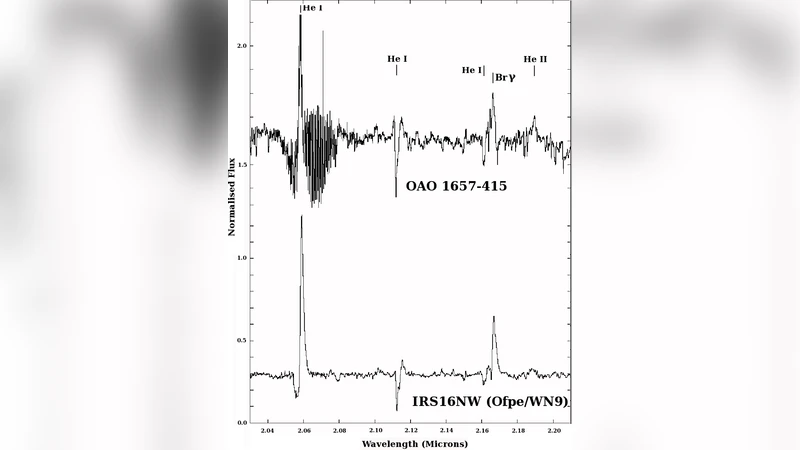
We report near-infrared observations of the mass donors of the eclipsing high-mass X-ray binary (HMXB) systems EXO 1722-363 and OAO 1657-415 in order to derive their accurate spectral classifications. We determined that EXO 1722-363 was of spectral type B0 - B1 Ia, positioned at a distance 8.0 +2.5/-2.0 kpc with a progenitor mass in the range 30 - 40 M_Sun. Luminosity calculations imply that L_X ~ 10^35 - 10^37 erg s^-1 for this distance range. We conclude that EXO 1722-363 shares many of the properties associated with other X-ray binary B-type supergiant donors. We found that OAO 1657-415 correlates closely with the spectra of a class of transitional objects, the Ofpe/WNL, an intermediate evolutionary stage between massive O type stars leaving the main sequence and evolving into Wolf-Rayets. Due to the wide range range in Luminosity displayed by Ofpe/WNL stars, (log L/L_Sun ~ 5.3 - 6.2) distance determinations are problematic. For OAO 1657-415 we report a distance of 4.4 <= d <= 12 kpc, implying an X-ray luminosity of 1.5 x 10^36 <= L_X <= 10^37 erg s^-1. We have used our new classification of OAO 1657-415 to explain the physical processes responsible for its unique position within the Corbet diagram. Ofpe/WNL stars demonstrate a high rate of mass-loss through a dense stellar wind combined with a low terminal velocity. This combination of wind properties leads to a high accretion rate and transfer of angular momentum to the neutron star in this system. We believe this in turn leads to a smaller instantaneous equilibrium spin period with respect to normal OB supergiants.
💡 Research Summary
This paper presents near‑infrared (NIR) spectroscopic observations of the donor stars in two eclipsing high‑mass X‑ray binaries (HMXBs), EXO 1722‑363 and OAO 1657‑415, with the aim of obtaining reliable spectral classifications, distances, and consequently more accurate X‑ray luminosities. The authors used high‑resolution H‑ and K‑band spectra obtained with 8‑meter class telescopes (VLT/ISAAC and Gemini/NIFS). By comparing the strengths and profiles of key diagnostic lines—He I 2.058 µm, Br γ, N III 2.115 µm, Si IV, and C III—with established NIR spectral atlases, they identified EXO 1722‑363 as a B0‑B1 Ia supergiant and OAO 1657‑415 as an Ofpe/WNL object, an intermediate evolutionary stage between O‑type main‑sequence stars and Wolf‑Rayet stars.
For EXO 1722‑363, the absolute visual magnitude appropriate for a B0‑B1 Ia star (M_V ≈ −6.5) combined with the measured J‑K colour and an extinction estimate of A_V ≈ 12 mag yields a distance of 8.0 kpc, with asymmetric uncertainties of +2.5/−2.0 kpc. Using this distance and the donor’s bolometric luminosity (log L/L_⊙ ≈ 5.5), the X‑ray luminosity is constrained to L_X ≈ 10^35–10^37 erg s⁻¹, consistent with previous X‑ray measurements.
OAO 1657‑415 presents a more complex case. Its spectrum shows strong He II emission, a broad Br γ emission component, and prominent N III/C III features, all hallmarks of Ofpe/WNL stars. Because Ofpe/WNL objects span a wide range of intrinsic luminosities (log L/L_⊙ ≈ 5.3–6.2), the distance estimate is less precise. After correcting for a higher extinction (A_V ≈ 15 mag) the authors derive a distance interval of 4.4–12 kpc. Consequently, the X‑ray luminosity lies between 1.5 × 10^36 and 1 × 10^37 erg s⁻¹.
The paper then discusses the implications of these classifications for the systems’ positions on the Corbet diagram (spin period versus orbital period). EXO 1722‑363 behaves like a typical supergiant‑neutron‑star binary, with an orbital period of ~9.7 days and a neutron‑star spin period of ~414 s, fitting the established trend for B‑type supergiant donors. In contrast, OAO 1657‑415 occupies an anomalous region characterized by a relatively long orbital period but a surprisingly short spin period. The authors attribute this to the wind properties of Ofpe/WNL stars: they exhibit very high mass‑loss rates (Ṁ ≈ 10⁻⁵ M_⊙ yr⁻¹) combined with low terminal velocities (v_∞ ≈ 300–500 km s⁻¹). Such a dense, slow wind enhances the mass accretion rate onto the neutron star and transfers angular momentum more efficiently, driving the neutron star toward a shorter equilibrium spin period than would be expected for a normal OB supergiant wind.
Overall, the study demonstrates that NIR spectroscopy can overcome the limitations of optical observations in heavily reddened HMXBs, providing robust spectral types and enabling more accurate distance and luminosity determinations. The identification of an Ofpe/WNL donor in OAO 1657‑415 also highlights the importance of considering transitional evolutionary phases when interpreting the accretion physics and spin evolution of neutron stars in HMXBs. The authors suggest that future work combining high‑resolution NIR spectroscopy with radio pulsar timing and X‑ray monitoring will further clarify the wind‑accretion coupling and the evolutionary pathways of massive binary systems.
Comments & Academic Discussion
Loading comments...
Leave a Comment